• Welcome to ASR. There are many reviews of audio hardware and expert members to help answer your questions. Click here to have your audio equipment measured for free!

Possible solution for DTS/Dolby/Atmos+eARC+HDCP to AES/EBU - via Dante? (for Okto DAC8PRO etc)

8 aes channels carry 16 channels of lpcm.
After a closer look I see it’s input and output on the Card-AES-96. 8 channels each. The H16-AES is output only. So not sure why they needed 2 DB25 connectors.
 
It doesn’t say that here:

View attachment 473228
8 I/O so total 16
After a closer look I see it’s input and output on the Card-AES-96. 8 channels each. The H16-AES is output only. So not sure why they needed 2 DB25 connectors.
Guessing a lot of pro gear or DAWs has both I/O per connector as a more common prevalent format. Allows you to tap in also. Same reason why Genelec also added 2 DB25 for inputs but only 1 for the output for 16 channels.


Nuprime not needing the input could have gone the 1 DB25 output for all 16 channels. But i guess they chose not to
 
However The AI will only revise its stance to support a position if it’s fed factual information that can be backed by hard data.
Currently, AIs have no memory of previous conversations, so when they correct, prompted by a human, they do so only for that single conversation.
Today, they are merely information aggregators.
 
Guessing a lot of pro gear or DAWs has both I/O per connector as a more common prevalent format. Allows you to tap in also. Same reason why Genelec also added 2 DB25 for inputs but only 1 for the output for 16 channels.
Nuprime not needing the input could have gone the 1 DB25 output for all 16 channels. But i guess they chose not to
I've been aware for a long time of the competing Tascam and Yamaha pin-out conventions for multi-channel audio interfaces using D-sub DB-25 connectors.
However I unwittingly glossed over the fact that these were used for both analogue and digital interfaces, so I looked further.
Sorry if you're already ahead of me. AES59 (2012) adopted the more widely-used Tascam standard, but this is actually two very similar standards.

An AES59 analogue interface is an 8 channel balanced analogue audio connection that is always either all inputs, or all outputs. I haven't found any exceptions.
This is used by everyone except Yamaha.
1756640008491.png

An AES59 digital interface is a multi-channel balanced digital audio connection that has essentially the same pin-outs, and can use the same cables.
However, it's almost always an I/O connection, with 4 AES3 inputs (8 audio channels) and 4 AES3 outputs (8 audio channels).
This standard is used by the following audio interfaces: AVID, Antelope, Audient, DAD, Digidesign, Focusrite, Grace, Merging, MOTU, RME, Tascam and Universal Audio
1756644068999.png
1756644084804.png

The Yamaha standard for DB25 digital audio connections is used by Apogee, Lynx and Yamaha.
Datasat, JBL, Trinnov and Lyngdorf use different digital interfaces, typically with 8 AES3 input channels on one connector, and 8 AES3 output channels on another connector.
Genelec use something different again, using AES59 / Tascam connections for the inputs, and outputs only for the output. Storm Audio are also completely different.

Nuprime appear to use the AES59 / Tascam standards for all analogue and digital interfaces. Excellent.

 
Last edited:
8 I/O so total 16

Guessing a lot of pro gear or DAWs has both I/O per connector as a more common prevalent format. Allows you to tap in also. Same reason why Genelec also added 2 DB25 for inputs but only 1 for the output for 16 channels.


Nuprime not needing the input could have gone the 1 DB25 output for all 16 channels. But i guess they chose not to
I see now the reason for the dual connectors is so it can be used with 2 of their 8 channel amps. They would prefer you buy a complete system from them. Otherwise using the Tascam standard wouldn’t actually be necessary. Because if using with an 8 channel DAC now like the Okto, you need to buy 2 breakout cables each with 4 input XLR’s that will be wasted. Instead of 1 cable with 8 output XLR’s.
 
Last edited:
Currently, AIs have no memory of previous conversations, so when they correct, prompted by a human, they do so only for that single conversation.
Today, they are merely information aggregators.
Grok remembers everything I tell it. Even if I use a different account, once it learns something, it doesn’t revert back to before it didn’t know. For example I asked if the Nuprime H16-AIP uses SRC and it said no. But after uploading a pic to it showing multiple CS8422 chips, it changed its mind. So I just asked it if it will remember for all now and it said this:

IMG_1424.jpeg
 
Last edited:
Grok remembers everything I tell it
Each query to LLM is independent - re-learning LLM is incredibly expensive and results in a new LLM version. Some LLMs APIs offer a minor learning mode which is quite expensive to use and not very effective. The way the current AI chabots work is they keep track of previous messages in the conversation session and every query is accompanied by a summary of the previous messages. That's why after a few questions in a session in programming (e.g. copilot) the responses start to forget parts of the code they were given to work on - because all the previous text does not fit into the LLM query input space and information compression is being applied by the web interface of the chatbot. That means an effective way to use the chatbot for programming is to solve one issue with the existing code and start a new session. IME the web interface of copilot still adds some short summary of the other sessions to the LLM query to keep the feeling that the bot is "personalized", but no detailed info, just some light touches.

The LLM does not remember what you discussed, it's the the web interface that keeps the track of your sessions. What Grok answered means that the web interface adds relevant info from other sessions of other users to your query - something I would be scared a bit of.
 
The LLM does not remember what you discussed, it's the the web interface that keeps the track of your sessions. What Grok answered means that the web interface adds relevant info from other sessions of other users to your query - something I would be scared a bit of.
It doesn’t remember personal things about you and share with others. But it does remember factual things about products. There’s nothing to be afraid of talking to AI if you’re not sharing anything you don’t care for anyone to know. It’s no different than doing a Google search. Or using free email services such as Gmail. Nothing you put on the internet is private.
 
Interesting development here. 1 tiny single board that does it all. HDMI eARC input, Atmos, DTS:X and all the spatial surround format decoding, and bitperfect 16 channel output via Dante. This is going to enable a new generation of amazing low cost pure digital only products:


IMG_1425.jpeg

IMG_1426.jpeg


I think this board is worthy of its own thread:

 
Last edited:
I've been aware for a long time of the competing Tascam and Yamaha pin-out conventions for multi-channel audio interfaces using D-sub DB-25 connectors.
However I unwittingly glossed over the fact that these were used for both analogue and digital interfaces, so I looked further.
Sorry if you're already ahead of me. AES59 (2012) adopted the more widely-used Tascam standard, but this is actually two very similar standards.

An AES59 analogue interface is an 8 channel balanced analogue audio connection that is always either all inputs, or all outputs. I haven't found any exceptions.
This is used by everyone except Yamaha.
View attachment 473277
An AES59 digital interface is a multi-channel balanced digital audio connection that has essentially the same pin-outs, and can use the same cables.
However, it's almost always an I/O connection, with 4 AES3 inputs (8 audio channels) and 4 AES3 outputs (8 audio channels).
This standard is used by the following audio interfaces: AVID, Antelope, Audient, DAD, Digidesign, Focusrite, Grace, Merging, MOTU, RME, Tascam and Universal Audio
View attachment 473288View attachment 473289
The Yamaha standard for DB25 digital audio connections is used by Apogee, Lynx and Yamaha.
Datasat, JBL, Trinnov and Lyngdorf use different digital interfaces, typically with 8 AES3 input channels on one connector, and 8 AES3 output channels on another connector.
Genelec use something different again, using AES59 / Tascam connections for the inputs, and outputs only for the output. Storm Audio are also completely different.

Nuprime appear to use the AES59 / Tascam standards for all analogue and digital interfaces. Excellent.
As far as I could find (when trying to figure out what cables to buy), the official AES59 has 3 configurations.

But this is based on what Claude says which in turn got from that same sound on sound website. The official paper is 50 bucks but maybe an AES member over here (@amirm ?) can research it for free since it shows $0 for them?

This is what Claude inferred (trust but verify)

Based on the evidence I found, all three configurations were part of the original AES59-2012 standard published on August 18, 2012.

1. Eight-channel unidirectional analog The standard specifies eight channels of balanced analogue audio traveling in a single direction (Sound On Sound)

2. Eight-channel unidirectional digital (AES3) The AES59 connection standard states that it can be used with digital equipment in exactly the same way as for analogue, passing eight separate AES3 balanced digital inputs or outputs in one direction only (Sound On Sound)

3. Bidirectional digital I/O (Combined mode) The AES calls this arrangement a 'digital combined I/O' mode, and the standard requires that the first four channels are used as AES3 inputs, while the last four provide AES3 outputs (Sound On Sound)

My source of confusion arose when I was reading specs on the Genelec website where they list

Inputs: 2 x DB25 (Tascam AES59-2012)
Outputs: 1 x DB25 (Tascam AES59-2012)

And I was like, why?
Arguing more with claude, it gave me this

All Configurations Were in the Original 2012 Standard. Based on the evidence, all three configurations were included in the original AES59-2012 standard published on August 18, 2012. However, there was significant debate during development about the bidirectional digital mode.

The Development Debate:

Originally the working group proposed that AES-3 digital connectors would always be I/O (bidirectional), but some committee members felt this was too restrictive. For example, a 16-channel AES-3 input card would have required two connectors (TV Technology)This reveals the exact reason manufacturers might choose 8x8 over 16 unidirectional outputs - the standard committee actually wanted to enforce bidirectional operation initially!

Why Manufacturers Choose 8x8 Instead of 16 Outputs:

1. Standard Compliance & Future-Proofing: The AES59 committee originally preferred bidirectional operation, suggesting this was seen as the "proper" way to implement digital DB25 connections.

2. Cable & Infrastructure Efficiency:Digital cables are bidirectional (4 pairs each way) and require crossover wiring for bidirectional operation (Pioneer DJ)With 8x8, you get full connectivity with standard AES59 cablesWith 16 outputs, you'd need specialized unidirectional cables and potentially confusing labeling

3. Practical Workflow Considerations:Most professional workflows involve both sending and receiving audioEven if you don't use inputs now, having them available provides flexibilityMany devices serve multiple roles (recording, playback, monitoring, routing)

4. Standard Breakout Cables: Standard AES59 breakout cables come with "four male connectors, four female connectors" (SweetCare) - designed for bidirectional use.

5. Panel Space Efficiency: Rather than having separate input and output DB25s (which would require different cable types), 8x8 gives you both in one connector with standard cables.So manufacturers choose 8x8 not because they're forced to, but because it aligns with the standard's intended workflow and provides maximum flexibility with standard cables and infrastructure.

This was the referenced article
 
Last edited:
Just wondering what you connect to a DAC8?

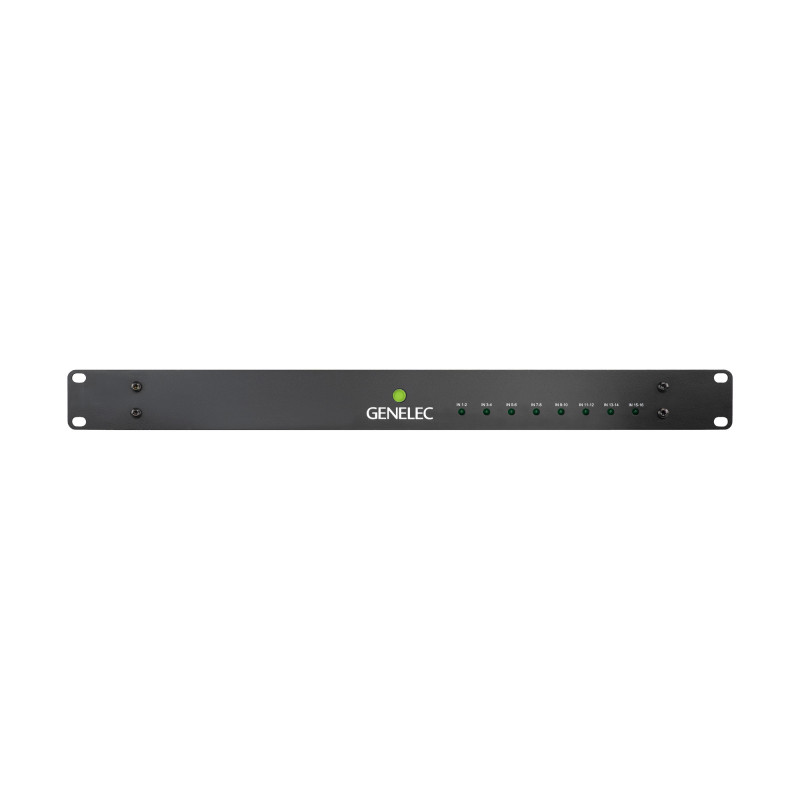
H16-AES feeding a DAC8 or two sounds like a match made in heaven.
This remains the goal with the NuPrime-X once I can confirm it's compatibility.
H16-AES in and a bunch of amp/speaker to the outputs.
So you've paired a DAC8PRO with it? Can the Okto easily switch between its USB and AES modes? I intend to switch between a PC (USB) and something like an Apple TV through the H16-AES.
Only semi-related if someone can better explain: I assume this part of the manual is because inputs 3 and 4 are somehow "secondary" to inputs 1 and 2? Perhaps due to how the clocking is performed?
1756684060178.png
 
Yes. Yes. Have not tried USB / AES mode.
Yes this will allow you to compare bitperfect via USB vs passing through the processor. They do say PCM and Dolby trueHD support up to 24/96.
IMG_1429.jpeg


But even non-Atmos TrueHD will require DSP to decode. And if passing though the SHARC it will still need to pass through the SRC. SHARC chips can’t be programmed to switch the internal sample rate processing on the fly based on the input. The SRC is what adapts that.

Regarding the CS8422’s in the AES board. There’s 2 ways they can be configured:

1: If the SRC needs to be utilized at any time they must be wired so all audio passes through the SRC and comes out the other end no longer bitperfect to what went in. Even if the sample rate going in matches the output sample rate.

2: They can be configured as dedicated AES3 transceivers only. Not utilizing the SRC feature at all. Using a mode called Direct Out. However this requires wiring the output to a different pin on the chip. And if wired this way SRC can never be used. Another thing is the chip must be software controlled to use this mode. Meaning there must be a DSP, FPGA or CPLD chip on the board that is programmed by a computer in the factory to configure the chip. When hardware mode is used the settings are set by fixed resistors. And the Direct Out functionality can’t be utilized.

In order to discover if SRC is enabled in the AES board, there might be a setting in the menu to set the sample rate of the output. Or it could be automatic. If it knows the source going in is 24/96, it might automatically upsample to 24/96 in the AES board after the SHARC to match the input rate. And give the illusion that it hasn’t been altered.

But at the end of the day all that matters is the sound. And by comparing TrueHD or PCM via USB and through the processor if you can’t tell the difference then it’s transparent enough for you.

Next month there might be an even better way to test the Atmos. Apple is supposed to be finally adding Atmos pass thru to the Apple TV. So one will be able to toggle between having the Apple TV do the decoding and output LPCM, and the external processor do it in pass thru mode. That will be an interesting comparison. And finally this might allow TrueHD Atmos when using Plex on the AppleTV. When streaming files located on a Plex server.
 
There is a possibility those AES board chips are CS8416’s. I didn’t realize they came in a QFN28 package option:


Although they are NRND status at all suppliers (Not recommended for new designs). But the CS8422’s in the AIP are completely discontinued and they still used them.

If this is the case these chips are pure receivers with no SRC capability. And will be a good thing.
 
But even non-Atmos TrueHD will require DSP to decode. And if passing though the SHARC it will still need to pass through the SRC. SHARC chips can’t be programmed to switch the internal sample rate processing on the fly based on the input. The SRC is what adapts that.

What are you basing that SHARC comment on? I think it is incorrect.

They can, in fact, process at different sampling rates. My MC-12 has 8 SHARCs in it and it processes at any sampling rate froom 44.1kHz up to 96kHz without resampling the data. And that was designed around 25 years old.
 
What are you basing that SHARC comment on? I think it is incorrect.

They can, in fact, process at different sampling rates. My MC-12 has 8 SHARCs in it and it processes at any sampling rate froom 44.1kHz up to 96kHz without resampling the data. And that was designed around 25 years old.
Yes they’re capable of processing at any rate. But when setup to decode Atmos they must be fixed at 1 rate. This is a resource intensive process. And doubling the sample rate doubles the processing load. And 48Khz will max out the chip as it is. This is why Nuprime says it only does Dolby Digital plus and Atmos at 24/48.

All AVP’s that use SHARC chips do it this way. Including the $20000 Storm Audio. All incoming audio whether 2 channel PCM, Atmos, DTS and everything goes through the SHARC SRC before anything else. Then processed at 24/48 regardless of what the incoming rate is.

This board here uses dual ADSP-SC573’s. And still maxes out at 24/96 internal processing capability over 16 channels.


And those are dual core DSP’s. The A16’s use a single, single core ADSP-21569 for both atmos decoding and post processing. It’s maxed out running at 48k. Which is likely why it can only do 7.1.4 Atmos.

​

 
If this is the case these chips are pure receivers with no SRC capability. And will be a good thing.
I hope so, but then the AES module doesn't have the same need to perform SRC as the AIP.
With a Dante network, every device has to be running at the same audio sample rate, or it just won't work.
With a much simpler AES3 point to point connection, the source can generate any allowed sample rate, and the sink will still receive it.
 
Back
Top Bottom