• Welcome to ASR. There are many reviews of audio hardware and expert members to help answer your questions. Click here to have your audio equipment measured for free!

Passive Radiator CSS SDX10 Design and Build

EngineerNate

Senior Member
Joined
Oct 6, 2018
Messages
340
Likes
387
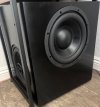
I have had an SDX10 for ages that started life in my car. I haven't had a car system for ages so it's sat in my shop in a sealed car box for a long time. I finally have a little space for a system so I'm giving it a proper home.

After corresponding with Dan at CSS I decided on a dual passive Radiator design at 2.5cuft and 9 washers on the PRs, giving an F3 of 19hz.

I bought 4X of their closeout PRs and a second SDX10 so the first wouldn't be so lonely. :D

I used CAD to design the enclosure and take volume measurements. They will double as speaker stands, and are some point I'll make a third to help cancel out room modes.

The boxes are golden ratioed, because why not!


IMG_2835.png

IMG_2834.png

IMG_2836.png

IMG_2838.png

IMG_2927.jpeg

IMG_2929.jpeg
IMG_2928.jpeg


I have a few free days before Thanksgiving I'm hoping to use for assembly. :)

Cheers
Nate
 

I think several other subwoofer drivers probably equal it at this point for pure bass duty, but I already had one purchased back when XBL-2 was the new hotness, so the barrier to entry to getting another was lower than with another driver.

That said, it's ability to play cleanly very very high for a subbass driver opens up interesting possibilities for using higher crossover points to reduce distortion in my main speakers (since I can run the two in stereo and use them as speaker stands, eliminating issues with localization).

If I build a third sub, I may choose a larger driver or do a similar looking cabinet with two drivers in push pull, just to keep life interesting. :)

Once I've gone through a full build on these and verify the flat pack fitment, I will post step and DXF files for anyone who wants to build a copy.
 
Finally got my shop cleaned up and started assembly on these. Step 1 is to laminate the sides.

First, I align the side layers (in this case, a bottom) and clamp. Then using a drillmate and a sharp brad point bit, I drill for two locating pins:
IMG_3606.jpeg


By going in reverse first and letting the brad points score the surface, you can get an extremely clean hole:
IMG_3607.jpeg


Next, setup a vacuum bag, coat the mating surfaces with titebond II, put into vacuum bag and pull vacuum. Then check for leaks!
IMG_3609.jpeg

IMG_3610.jpeg

IMG_3611.jpeg


That’ll do. That’s about 3,763 pounds of force clamping the two together and to my makeshift granite plate, to make sure they stay flat during the layup.

Bagging materials are standard low loft poly fill to allow for air to escape, 6mm polyethylene sheet plastic, and butyl caulking tape. I bought the vacuum pot on Amazon, it acts as an accumulator and helps things pull down fast.

Now I just need to do this several more times. Once I get the process down I think I can do a couple at once, stacked up vertically in the bag with a sheet of poly between.

Cheers,
Nate

PS-mark your sides before you start rolling glue. Ask me how I know.
 
IMG_3622.jpeg

IMG_3614.jpeg

IMG_3616.jpeg

Tops and bottoms laminated and ready for assembly. Backs next. I’m doing the panels you’ll see in-use most last so I learn as much as possible before doing the visible ones.
 
Great project. And nice shop :D.
 
Great project. And nice shop :D.
Thanks!

I spent my Christmas vacation cleaning and organizing it so I could actually do this project. It was a hot mess before, we did a massive renovation in the bonus room next door and my shop space got turned into a storage unit. A very dusty storage unit.

IMG_3604.jpeg
IMG_3458.jpeg
 
Different PR project, MBM focus


More context from the quotes here

would appreciate any feedback, but please respond at the thread first linked
 
IMG_3842.jpeg
IMG_3843.jpeg


Got all the corner chiseling done and the first pair of panels glued up today.

Going to buy more pipe clamps before I do another side.
 
More progress tonight. I got the second side glue up done and got the PR holes cleaned up and back chamfered.
IMG_3844.jpeg

IMG_3845.jpeg


IMG_3846.jpeg
 
Second unit glued up to catch it up to the first. Routing the backside of the driver openings this evening then installing the bracing in both units.

IMG_3865.jpeg
 
IMG_3914.jpeg


Both units have four sides.

I popped a side brace joints getting the front onto both of them. It turned out a little closed in from clamping the braces tight, and I tried to use a clamp to spread the opening a bit, and it delaminated the ply under the glue joint on one side of the side to side brace. I pried it open further, shot more adhesive into the break, and set the front after.

I tried to be more gentle with the second but ran into the same issue. If I had a set of these to build again I’d leave one side of the brace unglued and glue it during the front panel install. The box otherwise took the slight expansion to get the front in without a hitch.

In the end it’s all glued back together and I’m positive no one would ever know the difference.
 
Finally got my shop cleaned up and started assembly on these. Step 1 is to laminate the sides.

First, I align the side layers (in this case, a bottom) and clamp. Then using a drillmate and a sharp brad point bit, I drill for two locating pins:
View attachment 507036

By going in reverse first and letting the brad points score the surface, you can get an extremely clean hole:
View attachment 507037

Next, setup a vacuum bag, coat the mating surfaces with titebond II, put into vacuum bag and pull vacuum. Then check for leaks!
View attachment 507038
View attachment 507039
View attachment 507040

That’ll do. That’s about 3,763 pounds of force clamping the two together and to my makeshift granite plate, to make sure they stay flat during the layup.

Bagging materials are standard low loft poly fill to allow for air to escape, 6mm polyethylene sheet plastic, and butyl caulking tape. I bought the vacuum pot on Amazon, it acts as an accumulator and helps things pull down fast.

Now I just need to do this several more times. Once I get the process down I think I can do a couple at once, stacked up vertically in the bag with a sheet of poly between.

Cheers,
Nate

PS-mark your sides before you start rolling glue. Ask me how I know.
I started vacuum clamping in 1994. And I used to do this too. Now I have learned a bit over the years. I have my vacuum regulator set to about minus 15 inches of Mercury. Plenty of pressure, and better outcomes. You can starve your parts of glue if you are not careful. I roll on glue on both sides and use a open mesh to promote proper air evacuation. Initial evacuation can be aided by a shop vac. Really speed sup the process.

Mark
 
If anyone wants a pair of these drivers, I know where to get some new old stock. 2SDX10's

Mark
 
I started vacuum clamping in 1994. And I used to do this too. Now I have learned a bit over the years. I have my vacuum regulator set to about minus 15 inches of Mercury. Plenty of pressure, and better outcomes. You can starve your parts of glue if you are not careful. I roll on glue on both sides and use a open mesh to promote proper air evacuation. Initial evacuation can be aided by a shop vac. Really speed sup the process.

Mark

I have a Venturi vacuum generator now I plan to use for initial evac. It does way more cfm than the rotary vane.

Agree full vacuum is probably excessive for clamping pressure. Were the starved joints due to the glue sucking out of the joint? In general I didn’t get a ton of it outside the bond.

I rolled glue onto both sides with a paint roller.

Cheers,
Nate
Starved joints yes, and destruction! I broke a few things. Boxes under 30 inches of vacuum are an interesting thing to go bang believe me. Not quite shotgun level, but wakes you up pretty quickly.

If you are interested: @KravchenkoAudioPerth on YouTube has quite a few videos that include vacuum clamping. Veneering too.

Mark
 
Back
Top Bottom