IncognitOz
Member
- Joined
- Oct 23, 2022
- Messages
- 14
- Likes
- 13
Hi Team,
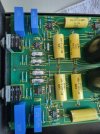
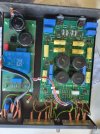
I am restoring an original Celestion System 6000 Active Controller / Crossover (c. 1990).
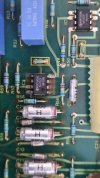
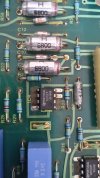
The PCB currently has a mix of TL072CP and NE5532P dual op-amps. I plan to install machined DIP-8 sockets and replace all stock ICs with Burr-Brown OPA2134PA (or TLE2072) to lower the noise floor.
Op-Amps: Considering the OPA2134PA is unity-gain stable (8 MHz GBW, JFET input) and the board has local decoupling caps, do you see any potential stability or oscillation issues when replacing the NE5532P positions with OPA2134PA in this circuit?
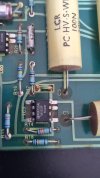
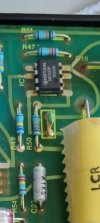
Looking closely at the PCB, I noticed a local decoupling capacitor connected to Pin 4 on each op-amp. Is this bypass capacitor what ensures circuit stability and prevents high-frequency oscillation when upgrading to modern op-amps like the OPA2134?
Thank you very much for your help.
Attachments
-
 IMG-20260811-WA0018.jpg268.5 KB · Views: 46
-
 IMG-20260811-WA0019.jpg284.2 KB · Views: 55
-
 IMG-20260811-WA0037.jpg169.8 KB · Views: 52
-
 IMG-20260811-WA0036.jpg175.7 KB · Views: 48
-
 IMG-20260811-WA0035.jpg148.3 KB · Views: 46
-
 Screenshot_2026-08-11-16-58-27-726_com.miui.gallery.jpg103.2 KB · Views: 51