The AX5689 is a unique chip because it features a digital architecture and global negative feedback (PFFB).Why and how?

-
Welcome to ASR. There are many reviews of audio hardware and expert members to help answer your questions. Click here to have your audio equipment measured for free!
You are using an out of date browser. It may not display this or other websites correctly.
You should upgrade or use an alternative browser.
You should upgrade or use an alternative browser.
NEW GaN Amplifier : Dual ACM8816 GaN amplifier chips + AK4118AEQ [YJCO D816]
Sometimes it takes a long time for new technology to be optimized in commercial products. It took several years for amplifiers utilizing the TPA325x chips to reach where they are now. GaN transistors do have better performance, and I think that eventually we will see some special designs that use them.We've seen time and time again that these GaN amps provide no benefit versus traditional ones. It's just a marketing buzzword.
A new GAN200 Infineon Nitride amplifier has appeared. Interested in opinions on whether this is compelling:
NotInYourHead
Active Member
- Joined
- May 18, 2025
- Messages
- 138
- Likes
- 120
A new GAN200 Infineon Nitride amplifier has appeared. Interested in opinions on whether this is compelling:
Attachments

That one is tempting... packed with Infineon chips!
1 MHz...
And it's affordable, too... for a DIY project!
1 MHz...
And it's affordable, too... for a DIY project!

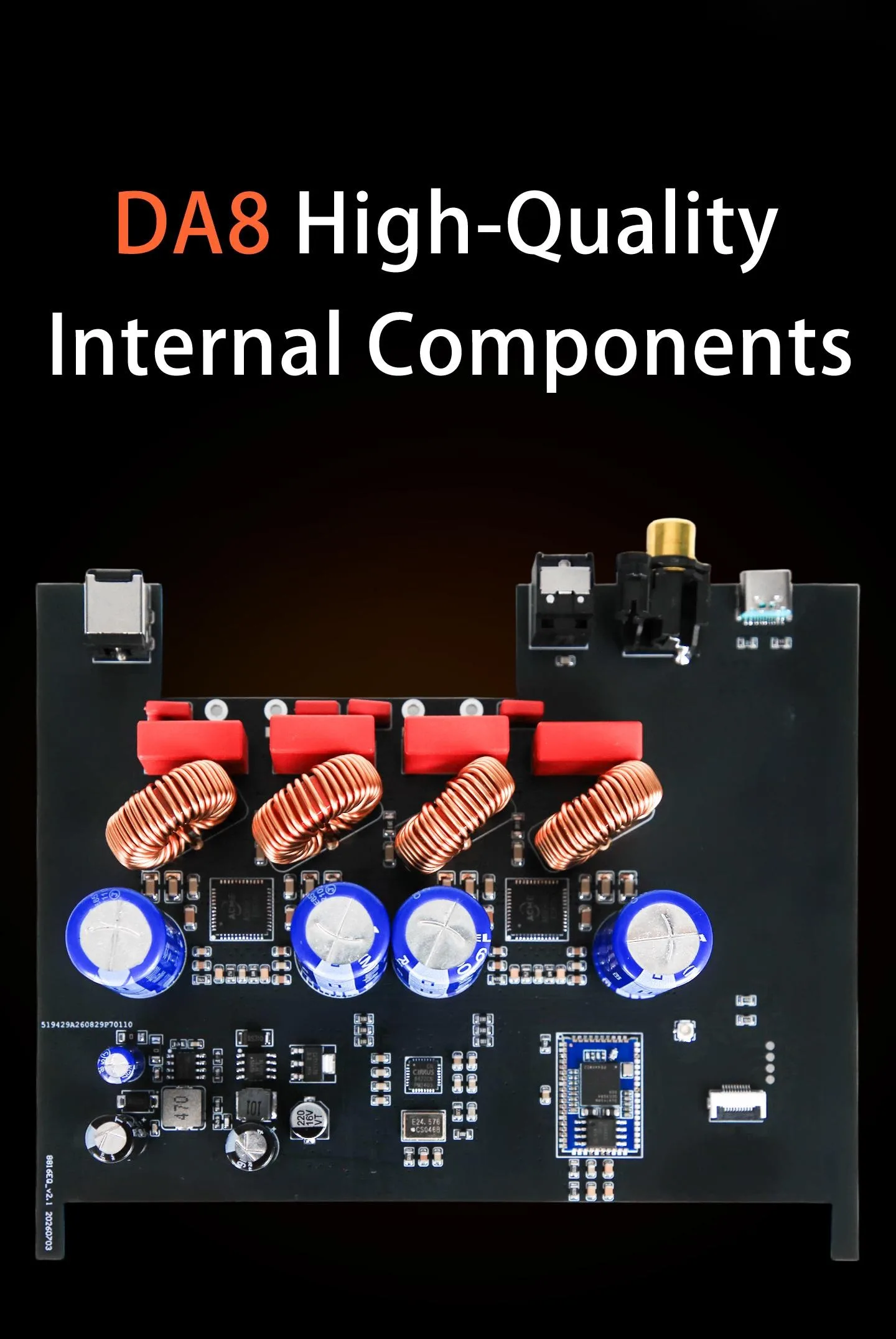

But there is no dac, it is a full digital amp.Personally, I prefer choosing the DAC before the amplification stage...
The integrated DAC chip certainly isn't on par with AKM or ESS...
With this solution, you're stuck (in my opinion).
Well we can debate that but there is no digital analogue conversion happening like in a traditional dac. Bits are converted straight to power pulses (filter smooths the pulses into a wave). If anything is to be considered a dac in a digital amp it is the filter at the end, before that it is Pulse Width Modulation (digital).Yes, of course... And your speakers decode the digital signal...
Michael Kohler
Member
- Joined
- Feb 20, 2026
- Messages
- 88
- Likes
- 16
The biggest problem with this technology, Full Digital Amplification (FDA), is that most people don’t understand it. And as a result, they don’t believe it. But it’s true. The music signal stays digital all the way to the speaker outputs. These actually fully digital amplifiers have been around since 1998 (!), the first amplifier being the Tact Millennium, and even today, almost 30 years later, hardly anyone has recognized and understood the benefits of the technology.Yes, of course... And your speakers decode the digital signal...
For those who still can’t believe it: there’s an article about TDAI on the Lyngdorf Audio homepage. That’s what the Lyngdorf amplifiers are called—Total Digital Amplifier Integrated. The article explains the technology.
Michael Kohler
Member
- Joined
- Feb 20, 2026
- Messages
- 88
- Likes
- 16
YES! In truth, it works exactly like that!Well we can debate that but there is no digital analogue conversion happening like in a traditional dac. Bits are converted straight to power pulses (filter smooths the pulses into a wave). If anything is to be considered a dac in a digital amp it is the filter at the end, before that it is Pulse Width Modulation (digital).

You should perhaps read this paper.The biggest problem with this technology, Full Digital Amplification (FDA), is that most people don’t understand it. And as a result, they don’t believe it. But it’s true. The music signal stays digital all the way to the speaker outputs. These actually fully digital amplifiers have been around since 1998 (!), the first amplifier being the Tact Millennium, and even today, almost 30 years later, hardly anyone has recognized and understood the benefits of the technology.
For those who still can’t believe it: there’s an article about TDAI on the Lyngdorf Audio homepage. That’s what the Lyngdorf amplifiers are called—Total Digital Amplifier Integrated. The article explains the technology.
Well, this is certainly more interesting. Discrete GaN transistors so quite a bit of power. Seems compelling enough.A new GAN200 Infineon Nitride amplifier has appeared. Interested in opinions on whether this is compelling:

I believe these Infineon chips are also found in the SMSL PA200 GaN & VMV A1PRO GaNWell, this is certainly more interesting. Discrete GaN transistors so quite a bit of power. Seems compelling enough.
Michael Kohler
Member
- Joined
- Feb 20, 2026
- Messages
- 88
- Likes
- 16
I read the article. I have two questions for you: First, do you think the article is a good article? Second, did you understand what was described in the article? If yes, could you write in YOUR own words how a Full Digital Amplifier is analog? Thank you in advance for that.You should perhaps read this paper.
For anyone who's interested, here’s the description from the company Lyngdorf about why they call their amplifiers fully digital:
Here is a digital eye diagram. When the traces fall within the black zone, it is all good for digital. But if your PWM waveforms look anything like the diagram, and you try to low pass filter them to reconstruct your analog signals, you get tons of garbage along with the signals you originally expected.I read the article. I have two questions for you: First, do you think the article is a good article? Second, did you understand what was described in the article? If yes, could you write in YOUR own words how a Full Digital Amplifier is analog? Thank you in advance for that.
For anyone who's interested, here’s the description from the company Lyngdorf about why they call their amplifiers fully digital:
Even when you have pristine PWM, without feedback correction, your "power DAC" has zero PSRR (power supply rejection ratio). When you draw a lot of current, such as what happens with power amplifiers, the supply rail will droop. If you don't have feedback, you'll again get lots of distortions in your power DAC output.
So it makes little sense to build your DAC for high voltage high current output. But since many of the high performance class D implementations are patent protected, Axign does theirs by A/D converting the output, and feedback correct in the digital domain. A lot of work to circumvent patents they don't own.
[Edit] Explain it again differently:
The bottom waveform is PCM conversion of the top one. You recover the top waveform by low pass filtering the bottom one. Good luck getting a pristine version of the bottom waveform from your H-bridges at tens of volts and tens of amps with no feedback.
All the difficult problems are analog problems.
Last edited:
Michael Kohler
Member
- Joined
- Feb 20, 2026
- Messages
- 88
- Likes
- 16
I tried to understand your explanation. I only partly succeeded. Thanks anyway. So I ask as a technical amateur:Here is a digital eye diagram. When the traces fall within the black zone, it is all good for digital. But if your PWM waveforms look anything like the diagram, and you try to low pass filter them to reconstruct your analog signals, you get tons of garbage along with the signals you originally expected.
View attachment 556811
Even when you have pristine PWM, without feedback correction, your "power DAC" has zero PSRR (power supply rejection ratio). When you draw a lot of current, such as what happens with power amplifiers, the supply rail will droop. If you don't have feedback, you'll again get lots of distortions in your power DAC output.
So it makes little sense to build your DAC for high voltage high current output. But since many of the high performance class D implementations are patent protected, Axign does theirs by A/D converting the output, and feedback correct in the digital domain. A lot of work to circumvent patents they don't own.
[Edit] Explain it again differently:
The bottom waveform is PCM conversion of the top one. You recover the top waveform by low pass filtering the bottom one. Good luck getting a pristine version of the bottom waveform from your H-bridges at tens of volts and tens of amps with no feedback.
All the difficult problems are analog problems.
View attachment 556816
If a so-called full digital amplifier has a digital input, at what point in such a device does the conversion to an analog waveform take place, and how exactly is this achieved, with which components? I'm asking for the following reason:
Most readers know the digital-to-analog converter chips that are built into D/A converters, for example from manufacturers like ESS or AKM. So in your opinion, how does this conversion happen in a full digital amp?
Similar threads

- Replies
- 15
- Views
- 3K
- Replies
- 8
- Views
- 1K

- Replies
- 16
- Views
- 5K
