• Welcome to ASR. There are many reviews of audio hardware and expert members to help answer your questions. Click here to have your audio equipment measured for free!

Multiple small amplifiers for 2 +1 speakers

carlmart

Active Member
Joined
Aug 30, 2018
Messages
201
Likes
17
I write this question mostly thinking on Amir's comments about it, if I can put the question clear and well.

I read a lot of things about audio, mostly in pages like this, in DIY forums and in YouTube videos. And I find there's an important question that turned amp when small amplifiers, like Aiyima and Fosi, were released and instantly became popular since not so long ago. At the same time there was an increase in 2-way speakers released, from very cheap to the usual very expensive that always existed. But with a difference: most of these new 2-ways were 4 ohms, with lower peaks down on many of the expensive ones. Like the Ascilab C6B, a seemingly remarkable example that got very good reviews here and on other places.

Most of these small 2-ways have that problem, they are small and shine more if you add a sub, always recommended in all reviews. So here we get to the problem no one talks about: the need to use multiple small amps. That is because most receivers capable of handling main speakers and sub can't go much high power in level, or they will compress or even worst: get damaged.

The solution? Using two small Aiyima/Fosi amps: one for the stereo main speakers and another amp (bridged if possible) for the sub or subs. Two amps mean two external power supplies.

And what about the signal source management, now that preamps seem to have vanished from the market or are awfully expensive. Something to send the L + R + Sub signal to each amp.

And let's not get if we want to use the same equipment to listen to music and home video, as very few people can afford two separate systems for each application, in cost and space. My case is one of them. Multichannel outputs that can't handle 4 ohms well enough and would need an Aiyima/Tosi to boost 6 channels safely.

I wonder if people think about this and how they go about it.

​

 
I use a 6-channel sound card, driven by CamillaDSP, for the crossover and equalization of 2 subwoofers plus satellites using 2 amplifiers. The Raspberry Pi used for the DSP is also an LMS streamer and server. I have a TOSLINK input for everything coming from the television (video).
I don't know of any commercial system that's as flexible and powerful.
 
The turnoff regarding these small amps as far as I'm concerned is that I really don't want all those powersupply bricks around. Fixed cable on one side adds to a salad and so on. Awkward in a living room, and even more so for a desk, where they either are placed on the floor, one has to fixate them under the desk, or leave them in a beneath desk tray, where they may or may not cause interference/noice of some sort. Might work for others, but I have landed on integrated power supplies. With integrated, I can replace the power cable with a shorter/longer one, cut it to exact length and so on.

Doubt audible benefits, but as I plan to hide what can be hidden, the heat from monoblocks will be divided in 2 compartments whereas a stereo amp will heat one compartment to higher temperatures.

There are dac/preamps with various combinations of inputs suitable to various requirements, like Fosi ZD3 and Luxin X9 which to various extent caretakes TV sound and sub out.

I specifically want to keep sources/streaming separate, as this is more likely to change and more sensitive to future updates of software and so on.
 
I'm not really sure what the problem is here.
Can't you use powered subs (the most typical types)?
And if you don't have enough power, can you not buy a more powerful amp?
If you are using an AVR, is there no configuration where you can't feed the satellite speakers from it, while driving the main stereo pair separately?
 
The solution? Using two small Aiyima/Fosi amps: one for the stereo main speakers and another amp (bridged if possible) for the sub or subs. Two amps mean two external power supplies.

And what about the signal source management, now that preamps seem to have vanished from the market or are awfully expensive. Something to send the L + R + Sub signal to each amp.
95% of subwoofers nowadays are active with a built-in Amp, so do not need purchasing a second Amp.

As for signal management, high level Sub inputs or 2.1 Amps like the WiiM Amp series are an effective solution.
 
Speakers should not be active: it's a very bad idea, only useful for mediocre audio. For good active audio you have to pay much more money like audio studios do. Better to use good passive xovers and external amps.

What you can go for on the bass side, on the woofer, is with external active eq powering and external separate amp for it. The res of the speaker stays passive handled with a stereo amp. That does work fine, using analog eq o DSP.
 
Last edited:
One:


Then pre-out from the Douk A5 to one or more active subwoofers.
The Douk A5 has a high-pass filter for the speakers. Set it to a suitable frequency, say 80 Hz. Set the active subwoofer's low-pass filter to 80 Hz. The result can be really good (after some EQ and fine-tuning regarding speaker-sub integration).

The little Douk A5 doesn't have to work as hard, since it is relieved of the task of delivering the lowest frequencies to the speakers.

By the way, there are plenty of active speakers that qualify as state-of-the-art (SOTA) hi-fi speakers, so I don't understand why the OP dismisses active speakers.
 
Name one passive loudspeaker for which there is no active loudspeaker at a comparable price with equal or better performance.
My initial sentence is wrongly expressed, sorry. Active and passive frequency splits caused by crossover/active filters have pros and cons each of them.

What I meant is active WITH EQ CIRCUIT AND POWER AMP BUILT INSIDE OR TO THE SPEAKER BOX. Vibrations from the speakers could affect the amp's audio behavior, introducing distortion. Simple decoupling may not cure the electronics vibrations produced by the box and audio waves.
This is an audiofool fallacy unless the amps are using vacuum tubes.
 
Vibrations from the speakers could affect the amp's audio behavior, introducing distortion.
There are theories around this, but in practice I have not seen this become a problem. Speakers at the higher end like Neumann KH120II or even the more humble Edifier series don't seem to have that kind of problem in use.

There are good reasons to want passive speakers, but vibration-induced distortion is thankfully not a big one. As noted in the thread you linked, it's a measurable problem but only at very high volume, and easily overwhelmed by driver distortion.

If it was a big issue, studios would avoid active speakers too, but in practice they use them more than home listeners.

As for your original problem of needing many channels of amplification that can handle lower impedances... I think the answer is simple but not exciting, you just need a lot of little amps, or one big, more expensive one. Or a higher-end AVR, maybe.
 
Name one passive loudspeaker for which there is no active loudspeaker at a comparable price with equal or better performance.
It’s quite a challenge.:)

My initial sentence is wrongly expressed, sorry. Active and passive frequency splits caused by crossover/active filters have pros and cons each of them.

What I meant is active WITH EQ CIRCUIT AND POWER AMP BUILT INSIDE OR TO THE SPEAKER BOX. Vibrations from the speakers could affect the amp's audio behavior, introducing distortion. Simple decoupling may not cure the electronics vibrations produced by the box and audio waves.
One issue with active speakers—and really the only one I see, as otherwise there are only advantages—is that they can have audible hiss. By "audible," I mean when listening close to them. Whether or not this is annoying is, of course, a matter of personal preference; however, if I were to buy active speakers for use as near-field desktop monitors, I would check their hiss level before purchasing.

On the other hand, if I were using active speakers with a listening distance of 2.5–3 meters/8–9 feet, I don't think I would even bother checking the hiss level beforehand. In that scenario, it would never be a source of annoyance for me—not even with models considered to have high levels of hiss.
 
For subwoofers active is the way to go in almost every case the amp is an integrated part of its tuning and protection and have all the crossovers .

And for distorsion try to hear amp distorsion at 20hz-80hz ;) at the same time as the drivers distort quite a bit as they all do when reproducing bass and humans are notoriously bad at hearing small levels of distorsion in bass ( where even getting away with bass reflex speakers , its a Helmholtz resonator ! )

For sound quality active speakers are the way . But i get the part where we have unserviceable integrated electronics ? so sometimes i wonder if i should go back to passives for that reason , with carefull design passive speakers can be very good for home use.

Here the distorsion argument is also ridiculous as the passive xover components will have much more distorsion than you average DSP crossover + amp .
And its hard to do some things active DSP crossovers do with passive components .

The most compelling arguments for passive home speakers are simply the much wider selection of speakers due the typical conservative audiophile market :)
We could have much better and a wider selection active home speakers if it where not for this . But its getting better for every year
 
The performance-to-price ratio of active speakers is becoming almost ridiculously good.
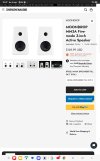
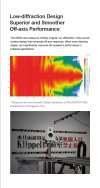
I mean, if the new MOONDROP MM3A small active desktop speakers live up to the manufacturer's performance claims, then the price of $170 per pair is simply incredible: :oops: :D
Screenshot_2026-09-04_124729.847.jpgMM3A_4.jpgMM3A_8.jpg

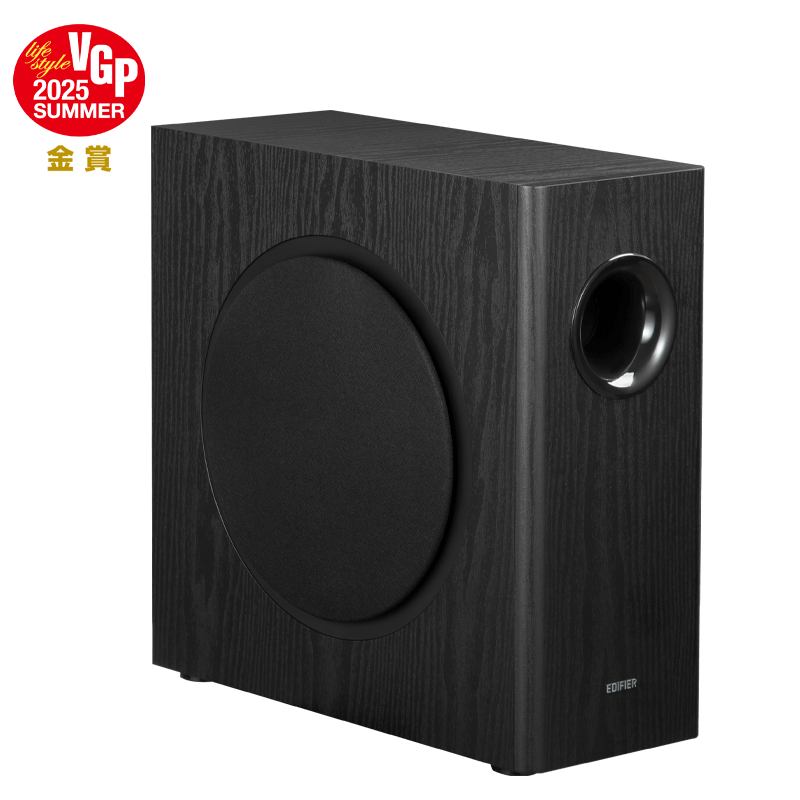
Add a subwoofer to the mix, and you have a great desktop setup. For smaller rooms or desktop use, you can get a lot out of an affordable active 8-inch subwoofer—like the Edifier T5s, which is also an incredible bargain, $150, given its performance (reaching down to 35 Hz, which is perfectly fine for most music):


Then, of course, there are the more expensive, state-of-the-art active speakers from brands like Genelec and Neumann.

Active speakers are really the way to go these days.:)

Edit:
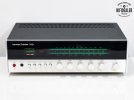
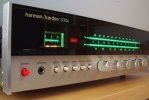
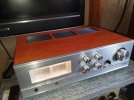
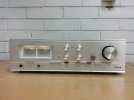
For me, passive speakers are actually still the choice to make because I like the aesthetics—the look—of my vintage receiver and amplifier (they make for a nice interior design touch that brightens up the living room). :)
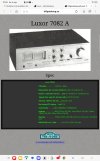
I’m also fond of the Luxor amp because of local Hi-Fi history.

Plus, it’s fun to service them and keep them in good condition. It’s as good a hobby as any.:)
hk-330c-1280x960.jpgs-l1200.jpgimages (23).jpegtumblr_o0lrke0wqP1udkb1xo5_1280.jpgScreenshot_2026-09-04_123913.063.jpg
The ones in the photos aren't mine.
 
Last edited:
The discussion or opinion is not between active and passive, particularly if you use DSP for the crossover, but placing the power amps on the speakers.
 
The discussion or opinion is placing the power amps on the speakers.
Placing the amplifier on the speaker, inside the speaker, or away from the speaker?

You can put the amplifier wherever you want, without vibrations causing any issues (with solid-state amplifiers), as explained admirably by others above.
If you already have passive speakers, it seems unnecessarily complicated to put it inside them.
My 2 amplifiers are close to the DSP / equalizer, to reduce the length of the low-level cables.
This doubles the speaker cables, but that doesn't cost much.
Sometimes I think about buying a 4-channel amplifier to have one less box and no separate power supplies, but hey, i don't see it and the boxes are small...
That is, as I see it, the best way to do it. DSP/Equalizer feeding the power amps with short cables and long thick cables passively from the power amps.

My question is how you best mage that with the smaller class D amp, each with its own supply, handling a subwoofer or two. Chinese audio has not yet devised a way to do it for high end projects using their small amps.

I come from the times when passive and active crossovers were discussed between more critical audiophiles. The problem was the expensive power amps that you had to use. Now the amps are cheaper. It should be a time to discuss an implementation like the one I explained.
 
Back
Top Bottom