DanielT
Major Contributor
It seems to be a smart system, right? Common in constructions nowadays?
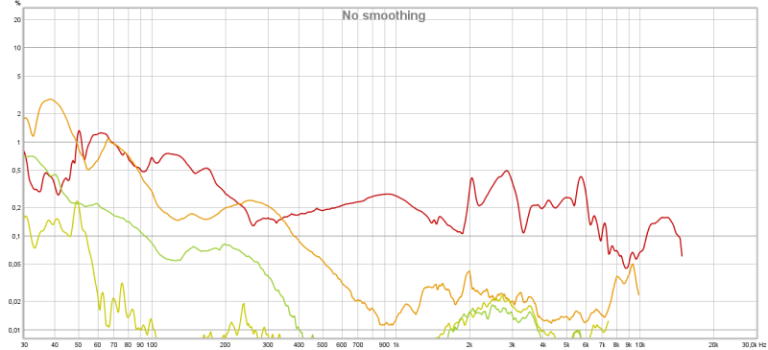
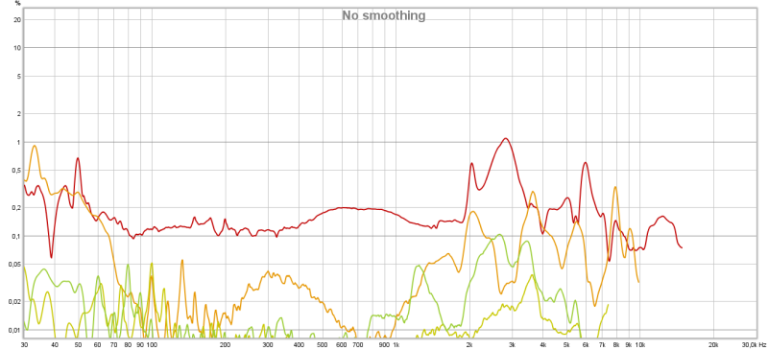
In the art of audio sound reproduction it is well-known that the dynamic loudspeaker is more nonlinear and generates more distortion than all the other system components combined. This is particularly true at low frequencies which require large cone excursions where the stiffness of both the inner spider and the outer surround increases rapidly as the cone approaches its peak displacement, resulting in a nonlinear suspension compliance generating high distortion.
For example, in a typical high fidelity sound system at a frequency of about 35 Hz the total harmonic distortion of the amplifier might be of the order of 0.01%, whereas the distortion of the loudspeaker might range from about 3.0% to about 50.0%, depending upon the loudness. If this cone motion can be sensed and given as a feed back to the earlier stage of the amplifier, this distortion can be reduced dramatically.
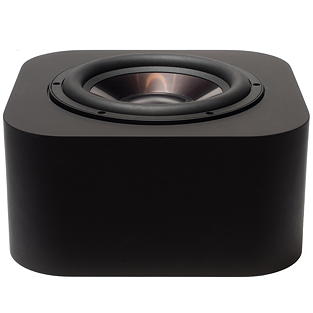
Motional Feedback (MFB) was a speaker system developed in the early 1970s by Philips Holland. It introduced a feedback system to the woofers of HiFi loudspeakers, enabling them to achieve a more extended low frequency response in a relatively small enclosure. The key benefits are a very controlled bass response. Any distortion induced by the enclosure or the woofer itself is immediately corrected by the feedback. These hand-built speakers were sounding very good and were quite expensive.
 www.circuitstoday.com
 www.mfbfreaks.nl
Aha! Separate solutions for it are sold! Maybe overkill for a beginner in DIY, but still:
 piratelogic.nl
In the art of audio sound reproduction it is well-known that the dynamic loudspeaker is more nonlinear and generates more distortion than all the other system components combined. This is particularly true at low frequencies which require large cone excursions where the stiffness of both the inner spider and the outer surround increases rapidly as the cone approaches its peak displacement, resulting in a nonlinear suspension compliance generating high distortion.
For example, in a typical high fidelity sound system at a frequency of about 35 Hz the total harmonic distortion of the amplifier might be of the order of 0.01%, whereas the distortion of the loudspeaker might range from about 3.0% to about 50.0%, depending upon the loudness. If this cone motion can be sensed and given as a feed back to the earlier stage of the amplifier, this distortion can be reduced dramatically.
Motional Feedback (MFB) was a speaker system developed in the early 1970s by Philips Holland. It introduced a feedback system to the woofers of HiFi loudspeakers, enabling them to achieve a more extended low frequency response in a relatively small enclosure. The key benefits are a very controlled bass response. Any distortion induced by the enclosure or the woofer itself is immediately corrected by the feedback. These hand-built speakers were sounding very good and were quite expensive.
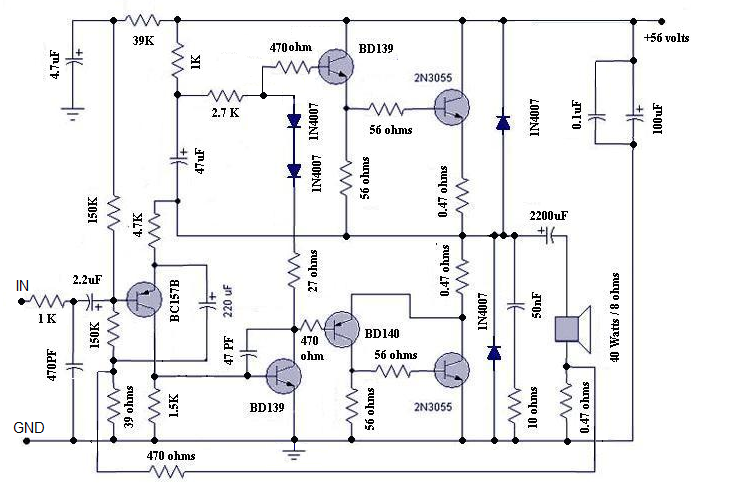
Motional feed back amplifier
This versatile amplifier circuit is designed and submitted by Mr Seetharaman Subramanian from Chennai . The full credit of this article goes to him and we are very proud to publish this fabulous circuit here. Seetharaman’s description about the circuit. This concept has appeared long back in...
www.circuitstoday.com
mfbfreaks.nl - mfbfreaks.nl - official site
Alles voor de echte mfbfreaks Check de service mogelijkheden en ons forum voor service en tips.
www.mfbfreaks.nl
Aha! Separate solutions for it are sold! Maybe overkill for a beginner in DIY, but still:
Motional Feedback Audio.
All things servo. StarBass drivers & accelerometers, loop electronics and cash & carry Little/One and Grown/Up sales via servolabs.nl
piratelogic.nl