hushin0917
Member
- Joined
- Aug 31, 2026
- Messages
- 18
- Likes
- 7
[Measurement & Comparison] Dolby Atmos LPCM Decoding Differences Across Multiple AoIP Processors and macOS
Ever since I integrated the Hyperion Axis16 into my setup, I noticed an intriguing phenomenon during system calibration and monitoring: Different hardware processors and operating systems output drastically different LPCM frequency responses and LFE digital levels when decoding the exact same Dolby Atmos bitstream.To verify this, I used a standardized test signal from Apple Music: DA&T (谷津音響)《Multi-channel Audio Test Signals Vol. 1》– LFE Channel Pink Noise
Test Signal & Calibration Context:The LFE track on this album was produced at 0dBFS (flat full-scale signal).In standard cinema calibration, the acoustic SPL of the subwoofer is already calibrated +10dB higher than the main speakers at the listening position. Therefore, at the digital decoding/LPCM level, the decoder's DSP must maintain a 1:1 flat output (0dB digital offset) across all channels. If a decoder applies an additional +10dB digital gain to a 0dBFS LFE signal, the final acoustic output will result in an erroneous +20dB boost.
Hardware Decoding Comparison & Graph Analysis
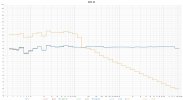
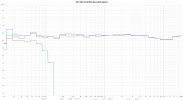
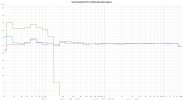
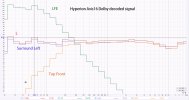
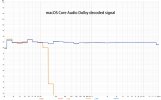
I captured the decoded LPCM measurement graphs from several setups receiving this Dolby Atmos bitstream (JBL SDP-58, StormAudio ISP Evo, Hyperion Axis16, and macOS Core Audio):The measurement curves reveal stark discrepancies in digital signal handling and frequency response accuracy:
- macOS Core Audio: The Only Accurate 1:1 Reference
- The decoded LFE digital signal aligns perfectly flat with all main channels (0dB Offset).
- This represents the only strictly correct digital decoding behavior in this test—delivering a pristine, uncolored LPCM output across the entire audible spectrum.
- JBL SDP-58: Attenuated LFE & High-Frequency Roll-Off
- Contrary to expectation, the decoded LFE digital signal on the JBL SDP-58 is actually lower than the main channels (digitally attenuated).
- Furthermore, the measurement graph reveals a noticeable high-frequency dip/roll-off above 10kHz across the main channels.
- Hyperion Axis16: Digital LFE Boost & High-Frequency Roll-Off
- The Axis16 incorrectly applies a +10dB digital gain offset on the LFE channel in the LPCM domain (leading to a +20dB total low-frequency overload on a calibrated system).
- Like the JBL, the Axis16 also exhibits a distinct high-frequency roll-off/dip starting around 10kHz.
- StormAudio ISP Evo: Digital LFE Boost (+10dB Offset)
- Similar to the Axis16, the StormAudio applies an extra +10dB digital gain to the 0dBFS LFE signal, resulting in low-frequency double-boosting.
- Crossover & Bass Management Variations:
- Beyond LFE gain offsets, the high-pass/low-pass filter cutoffs and roll-off slopes for the Height/Top Front and Surround channels differ significantly between brands, causing noticeable variations in overall bass integration.
Impact on Monitoring and Room Calibration
These digital decoding inconsistencies introduce severe calibration pitfalls and monitoring errors:- Calibration Trap: If an auto-EQ or manual alignment is performed using a processor that erroneously boosts or attenuates the digital LFE (like Axis16, StormAudio, or JBL), the room correction software will severely miscalculate subwoofer gain.
- Frequency Response Coloration: The 10kHz+ high-frequency attenuation observed on both the JBL SDP-58 and Axis16 means these decoders are not outputting a bit-perfect LPCM representation, which directly impacts treble airiness and detail during mixing or critical listening.
Attachments
Last edited: