• Welcome to ASR. There are many reviews of audio hardware and expert members to help answer your questions. Click here to have your audio equipment measured for free!

Mastering recordings on CDs

He's great yeah! I just wish he stopped using AI for his images, it feels lazy and doesn't fit with his great writing.
I've just reread the article on "hi-res" after so many years and it's as valid now as it was then. He also links to Monty's demolition. What a waste that has been, in so many ways!
 
I don't think the lack of dynamic range or loudness wars are hard to understand.

They're not. They've been discussed and explained and dissected ad nauseam.. For at least a decade now.

But no topic is ever so thoroughly covered that ASR won't wrassle with it some more.

Often revived by a new ASR poster who has so very much to learn, but seems to lack Google.
 
In the car, it's acceptable; on the street, on the subway, on a smartphone, it's acceptable; at home, it's unacceptable.
I've been in a restaurant barely aware of the sound system because of the din when a RHCP song cut through clearly. This is not my preferred way to listen to music!
 
Here is a visual using Pro-Q4 within foobar2000 in real time--using that plugin in expander mode that I posted a while back (watch the cursor movements closely):

I like that there is a visualization of what we are doing, it is very helpful.
 
upsampling (AuraEngine - Windows only)
The downside of this solution is the size of the music file, which increases five-fold.
By the way, the upsampling process works faster in my case, without GPU support.
Good app.
 
The downside of this solution is the size of the music file, which increases five-fold.
By the way, the upsampling process works faster in my case, without GPU support.
Good app.
Haven't tried that extra step yet but wouldn't highest-quality downsampling (+ dither) like with SoX (Sound eXchange) or SRC (Secret Rabbit Code) dBpoweramp/SSRC do the trick; as DR shouldn't change then?

Edit: Made a quick test and I'd say it suits it purpose. DR4 to DR6 (still poor) of Red Hot Chili Peppers' Californication. Data in the file names. Original FLAC -> AuraEngine 352.8k (30.0M Taps + HP) -> SSRC 44.1 kHz/16-bit (+ dither).

06. Californication_DR4.png -> 06. Californication [AE · 44.1k→352.8k · Kaiser 30M · f64 · HP]_DR6.png -> 06. Californication [foobar2000 · 352.8k→44.1k SSRC · 16-bit Dither]_DR6.png
 
Last edited:
Mastering recordings in 1989 was different. That's never going to happen again. ;)
Clipboard_09-04-2026_01.jpg
 
Mastering recordings in 1989 was different. That's never going to happen again. ;)
View attachment 556556
It could happen again, if people only knew - and would care enough! :D

ASR could make a change as we did under @amirm's guidance with regards to all that lovely gear that now defines our standards. Funny no, that even speakers got so good that right now the strongest weakness is our beloved music that we reproduce...

Btw. an absolute gem (80s!) is Roy Orbison - Black & White Night 30 (Blu-ray).
 
Haven't tried that extra step yet but wouldn't highest-quality downsampling (+ dither) like with SoX (Sound eXchange) or SRC (Secret Rabbit Code) dBpoweramp/SSRC do the trick; as DR shouldn't change then?

Edit: Made a quick test and I'd say it suits it purpose. DR4 to DR6 (still poor) of Red Hot Chili Peppers' Californication. Data in the file names. Original FLAC -> AuraEngine 352.8k (30.0M Taps + HP) -> SSRC 44.1 kHz/16-bit (+ dither).

View attachment 556603 -> View attachment 556604 -> View attachment 556605

If I understand correctly, this program isn't intended to change the dynamic range of the recording; its purpose is different. The change in dynamic range is minimal or nonexistent; it's a side effect.

Firstly, it aims to minimize clipping effects caused by excessive signal compression, as much as possible. Secondly, it aims to more accurately convert the digital signal to analog. It does what any DA decoder does, only in a much more precise and superior way.

That's how I understood it, but I'm not sure if I'm correct.
 
Amy Winehouse Back to Black (2009)
Track "Rehab"
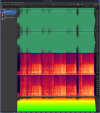
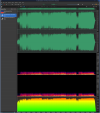
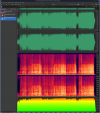
I lowered the RMS from -8.9 dB to -13.5 dB
I applied a high-pass filter to 20hz/-24 dB
I know what I did, but I don't know why the DR increased from DR5 to DR9.
Did I hear a difference? Yes, it's quieter now. Do I hear a difference in dynamics? Honestly? I don't. :)

View attachment 556224

View attachment 556225

Sorry to reply to my own post, but I'm still wondering.
What changed as a result of first lowering the RMS by 4.6 dB and then using a high-pass filter at 20 Hz with a -24 dB drop?
The recording's DR improved significantly.
A side effect is a reduction in the sound level around 20 Hz by about 6 dB.
The question is, is this audible? I rarely heard a difference, even when using a low-pass filter and very high gain. I think the highest gain is visible on the woofer cones, because it would be very difficult to hear.
By the way, I still wonder why such a high sound level is left in the recordings in the range up to 20 Hz. Most people can't hear this range; very few instruments are capable of producing sound in this range usable to humans. We end up with something that's useless to us, limits the dynamic range, and is actually harmful to the speakers.
Is there any purpose to this, or is it just sloppiness on the part of the mastering team?
Am I thinking correctly?
 
Am I thinking correctly?
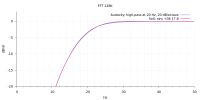
I don't think that's related to the amount of bass below 20 Hz, but rather to the fact that the high-pass filter is minimum phase. If you use SoX, then "sinc -t36 17.8" is comparable (at least in frequency magnitude response) to Audacity's high-pass:
fft.png
If you reduce Rehab's volume by 4.6 dB and then filter it with "sinc -t36 17.8", which is linear phase, and with "sinc -M -t36 17.8", which is minimum phase, you get:
Code:
Sample peak,          RMS
 -4.60 dBFS,  -13.46 dBFS - original
 -4.35 dBFS,  -13.46 dBFS - sinc -t36 17.8
 -0.43 dBFS,  -13.46 dBFS - sinc -M -t36 17.8
Linear phase increases peak by 0.25 dB and minimum phase by 4.17 dB.

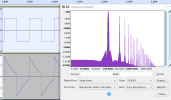
Or you can generate a "Square, no alias" in Audacity, 100 Hz, 0.5 amplitude and high-pass it at 20 Hz. The signal has no content below 100 Hz but the filter will change peaks significantly:
audacity.square.highpass.png
 
If I understand correctly, this program isn't intended to change the dynamic range of the recording; its purpose is different. The change in dynamic range is minimal or nonexistent; it's a side effect.

Firstly, it aims to minimize clipping effects caused by excessive signal compression, as much as possible. Secondly, it aims to more accurately convert the digital signal to analog. It does what any DA decoder does, only in a much more precise and superior way.

That's how I understood it, but I'm not sure if I'm correct.
Yes, it's just a side effect but does it matter? With none of the options available the lost information can be restored (this would require good remastering from fully intact source, like from analogue master tape), since DR compression is a destructive process when overdone.

Hence the aim is to render the poorly mastered content subjectively more pleasing, less fatiguing, i.e. less "shouty". This can be achieved with AuraEngine and depending on the settings and content available, quite effectively (Archimago's DR3 to DR9 example).

A combination of methods would be another option but also don't overdo it.
 
Rush - Xanandu

Streaming DR trace:
02 Xanadu Streaming - Dynamics Trace.jpg


Vinyl DR trace after de-clicking and de-crackling:
02 Xanadu Clean - Dynamics Trace.jpg

Pretty much identical...
 
  • Like
Reactions: 829
Clipboard_09-05-2026_01.jpg
Cruel Summer (Ace Of Base) > Aura Engiene
 
  • Like
Reactions: 829
Clipboard_09-06-2026_01.jpg


30M Taps, all DSP options: Enabled
Encoding speed for the entire disc: 22m11s.
The disc takes 56m24s.
Intel Ultra 7 GPU: OFF

Intel Ultra 7 GPU: ON (GPU integrated with the processor, shared memory)
Encoding speed for the first two recordings: 2:45
Intel Ultra 7 GPU: OFF
Encoding speed for the first two recordings: 3m20s.

There is a software error or insufficient system memory. With a larger number of files in the queue, and with the GPU enabled, the program displays an error after 4 or 5 files and stops working.
I think a modern graphics card should significantly speed up the entire process. The AI estimates 8x-10x faster with an RTX 5060-class graphics card at 30M Taps.

Out of curiosity, I listened to this album in its entirety. It's a very good album, with very good songs, melodic, catchy. I also remembered that I know more than one song, but I'd forgotten about it. :)
However, I don't like the sound design. The drummer mainly uses the snare drum, and when he uses the cymbals, they're terribly recorded. The vocalist sings as if he's singing through a telephone receiver.
The whole sound is flat, cardboard-like, and the stereo imaging is poor.
That's how it was designed.

 
Last edited:
  • Like
Reactions: 829
However, I don't like the sound design. The drummer mainly uses the snare drum, and when he uses the cymbals, they're terribly recorded. The vocalist sings as if he's singing through a telephone receiver.
The whole sound is flat, cardboard-like, and the stereo imaging is poor.
That's how it was designed.

Yes, that's how the album was mixed and mastered.
It's extremely processed in those two production steps, but it’s hard to say what the raw recorded tracks sounded like before they were destroyed during mixing and mastering. I would very much want to get hold of the multitracks of this recording, as I’m sure they sound pretty good. There’s no real reason to limit or compress the tracks that hard already at the recording stage of the production.

Every drum in the drum kit is heard, but they are so extremely dynamically limited that only the snare drum comes through sounding somewhat “full”, as it has strong energy in the midrange. The kick drum is almost completely stripped of the low-end frequencies, and the hi-hat and cymbals have a very limited frequency range.

As you say, the songs are really good, but the sound is flat and boring. I think this album very much deserves a more dynamic release, as the originally released CD I own is as limited as the 2014 remaster, which can be listened to on Tidal.
 
Last edited:
Yes, that's how the album was mixed and mastered.
It's extremely processed in those two production steps, but it’s hard to say what the raw recorded tracks sounded like before it was destroyed in the mixing and mastering stages. I would very much want to get hold of the multitracks of this recording, as I’m sure they sound pretty good. There’s no real reason to limit or compress the tracks that hard already at the recording stage of the production.

Every drum in the drum kit is heard, but they are so extremely dynamically limited that the snare drum comes through sounding somewhat “full” as it has strong energy in the midrange. The kick drum is almost completely striped of the low end frequencies, and the hi-hat and cymbals has a very limited frequently range.

As you say, the songs are really good, but the sound is flat and boring. I think this album very much deserves a more dynamic release, as the originally released CD I own is as limited as the remaster from 2014, which can be listen to on Tidal.
I don't think another mix has ever been made.
 
Aura Engine 30M Taps.
Without a fast graphics card, it takes a very long time. I need to buy a fast graphics card for music :) and a large-capacity drive. :)

Clipboard_09-06-2026_01.jpg
 
Back
Top Bottom