• Welcome to ASR. There are many reviews of audio hardware and expert members to help answer your questions. Click here to have your audio equipment measured for free!

Mastering recordings on CDs

Amy Winehouse Back to Black (2009)
Track "Rehab"
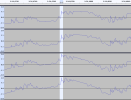
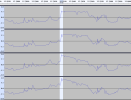
I lowered the RMS from -8.9 dB to -13.5 dB
I applied a high-pass filter to 20hz/-24 dB
I know what I did, but I don't know why the DR increased from DR5 to DR9.
Did I hear a difference? Yes, it's quieter now. Do I hear a difference in dynamics? Honestly? I don't. :)

a1.jpg


a2.jpg
 
Last edited:
Psytrance (psychedelic trance) is a subgenre of electronic dance music characterized by fast tempos (usually 135–150 BPM), hypnotic, steady 4x4 beats, and complex, layered synthetic sounds with a cosmic and "acidic" sound.
The main goal of psytrance is to induce an altered state of consciousness in the listener. This is achieved, among other things, through very loud mastering.
DJs playing live sets combine tracks from different producers. If a track were mixed more quietly (more dynamically), it would sound flat and lacking energy to the audience after transitioning from a louder track. Therefore, creators prefer to pump up the master to its limits to ensure their track stands out powerfully at the party. -AI
Up to 150? That's rookie psytrance! It can go over 200bpm, though personally it's not something I really like. The best do hover around 145-170bpm though.
And I don't agree that t sounds flat if dynamically mastered, though there are VERY few examples of this, the only one I know is Onkel Dunkel - Total Viking Power, it's mastered at around -11dB. Problem with that one is that it's lacking in treble, but I do have a custom EQ version I made on my drive at home which sounds excellent "despite" its unusual dynamic range.

But then there are other stuff with a bit more "normal" dynamic range which still sounds really good even if I don't think it would fare badly with a bit more dynamics.
 
Amy Winehouse Back to Black (2009)
Track "Rehab"
I lowered the RMS from -8.9 dB to -13.5 dB
I applied a high-pass filter to 20hz/-24 dB
I know what I did, but I don't know why the DR increased from DR5 to DR9.
Did I hear a difference? Yes, it's quieter now. Do I hear a difference in dynamics? Honestly? I don't. :)

View attachment 556224

View attachment 556225

The reason for the increase in DR is phase shifts.

We have discussed these things in other threads before when talking about why DR numbers can’t be trusted when it comes to measuring vinyl rips, for example. The phase shifts that occur when applying the usual vinyl preparations like high-pass filters, mono bass, and similar things change the waveform, which in turn increases the DR reading. For this reason, the same dynamically limited master used for the CD release may have also been used for the vinyl record, even though the DR number is way higher when measuring the vinyl rip.

This is something that makes a big difference for mastered tracks that have been severely dynamically limited, but if you do the same thing to a track that has its original dynamic range intact, it will most likely not be a significant increase in the DR numbers.
 
Last edited:
Amy Winehouse Back to Black (2009)
Track "Rehab"
I lowered the RMS from -8.9 dB to -13.5 dB
I applied a high-pass filter to 20hz/-24 dB
I know what I did, but I don't know why the DR increased from DR5 to DR9.
Reducing volume (here, by 4.6 dB) does not change the DR value of the original track, so it stays DR5.
Applying high-pass at 20 Hz doesn't change (much) the RMS, but it changes the shape of the waveform and therefore peaks. It this case rather extremely, by 4 dB (or maybe anywhere from 3 to 5 if we consider rounding). Here's the point with the highest peak after applying that HP:
1st.png
Code:
    dBFS
old -5.1 -5.2
new -0.4 -0.3

Here's the point with the 2nd highest peak after applying that HP:
2nd.png
Code:
    dBFS
old -4.9 -5.1
new -0.9 -1.2
 
Don't agree. It sold well despite the mastering not because of it.

I bought it when it came out since I'm a fan of RHCP since their first album. I didn't buy it because of the loud mastering, I didn't not buy it because of the loud mastering.

Which suggests that the mastering doesn't much matter to the consumer.

'Blood Sugar Sex Magic' has good dynamic range, the CD scoring 14/12/15 on the DR Database. It sold over 14 million copies (Californication - 17 million).

The follow up album to that - 'One Hot Minute' sold less than half as many copies. Why? Because musically it's just not remotely as good.

People are buying for the music, not the mastering, there's no sales advantage I can see for killing the dynamic range at least with this particular band.

Nor a disadvantage, apparently.
 
The fun continues
"Californication"
What I did:
In Adobe Audition, I lowered the volume by 3.6 dB.
I used the Bitter Sweet* plug-in.
DR4, after using the DR8 plug-in.
It plays quieter now, and the differences are borderline perceptible.
The final mastering isn't the problem.
That's simply how this song was conceived and mixed: vocals, snare drum, and guitar, all in the foreground.
Remastering won't change much.
A change would be made if a completely new mix of the individual elements was made, with a new idea for this song, but then it would be a completely different recording.

*
The Flux BitterSweet plug-in is a free dynamics processor, a Transient Designer, used to shape transients—the initial, rapid volume impulses in an audio signal.

a1.jpg


a2.jpg
 
Last edited:
You're totally missing the point... again. There is no denying that people love McDonald's. Others don't, and still go there...

So, if people love something, but don't think it's 'quality'......what does 'quality' mean? Would/should they like the 'quality' thing more?


In general, people don’t eat billions of Big Macs because McDonald’s represents the pinnacle of cooking. McDonald’s is successful because the product and the way it is presented are ruthlessly optimized for consumption: familiar, convenient, heavily marketed, and designed for immediate appeal. Californication is much the same. People liked the music for sure! But they were presented with it through massive promotion, radio exposure, and a deliberately loud, compressed, in-your-face master specifically designed to grab attention against everything around it (at least, back then).

So, yeah, in many ways, Californication is the fast food of music.

Are you trying to make some normative aesthetic point about sales volume, or about quality? Or even some moral point about them? (familiar, convenient, heavily marketed, and designed for immediate appeal: BAD unfamiliar, hard to find, niche: GOOD -- oh dear, it's Pitchfork circa 2007)

Seems you're saying if only, oh if only, the masses were instead massively fed deliberately wide dynamic range music that relies only on its musical qualities to grab attention, they wouldn't buy compressed shite like that RHCP album.

To quote Hemingway, it's pretty to think so, but I'm skeptical on several levels..

Because obviously: what a person believes the 'pinnacle' of anything to be, is a subjective choice they make.
Not one you make for them; nor can you assume they are simply brainwashed, and 'if only' they knew what real quality is, they'd agree with voodooless, and never buy/eat/tolerate or, perish the thought, enjoy or want or think that shite sounds good ever again.

For some that would be true, for others, not. Obviously.

Now to me, that RHCP album is shite because RHCP itself is shite*, their music is terrible, regardless of the DR.
I can only assert that, I can't prove that, nor would be so foolish as to claim oh, if only people could hear [insert band X] instead of RHCP, they'd clearly prefer 'X'.

What sorts of things can influence sales? Among them: aggressive marketing (diabolical!), herd behavior (uncool!), word of mouth (cool!), luck (blessed!) and that rather personally defined thing, 'quality' as in 'I like the way it sounds' (totally subjective!). I would no more waste my time arguing that embrace by the masses is a sure sign of quality than I would say it's a sure sign of lack of quality. Same goes for lack of sales.
Quality (subjective) and popularity (sales performance, objective) might intersect, might not. Why waste time on linking them?

Instead I'd go enjoy a Burger King cheeseburger. Not McDonald's, those are garbage.


* I am terribly disappointed that Nick Cave, who expressed an entirely correct and widely-quoted negative opinion about RHCP years ago, has more recently recanted and said he was just being provocative.

 
Last edited:
What sorts of things can influence sales? Among them: aggressive marketing (diabolical!), herd behavior (uncool!), word of mouth (cool!), luck (blessed!) and that rather personally defined thing, 'quality' as in 'I like the way it sounds' (totally subjective!).
There you have it! That’s the whole point I was trying to make with the analogy.
 
"The astonishing commercial success of "Californication" (over 15 million copies sold worldwide) stemmed from a perfect confluence of artistic, personal, and market circumstances at the turn of the millennium. Here are the key factors that contributed to the album's enormous sales: The return of John Frusciante: For many fans, this was a pivotal moment. After a tumultuous period and the guitarist's absence on the less-than-received album "One Hot Minute," his return to the band brought a new chemistry. Frusciante brought a unique sensitivity, spaciousness, and catchy, melodic riffs to the music. A shift to a more melodic style: The band deliberately abandoned aggressive, raw funk metal in favor of alternative rock based on strong melodies and pop accessibility. While the rhythm section (Flea and Chad Smith) retained a funk pulse, the songs became more atmospheric and song-driven, opening the door for mainstream radio play. Countless Massive Hits: Few albums in rock history have generated so many timeless singles. Tracks like "Scar Tissue" (Grammy Award-winning), "Otherside," and the title track "Californication" dominated charts worldwide and propelled album sales for months. Revolutionary Music Videos and the Era of MTV: The video for "Californication," styled after a 3D video game, became one of the most iconic and most-streamed music videos of its time. At a time when MTV had a massive influence on record purchases, the album's visual appeal significantly boosted its popularity. Rick Rubin's Production: The legendary producer helped the band tame the chaos by focusing on simplicity, clean song structures, and the emotional lyrical delivery of Anthony Kiedis. Lyrical Maturity: Kiedis, fresh off his recovery from addiction, wrote more reflective lyrics. The album touched on the dark side of Hollywood, the decline of the American dream, addictions and sarcasm towards globalization, which resonated strongly with the growing generation"

I remember this band thanks to the song "Californication," which I knew from the radio, where it was often played. It was very cool.
Today, when I have better listening equipment and have heard a bit more, I don't think this song was well recorded or mastered. Quite the opposite. :)
The mastering of the recordings is, objectively speaking, poor, but as you can see, it didn't hinder sales in any way.
The burgers aren't great either, but they sell very well.
 
Last edited:
So it's definitely true that we cannot know for sure if the loudness war compression strategy worked or not, but it does align with some principles we generally accept:

- highly compressed music is perceived as louder
- toole's research shows that an increase in volume increases listener preference (which is why all blind testing must be very scrupulously level-matched)

If we add to that the information about psytrance music above and we have, if not evidence, some strong suggestion that the strategy was effective*: If we're watching MTV or listening to the radio or a mixtape, it seems reasonable that (all else being equal) we're going to get more satisfaction from music that we perceive as louder than the other music around it. (of course "all else" can never be equal, so this can never be proven without controlled, large-scale blind testing.)

*for a while: eventually you hit the brick wall, the end of the road, the perfect rectangle, and the game is over
 
I don't think the lack of dynamic range or loudness wars are hard to understand.

Firstly, per @RexrothPigeon 's comment, louder sounds better. Loudness wars originated AFAIK because on the radio or in streaming mixes, the louder song sounds better next to the quieter (but more dynamic) one.

Also, high dynamic range recordings don't work well in situations with a lot of background noise, or on systems that don't have a lot of dynamic capability. And guess what, that describes a very large chunk of consumer music listening.

As for why people buy poorly mastered recordings... well, if that's what is available and you like the artist, you just buy it.

Even among this crowd, I think it's not very common for us to avoid listening to an album we like simply because the mastering is bad. Some of us apply DSP, some of us just grit our teeth, but the music is the music.

Now take that, and imagine you don't even know what dynamic range is, and you can see how bad masters face few obstacles to commercial success.
 
- highly compressed music is perceived as louder
- toole's research shows that an increase in volume increases listener preference (which is why all blind testing must be very scrupulously level-matched)

However, that only applies in a fixed volume situation, where you are listening to music either compressed, or not, in sequence without adjusting the volume**. If we are listening with the option of turning the volume up when (say) listening to an uncompressed album to achieve the same volume then I think it is generally accepted that the less compressed music with the increased dynamics will sound better.

**This situation - typically for example radio listening - is where loudness wars became necessary. If your track is less compressed than the competition then it is going to be perceived as not as good - when played back to back with the competition. This does not mean that reduced dynamic range is preferred - only that the higher volume is.

EDIT: Ninjad by @kemmler3D
 
"The astonishing commercial success of "Californication" (over 15 million copies sold worldwide) stemmed from a perfect confluence of artistic, personal, and market circumstances at the turn of the millennium. Here are the key factors that contributed to the album's enormous sales: The return of John Frusciante: For many fans, this was a pivotal moment. After a tumultuous period and the guitarist's absence on the less-than-received album "One Hot Minute," his return to the band brought a new chemistry. Frusciante brought a unique sensitivity, spaciousness, and catchy, melodic riffs to the music. A shift to a more melodic style: The band deliberately abandoned aggressive, raw funk metal in favor of alternative rock based on strong melodies and pop accessibility. While the rhythm section (Flea and Chad Smith) retained a funk pulse, the songs became more atmospheric and song-driven, opening the door for mainstream radio play. Countless Massive Hits: Few albums in rock history have generated so many timeless singles. Tracks like "Scar Tissue" (Grammy Award-winning), "Otherside," and the title track "Californication" dominated charts worldwide and propelled album sales for months. Revolutionary Music Videos and the Era of MTV: The video for "Californication," styled after a 3D video game, became one of the most iconic and most-streamed music videos of its time. At a time when MTV had a massive influence on record purchases, the album's visual appeal significantly boosted its popularity. Rick Rubin's Production: The legendary producer helped the band tame the chaos by focusing on simplicity, clean song structures, and the emotional lyrical delivery of Anthony Kiedis. Lyrical Maturity: Kiedis, fresh off his recovery from addiction, wrote more reflective lyrics. The album touched on the dark side of Hollywood, the decline of the American dream, addictions and sarcasm towards globalization, which resonated strongly with the growing generation"

I remember this band thanks to the song "Californication," which I knew from the radio, where it was often played. It was very cool.
Today, when I have better listening equipment and have heard a bit more, I don't think this song was well recorded or mastered. Quite the opposite. :)
The mastering of the recordings is, objectively speaking, poor, but as you can see, it didn't hinder sales in any way.
The burgers aren't great either, but they sell very well.
Sales often don't mean a lot.
 
**This situation - typically for example radio listening - is where loudness wars became necessary. If your track is less compressed than the competition then it is going to be perceived as not as good - when played back to back with the competition. This does not mean that reduced dynamic range is preferred - only that the higher volume is.
Yes, this is why I gave the particular use-cases of mtv, radio, and mixtapes, for which listeners are unlikely to be riding the volume knob from track to track--or at least are unlikely to want to do so.
 
YES - 90125

Comparison, the late 1980s/early 1990s edition and the 2004 edition (Expanded Deluxe Version)
For comparison purposes, the bonus tracks on the Deluxe edition have been omitted.

This is an old album.
The argument that the 2004 edition was compressed because uncompressed recordings elsewhere would sound worse on the radio is irrelevant.
The publisher assumed that this version would sound better to the customer who purchased it. It was simply assumed that what plays louder, with a smaller dynamic range, sounds better.
Is this a valid assumption? I'm afraid it's a valid assumption. For most listeners, louder usually means better sound. Only when they can compare both versions, have slightly better audio equipment, and listen carefully, will they understand and hear the difference.

Clipboard_09-04-2026_01.jpg
 
Last edited:
This is an old CD, over 27 years old. Is this good mastering?
The album sold an estimated 15 million copies, so it's likely that people liked this mastering.
Many, many albums have this final mastering. Is this good mastering?

View attachment 555953
No, it's horrible mastering. Thank god the vinyl mastering exists, and that's only because they can't push the levels so hard in this format due to the technical limitations of the Vinyl medium.
View attachment 555954

Indeed, most of the Masterings on digital media have an extremely high level of loudness because they all are afraid of "losing to the competence" so they all believe that in order to be "competitive" you have to play their game too: how loud and compressed can I make this sh*t?

Vinyl, on the other hand, has technical limitations as I said, this forces engineers to decrease the limiter levels of their masterings. This is also another reason of why people wrongly feels that "Vinyl sounds better", thinking that the medium is "more musical", but most of them ignore the reality: it's simply because Vinyl has the best Masterings. CD's and digital streaming platforms could have these masterings too if they just decided to use the same vinyl mastering.....
I found the most complete and objective information an this topic over the years on Archimago's Musings.

As per why Vinyl rips often have a higher DR:
"[...] And when it comes to vinyl, IMO, just because a vinyl rip has higher DR does not mean that it must have originated from a superior master that was any less compressed. [...]" Read the explanation following the link provided above.

What has been removed from tracks irreversibly by excessive DR compression cannot be restored from these same sources. But there are a few ways to make highly DR compressed tracks sound subjectively better (= a lot less fatiguing), like (he's even using Red Hot Chili Peppers as example):
So basically de-clipping (as shown by others in this thread), upsampling (AuraEngine - Windows only; *extra step see here) and using multichannel mixes (where available) are some of the options we have, in cases where no good remastering got released from intact source (like in this example).

And don't focus on "HiRes" content incl. SACD - it really doesn't make things better!
 
Last edited:
I found the most complete and objective information an this topic over the years on Archimago's Musings.

As per why Vinyl rips often have a higher DR:


What has been removed from tracks irreversibly by excessive DR compression cannot be restored from these same sources. But there are a few ways to make highly DR compressed tracks sound subjectively better (= a lot less fatiguing), like (he's even using Red Hot Chili Peppers as example):
So basically de-clipping (as shown by others in this thread), upsampling (AuraEngine - Windows only) and using multichannel mixes (where available) are some of the options we have, in cases where no good remastering got released from intact source (like in this example).

And don't focus on "HiRes" content incl. SACD - it really doesn't make things better!
To anyone who doesn't already know it, Archimago's Musings has been one of the best audio-related sites for many years.
 
DIY Dynamic Decompression of Music TracksI lowered the RMS from -8.9 dB to -13.5 dB
I applied a high-pass filter to 20hz/-24 dB
I know what I did, but I don't know why the DR increased from DR5 to DR9.
Did I hear a difference? Yes, it's quieter now. Do I hear a difference in dynamics? Honestly? I don't. :)
The low pass filter you applied at 20 Hz reduces the infrasonic rumble (a constant droning noise-like spectrum). Remember my comment above that the TT Offline Meter (crest factor) measures mostly bass dynamic range. If you remove the lower frequency rumble that you can see is higher amplitude, what remains is only the more impulsive bass of the bass drum and (perhaps) thumb-hammered bass of the electric bass. The crest factor therefore is reading a larger dynamic range at bass frequencies.

If you want to hear increased dynamic range at higher frequencies, recall that I mentioned the use of FabFilter Pro-Q4 in its expander role. This plugin actually can raise the dynamic range of music tracks, as you might wish to hear. This plugin can be downloaded for a 30-day trial from that link without cost. It can be used within Audacity--or foobar2000 using the VST plugin add-on component within foobar.

Here is a visual using Pro-Q4 within foobar2000 in real time--using that plugin in expander mode that I posted a while back (watch the cursor movements closely):


and a short tutorial comparing Pro-MB (compressor-expander) to its main competitor--Waves C-series plugin:


I recommend playing with the upwards compressor-expander plugin of your choice.

I might also recommend trying another music track than the one you picked (Amy Winehouse's Rehab) since that track has been processed so heavily to sound "constant loudness". The version of that track on YT has a dynamic range of 6 dB and a loudness well over -10 dB--even without apparent clipping, i.e., track is basically trashed.

Chris
 
Last edited:
Back
Top Bottom