• Welcome to ASR. There are many reviews of audio hardware and expert members to help answer your questions. Click here to have your audio equipment measured for free!

Magnepan LRS Speaker Review

I believe a dipole has the opposite behavior regarding SBIR against the front (behind the speaker) wall, because its rear-facing wave leaves the speaker having inverted amplitude from the front wave.
For example, consider a speaker 3' away from the front wall. It travels 6 feet going back, reflecting forward. That's a full wavelength of about 175 Hz. With a conventional speaker this strengthens 175 Hz, making a peak. With a dipole it weakens 175 Hz, making a dip. This may be a factor contributing to Amir's in-room measurements where the speakers had reverse swings at the same frequencies.

Based Amir's spindata into CAD animation toggles summing two LRS sharing exactly same position and polarity verse add longer Z distance of 1829mm to one of them verse also including inverted polarity..
MRC01_x1x1x1_2000mS.gif
 
Last edited:
Thanks feedback on comparison and send a LRS sample in for Amir's anechoic acoustic analyze @sm5.

May i give my view on these test stuff situations, say for non omni transducer in mono and remember it was mono then dont expect directivity disapearance where the actual sound stage comes from in there is no optimized equal stereo triangle to offer the dreaming illusion and get acoustic sources kind of disapear with closed eyes where also physical walls disapear, in mono there can be huge 3d and depth if speaker system is good plus not too much excess phase (non minimum phase) from the upstream chains and with eyes closed to hide that the physical walls will not distort depth into recording room of track material, but in mono pin point where sound comes from nearfield or farfield is very easy and probably feels like a tiny little spot in space compared to the small room/studio size up to concert halls of the recorded material.

For test where LRS made you sense 4 actual vocal tracks and B1 didn't suggest recheck that part also into head phones because if headphones sounds like B1 there then its a effect from LRS and no one would get to hear it that way on other systems.
 
@amirm Since your first panel review was so satisfying are you committed to publishing one panel review per month for the next 6 months?

I've stayed out of this deliberately. I wish I had commented weeks ago when I saw that speakers were on the list, I cringed and thought to myself Magnepans would be first with Martin Logans and Quads not far behind. When my father retired I bought him small Maggies and an NAD receiver and never had any issues. I suggest that folks simply give the old uh huh and move on.
 
Great review, thanks. These are highly recommended by many reviewers online.
Strange how can bad measure electronics sounds good to people.
 
Great review, thanks. These are highly recommended by many reviewers online.
Strange how can bad measure electronics sounds good to people.
I have heard a decent number of speakers that measure poorly, and most sounded fine. However, if all else equal, why not get the better measuring speakers?
 
As I just explained, the AP is easier since it is always connected to my workstation. But yes, I will see if I can modify the setup for the future to run REW.

Usually I run REW using my laptop but lugging that up to the listening room has been a hassle.

Thank you for this and I hope to see these more in the future! Room modes and first reflections are a mess, but RTA type noise measuement with moving mic by hand is actually very easy and suprisingly "reliable" ie. repeatable. Just keep distance to walls from speaker and your seated position constant!

https://www.audiosciencereview.com/forum/index.php?threads/rew-moving-microphone-method-help.12641/
http://www.ohl.to/audio/downloads/MMM-moving-mic-measurement.pdf
https://www.diyaudio.com/forums/multi-way/262246-moving-mic-measurement.html
 
Last edited:
Random listening comparison test of LRS and Emotiva B1+ speakers: (& Dirac on two separate speakers)
Since I still only have one Magnepan LRS panel, I hooked it up right after this review up curious to listen to stuff in mono without room correction to see if perhaps I was nuts thinking that I was wrong about the magnepans?
Didn't get it set up exactly figuring it wouldn't matter much in Mono. Not going to lie: it sounded pretty bad! So bad that I bought some Emotiva B1+ speakers thinking maybe I'd replace the LRS's with them and save some money :p

The Emotivas came in the mail and they feel quite heavy duty ... nicer quality build than the JBL 306mkii's I had! Hooked them up and since they are passive ... no hiss! So I ran Dirac + hooked them up to my dual subs. I noticed instantly with or without dirac that I'd have problems trying to mix vocal range material on them as the midrange was sort of there but not easy to discern. I had the same problem with Adam A7x's in the past to be honest though which is why I quit using them.

I hooked up one B1+ on my left and my single Magnepan LRS on the right. (Using a Purifi Amp) (Each with their own separate subwoofer as I'd always use subs anyways)
#1 : I didn't angle the Magnepans properly the first time ... just a couple of inches off made the treble go way down! So yes: they are really sensitive to angles!
#2 : Without any room correction or using subs: the Emotiva's sound much better! I can actually hear the bass parts! The Magnepan sounds 'taller' though as it's essentially sound coming at me from 2' below and 2' above my ears but it has barely any low end and lacks the bright highs of the Emotiva. I can barely hear any bass or kicks. It's pretty boring/bland. Voices do sound closer to what someone speaking to you normally would sound like though vs the Emotiva where it sounds like it's a voice coming from a speaker/tiny if that makes sense.

#3 With Dirac & Two Subwoofers:
I ran Dirac unsure of how it would handle two completely different types of speakers: It actually worked pretty well! I have them on each side of my 4' wide desk as nearfield mixing speakers about 4-5' from my head. For general listening it's not too bad with the two completely different types of speakers but obviously I wouldn't trust mixing on them. The strange thing is adding the LRS sounded better than having two matched Emotiva speakers ... I didn't expect that.

So with them both calibrated with a SPL meter equal distance to my ears and using keyboard shortcuts to switch from speaker to speaker it's pretty easy to tell the difference.

The Emotiva sounds like ... a small speaker. If you shut your eyes you know it's coming from a speaker and you'd be able to guess it's coming from a small speaker: even with the sub. The Magnepan + the subwoofer sounds like a wall of awesome sound at my nearfield distance.
The bass is actually better on the LRS now. The Emotiva will distort or just get more compressed sounding in the midrange/bass at louder volumes but the LRS stays clear. Voices and Midrange are much better on the LRS side also. Admittedly there are some things the Emotiva does that the LRS doesn't. The Emotiva does have a bit more in the super high frequencies though. (Though I suppose with the more expensive Magnepans they have real ribbon tweeters ... for example the Mini Magnepans I once had definitely had way better highs than the LRS)
It's like some things do sound a bit clearer on the Emotiva's due to the high end ... but it's mostly things that probably get fatiguing after a while anyways like the top end of a cymbal crash or things that many people can't actually hear above 16khz.

One thing that is important for me is the midrange for mixing. One example is on a certain song ... on the Emotiva's things sort of blur together - a chorus sounds like one voice coming from a small speaker. The LRS's on the other hand, the voice not only sounds more natural but I can tell that there's 4 actual vocal tracks that add up to one single chorus line.

I then used Equilibrium and EQ'd full tracks as if I was mastering a song & I do it on one speaker and then the other to see if I'd do it the same. For the most part it's pretty close: essentially showing that even with the different presentation of either speaker: I'd still make pretty close to the same EQ decisions which is good.

If you have no subs and no Dirac: don't get the LRS! As far as the Emotiva ... I'd personally probably rather get another pair of JBL's in the future if going that route ... at least as someone who mixes. If just listening for fun the Emotiva's are fine for the price. I have mixed on NS10's and Genelecs in the past at other studios long ago and personally never liked them. ProAc and big PMC mastering speakers weren't really my thing either. I do prefer mixing on full range Electrostatic speakers more than Magnepans though. I also like B&W 802d's whenever I've heard them. - so take that into consideration for my tastes.

Thanks for sending it in, and as someone with subs and Dirac, this is good to hear.
 
I think lack of phase in the computation of early window reflection sum must be the problem for dipole speakers.


I get flat phase from the dipole 'stat panels at the listening position, sometimes all the way down to the crossover area (180Hz) to the woofer

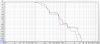
EQ and No EQ phase at 1/48 smoothing at 10 feet

No "windowing" to flatten things out.


1601385631559.png


JBL - won't fit the window unwrapped

1601386025321.png
 
Last edited:
@amirm Since your first panel review was so satisfying are you committed to publishing one panel review per month for the next 6 months?

Just thought I remind you that despite all the sniping, questioning of methods and other stuff we only do it because we care about sound, and because you alone are providing us with such measures in the first place. So don't forget many of us are highly appreciative of your efforts. (and jealous of your gardening bounty :)).

I think you should do a modern Quad next. Then we can disbelieve the results wondering if the segmented rings having delay are measured correctly by the Klippel or not. ;)

If you thought DACs, and amps and stuff could get people sideways, you should have known a panel speaker which many love that measures almost off the bottom of the scale would get some pushback. Everyone who owns a small Maggie has to look at this and think, "no way, what BS is this!"
VERY WELL SAID! And, as a multiple Maggie owner, including a pair of MMGs in storage, I agree completely!!! LOL

I was VERY EAGERLY anticipating a Maggie review and, frankly, was not surprised - nor offended or my dignity challenged - by the results.

Keep up the good work!
 
maybe the robot should hit the road and measure some big, 'non-shippable' speakers?
 
No need for the robot to hit the road. Members here can measure them at the listener position with a calibrated mic and REW, and post results.
Some already have.
 
maybe the robot should hit the road and measure some big, 'non-shippable' speakers?
I asked early on if Amir could fit it into the camper van, if it would work, and if he could do traveling speaker measurements with the Klippel.
 
Who’s gonna be the one to send in a Wilson WAMM Chronosonic? I’ll chip in $100 toward the return shipping cost!
 
@sm5, @richard12511, @amirm plus other interested LRS owners, have done some observations in CAD software for Amir's nice acoustic analyze of LRS panel that normal happen in verticals for point sources when woofer plus tweeter is stacked upon each other, but for LRS panel stacked woofer line sources sits side by side to stacked tweeter line sources, so are they time and directivity alligned on a flat panel in horizontal plane, thanks :)..

Now Amir has decoded panels acoustic performance and it show highly directive system in both the vertical and horizontal plane then one could imagine get the red cross optimized for ear height at listening position will help to optimal performance, from Amir's description it sounded as some little rings on the stand could adjust the vertical plane to get the right directive ear height at listening position from the red cross, good enough then Amir played something with bass and it was as if the speaker was drowned under water again and told it wasn't just absence of deep bass but rather quietness on top of that, now look the next animation..

sm5_0a.png


Crossover region is 1kHz so the hor/ver radars at right side is set to that frequency, when panel is physical rotated -30 relative to ear at listening position 1kHz lobe which is center for crossover region optimize to be pointing strait at listeners ears and for all curves into listening window (lower plot left side) they seems to clear up or unite, looks nice on paper graphs and think should be researched if it works as good in listening tests now that system is so directive as it is. If that rotation falls out to work good then if panels comes as mirrors each other then the other panel should be rotated +30º (upper most right example) and in system is very directive it can make a difference relative to corners or sidewalls which panel is used for whatever left/right side provided they came as mirrors, now if all this rotation stuff works improve subjective performance have some EQ suggestions to try out because system response and tonality did go a bit worse after rotation..

sm5_1_x1x3_600mS.gif


Animation toggles non rotate, verse rotate -30º, verse rotate -30º plus EQ corrected suggestion that forms a low end stopband Linkwitz Riley 4th order @60Hz so if a subwoofer is also present try set it to same number, should EQ suggestion sound bright or dull suggest use a very broad high shelve such as for example Q=0,3 @400-600Hz and dial in small +/- steps to tame tonality to sound natural, sensitivity land around 81dB but be aware as one can see in the filter curve that in 120Hz area there is some 4dB boost so whenever LRS panel will bottom out there is not to know in a synthetic model..

sm5_2_x1x1x3_1000mS.gif


Polars and animation toggles same as above in non rotated, verse rotated -30º, verse rotated -30º plus EQ corrected suggestion..

sm5_3_x1x1x3_1000mS.gif


Radar for verticals and animation toggles same as above in non rotated, verse rotated -30º, verse rotated -30º plus EQ corrected suggestion..

sm5_4_x1x1x3_1000mS.gif


Radar for horizontals and animation toggles same as above in non rotated, verse rotated -30º, verse rotated -30º plus EQ corrected suggestion..

sm5_5_x1x1x3_1000mS.gif


EQ correction used above for LRS panel and as told should EQ suggestion sound bright or dull suggest use a very broad high shelve such as for example Q=0,3 @400-600Hz and dial in small +/- steps to tame tonality to sound natural, sensitivity land around 81dB but be aware as one can see in the filter curve that in 120Hz area there is some 4dB boost so whenever LRS panel will bottom out there is not to know in a synthetic model, also low end stopband is set to form a Linkwitz Riley 4th order @60Hz slope and if that don't suit ones situation one can then transfer to whatever other roll off slope within reason, and BTW use only this EQ suggestion in combination panels are rotated 30º else if not rotated filter settings are way off for LRS non linear response, also for all modeled and calculated this case is LRS as anechoic acoustics so whatever local room nasties they should be handled and extracted as usual, well :) or not..

sm5_6.png
 
Last edited:
@sm5, @richard12511, @amirm plus other interested LRS owners, have done some observations in CAD software for Amir's nice acoustic analyze of LRS panel that normal happen in verticals for point sources when woofer plus tweeter is stacked upon each other, but for LRS panel stacked woofer line sources sits side by side to stacked tweeter line sources, so are they time and directivity alligned on a flat panel in horizontal plane, thanks :)..

Now Amir has decoded panels acoustic performance and it show highly directive system in both the vertical and horizontal plane then one could imagine get the red cross optimized for ear height at listening position will help to optimal performance, from Amir's description it sounded as some little rings on the stand could adjust the vertical plane to get the right ear height at listening position from the red cross, good enough then Amir played something with bass and it was as if the speaker was drowned under water again and told it wasn't just absence of deep bass but rather quietness on top of that, now look the next animation..

View attachment 85585


Crossover region is 1kHz so the hor/ver radars at right side is set to that frequency, when panel is physical rotated -30 relative to ear at listening position 1kHz lobe which is center for crossover region optimize to be pointing strait at listeners ears and for all curves into listening window (lower plot left side) they seems to clear up or unite, looks nice on paper graphs and think should be researched if it works as good in listening tests now that system is so directive as it is. If that rotation falls out to work good then if panels comes as mirrors each other then the other panel should be rotated +30º (upper most right example) and in system is very directive it can make a difference relative to corners or sidewalls which panel is used for whatever left/right side provided they came as mirrors, now if all this rotation stuff works improve subjective performance have some EQ suggestions to try out because system response and tonality did go a bit worse after rotation..

View attachment 85589


Animation toggles non rotate, verse rotate -30º, verse rotate -30º plus EQ corrected suggestion that forms a low end stopband Linkwitz Riley 4th order @60Hz so if a subwoofer is also present try set it to same number, should EQ suggestion sound bright or dull suggest use a very broad high shelve such as for example Q=0,3 @400-600Hz and dial in small +/- steps to tame tonality to sound natural, sensitivity land around 81dB but be aware as one can see in the filter curve that in 120Hz area there is some 4dB boost so whenever LRS panel will bottom out there is not to know in a synthetic model..

View attachment 85594


Polars and animation toggles same as above in non rotated, verse rotated -30º, verse rotated -30º plus EQ corrected suggestion..

View attachment 85597


Radar for verticals and animation toggles same as above in non rotated, verse rotated -30º, verse rotated -30º plus EQ corrected suggestion..

View attachment 85598


Radar for horizontals and animation toggles same as above in non rotated, verse rotated -30º, verse rotated -30º plus EQ corrected suggestion..

View attachment 85599


EQ correction used above for LRS panel and as told should EQ suggestion sound bright or dull suggest use a very broad high shelve such as for example Q=0,3 @400-600Hz and dial in small +/- steps to tame tonality to sound natural, sensitivity land around 81dB but be aware as one can see in the filter curve that in 120Hz area there is some 4dB boost so whenever LRS panel will bottom out there is not to know in a synthetic model, also low end stopband is set to form a Linkwitz Riley 4th order @60Hz slope and if that don't suit ones situation one can then transfer to whatever other roll slope within reason, and BTW use only this EQ suggestion in combination panels are rotated 30º else if not rotaded filter settings are way off for LRS non linear response, also all case is LRS anechoic so whatever local room nasties should be handled as usual or not..

View attachment 85600
Good work!
 
Seriously, you could only correct for one ear with that pattern.
 
One ear of one person at a time. The other ear, not so much.
 
Back
Top Bottom