
-
Welcome to ASR. There are many reviews of audio hardware and expert members to help answer your questions. Click here to have your audio equipment measured for free!
- Forums
- Audio, Audio, Audio!
- Amplifiers, Phono preamp, and Analog Audio Review
- Turntables, Phono Amplifier, Cartridges Review
You are using an out of date browser. It may not display this or other websites correctly.
You should upgrade or use an alternative browser.
You should upgrade or use an alternative browser.
Looking for a cartridge recommendation!
- Thread starter MMJ
- Start date


- Joined
- Mar 30, 2019
- Messages
- 1,338
- Likes
- 2,441
Never put a $650 phono cartridge ona $400 turntable. Beyond the point of diminishing returns. Recommend the AT-VM95 cartridge line.
Fixed it for you

- Joined
- Mar 30, 2019
- Messages
- 1,338
- Likes
- 2,441
Forgot to mention that I have access to around 150pF with 47kOhm and no way of changing it.
Since you probably have around 220-250pF total (including your phono cable) you probably want the aforementioned AT-VM95 as long as your tonearm is a good match and can handle something akin to a medium-medium-minus compliance cartridge. In 1982 --I mean 2026-- you should not be using an elliptical stylus and ML ones are the best made today. Many of the more expensive AT cartridges require less capacitance so they won't be optimized in your system. There is almost no information at 15kHz and above so you don't need a better frequency response (or a more expensive cartridge) than this below.

antcollinet
Grand Contributor
Get a VM95ML cartridge and a Parks Audio waxwing phone stage instead. About the same money - but the phone stage will povide vastly more benefits than the minor improvements from a more expensive cartridge.Since I will be selling a bunch of Ortofon Concordes, what would everyone here recommend to get as a replacement? Looking for a cartridge around 650 USD, putting it on an AT-LP120x with 150pF and 47kOhm.
Thanks all!
- Thread Starter
- #8
What do you think about the nagaoka mp500 with my existing setup? Lp120x with the Fosi X5. Worth to extend the budget? (on sale where I live with a large discount)Since you probably have around 220-250pF total (including your phono cable) you probably want the aforementioned AT-VM95 as long as your tonearm is a good match and can handle something akin to a medium-medium-minus compliance cartridge. In 1982 --I mean 2026-- you should not be using an elliptical stylus and ML ones are the best made today. Many of the more expensive AT cartridges require less capacitance so they won't be optimized in your system. There is almost no information at 15kHz and above so you don't need a better frequency response (or a more expensive cartridge) than this below.
View attachment 553940

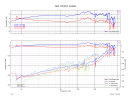
If you can solder loading plugs I would still suggest the AT745xML. Below is sweep with the Ortofon test LP (adjusted for its flaw).What do you think about the nagaoka mp500 with my existing setup? Lp120x with the Fosi X5. Worth to extend the budget? (on sale where I live with a large discount)
Subwaffler
Member
- Joined
- Nov 27, 2024
- Messages
- 22
- Likes
- 16
I wouldn't put anything more fancy than an ATVM95E on an ATLP-120.
- Thread Starter
- #11
Thank you everyone, went with the 95ML!Since I will be selling a bunch of Ortofon Concordes
Thanks all!
antcollinet
Grand Contributor
Good choice. One of the best value cartridges on the market.Thank you everyone, went with the 95ML!

How do you do the adjustment? It wold be nice yo save the clear audio and JVC recordIf you can solder loading plugs I would still suggest the AT745xML. Below is sweep with the Ortofon test LP (adjusted for its flaw).
View attachment 553964
It's JPs correction, which is the correct one (my first one was not, even if it looked good).How do you do the adjustment? It wold be nice yo save the clear audio and JVC record
If you record flat use the following in Audacity's Nyquist prompt, it corrects for the error in time constants when it was cut:
(biquad-m *track* 0.73137993061956 -0.39063797071820 -0.27569578143734 1.0 -0.59106473412185 -0.39977762693709)
However, If it is recorded with RIAA, you need to reverse it to flat before you do the above one. So these ones needs to be done before the above:
(setf *track* (biquad-m *track* 7.9682567668766300E+00 -5.2724672933908900E+00 -1.4469430767688700E+00 1.0000000000000000E+00 3.6557310000000000E-01 1.4996620000000000E-02))
(biquad-m *track* 1.10057904093330000E+00 -6.65301031771105000E-01 -4.30266896696176000E-01 1.00000000000000000E+00 -5.75527420000000000E-01 -3.79604780000000000E-01)
That the problem Audacity add ins do not work on my pc, it did before , but not this pc
Edit , not a problem I asked Claude to make a script
@Thomas_A
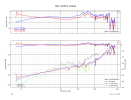
Not sur how correct it is but this is what Claude gave me. Blue Ortofon sweep, red =after biquad processing, The cartridge is AT33PTGii, is has a droop below 10khz, but I am sot sure if it should be so pronounced all the way from 1000 hz.. Just some random Ortfon sweep I had.
Is the Bi-quad to correct it to JVC TRS-1007 or CA TRS-1007?. I have some recent JCV sweeps I can check with too
2200hz as reference


Edit , not a problem I asked Claude to make a script
#!/usr/bin/env python3
"""
Apply a biquad IIR filter to a WAV file (e.g. for sweep-test equalization).
Biquad coefficients follow the standard form:
b0, b1, b2, a0, a1, a2
as used in SoX-style "biquad" definitions.
Spyder usage:
Just set INPUT_WAV and OUTPUT_WAV below, then hit Run (F5).
"""
import numpy as np
from scipy.io import wavfile
from scipy.signal import lfilter
# --- Your biquad coefficients ---
# biquad-m track b0 b1 b2 a0 a1 a2
B0 = 0.73137993061956
B1 = -0.39063797071820
B2 = -0.27569578143734
A0 = 1.0
A1 = -0.59106473412185
A2 = -0.39977762693709
b = [B0, B1, B2]
a = [A0, A1, A2]
# --- Set your file names here (must be in the same folder as this script) ---
INPUT_WAV = "sweep.wav"
OUTPUT_WAV = "sweep_eq.wav"
def apply_biquad(in_path: str, out_path: str):
rate, data = wavfile.read(in_path)
orig_dtype = data.dtype
is_int = np.issubdtype(orig_dtype, np.integer)
# Work in float64 for filtering precision
if is_int:
max_val = np.iinfo(orig_dtype).max
x = data.astype(np.float64) / max_val
else:
x = data.astype(np.float64)
max_val = 1.0
# Handle mono vs multi-channel
if x.ndim == 1:
y = lfilter(b, a, x)
else:
y = np.zeros_like(x)
for ch in range(x.shape[1]):
y[:, ch] = lfilter(b, a, x[:, ch])
# Guard against clipping after filtering
peak = np.max(np.abs(y))
if peak > 1.0:
print(f"Warning: filtered signal peak = {peak:.3f}, normalizing to avoid clipping.")
y = y / peak
if is_int:
y_out = np.clip(y * max_val, np.iinfo(orig_dtype).min, np.iinfo(orig_dtype).max)
y_out = y_out.astype(orig_dtype)
else:
y_out = y.astype(orig_dtype)
wavfile.write(out_path, rate, y_out)
print(f"Wrote filtered file: {out_path} ({rate} Hz, {y_out.shape})")
if __name__ == "__main__":
apply_biquad(INPUT_WAV, OUTPUT_WAV)
"""
Apply a biquad IIR filter to a WAV file (e.g. for sweep-test equalization).
Biquad coefficients follow the standard form:
b0, b1, b2, a0, a1, a2
as used in SoX-style "biquad" definitions.
Spyder usage:
Just set INPUT_WAV and OUTPUT_WAV below, then hit Run (F5).
"""
import numpy as np
from scipy.io import wavfile
from scipy.signal import lfilter
# --- Your biquad coefficients ---
# biquad-m track b0 b1 b2 a0 a1 a2
B0 = 0.73137993061956
B1 = -0.39063797071820
B2 = -0.27569578143734
A0 = 1.0
A1 = -0.59106473412185
A2 = -0.39977762693709
b = [B0, B1, B2]
a = [A0, A1, A2]
# --- Set your file names here (must be in the same folder as this script) ---
INPUT_WAV = "sweep.wav"
OUTPUT_WAV = "sweep_eq.wav"
def apply_biquad(in_path: str, out_path: str):
rate, data = wavfile.read(in_path)
orig_dtype = data.dtype
is_int = np.issubdtype(orig_dtype, np.integer)
# Work in float64 for filtering precision
if is_int:
max_val = np.iinfo(orig_dtype).max
x = data.astype(np.float64) / max_val
else:
x = data.astype(np.float64)
max_val = 1.0
# Handle mono vs multi-channel
if x.ndim == 1:
y = lfilter(b, a, x)
else:
y = np.zeros_like(x)
for ch in range(x.shape[1]):
y[:, ch] = lfilter(b, a, x[:, ch])
# Guard against clipping after filtering
peak = np.max(np.abs(y))
if peak > 1.0:
print(f"Warning: filtered signal peak = {peak:.3f}, normalizing to avoid clipping.")
y = y / peak
if is_int:
y_out = np.clip(y * max_val, np.iinfo(orig_dtype).min, np.iinfo(orig_dtype).max)
y_out = y_out.astype(orig_dtype)
else:
y_out = y.astype(orig_dtype)
wavfile.write(out_path, rate, y_out)
print(f"Wrote filtered file: {out_path} ({rate} Hz, {y_out.shape})")
if __name__ == "__main__":
apply_biquad(INPUT_WAV, OUTPUT_WAV)
Not sur how correct it is but this is what Claude gave me. Blue Ortofon sweep, red =after biquad processing, The cartridge is AT33PTGii, is has a droop below 10khz, but I am sot sure if it should be so pronounced all the way from 1000 hz.. Just some random Ortfon sweep I had.
Is the Bi-quad to correct it to JVC TRS-1007 or CA TRS-1007?. I have some recent JCV sweeps I can check with too
2200hz as reference
Attachments
Last edited:
Similar threads
- Replies
- 12
- Views
- 4K


- Replies
- 35
- Views
- 3K

- Replies
- 3
- Views
- 3K
