• Welcome to ASR. There are many reviews of audio hardware and expert members to help answer your questions. Click here to have your audio equipment measured for free!

Lewitt LW6

Soria Moria

Addicted to Fun and Learning
Joined
Mar 17, 2022
Messages
674
Likes
1,331
Location
Norway
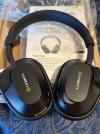
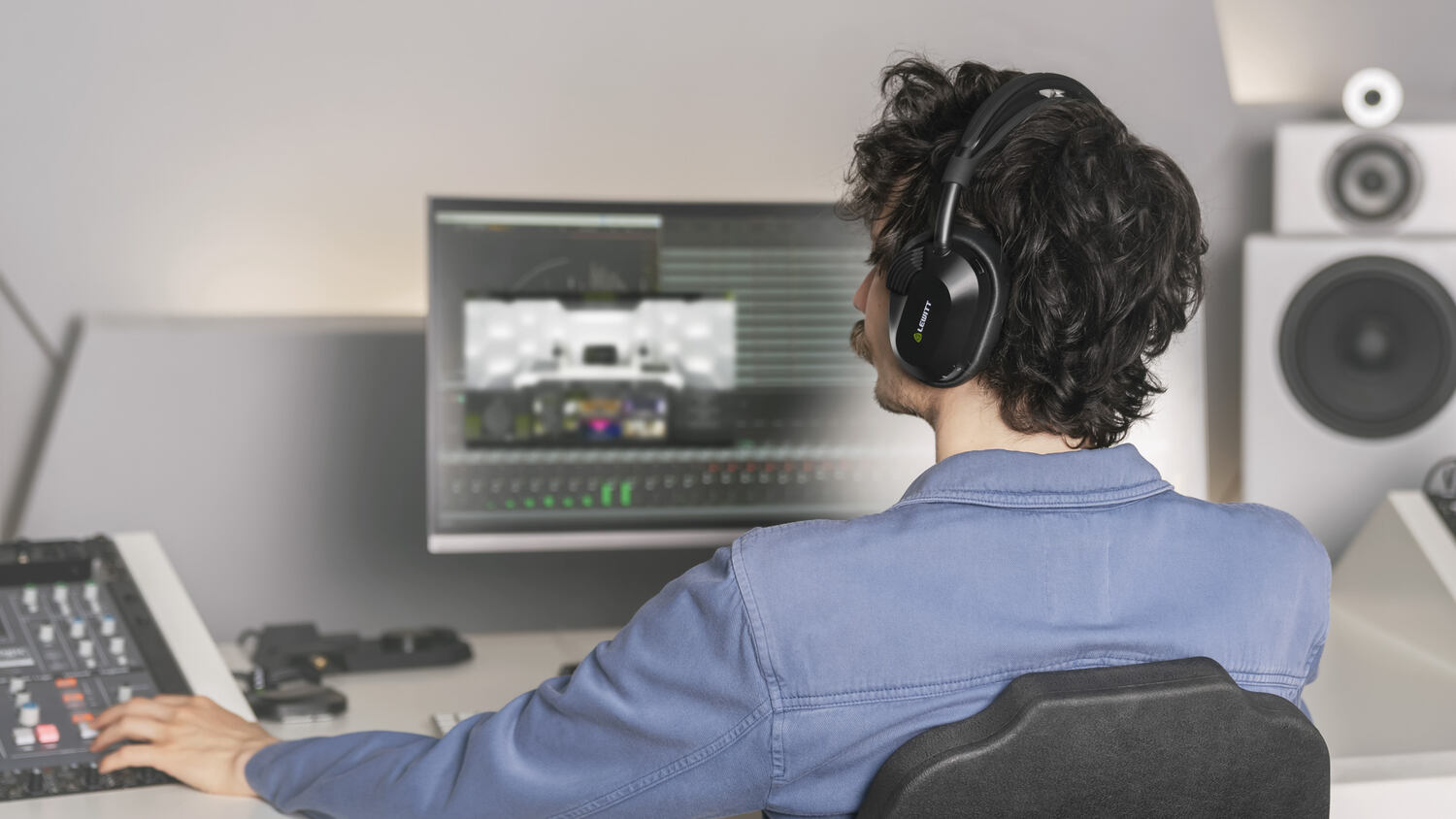
I got these headphones yesterday. Anybody else have them? In my opinion these are the best sounding headphones I have ever heard. Straight out of the box they sound near what I would call perfect. Absolutely no EQ was needed for me. They are also wireless with a latency of 5,8 ms and lossless, so it's a very attractive package. :)
These were also worked on by the legendary Oratory1990 which is probably part of why they sound so good.
 

Attachments

  • 1790841162314.png
    1790841162314.png
    1.4 MB · Views: 191
Sadly, there is no report of the LW6 yet by @oratory1990 on his own repository.
I'm pretty sure he has measurements as he works for Lewitt :)
Kind of wondering how it measures on his own fixture against Harman and say GRAS 45CA-10 and BK5128.
The plots on the Lewitt website look great (MIRE and their own target but that is logical).
FWIW I think the MIRE way is a better way to go than standard test fixtures.
I wonder which person's head was used or if there was some 'average' found on a number of heads.

Interesting stuf about the LW6:

Getting an active headphone right with internal DSP is easier than getting a closed headphone right fully passive.
There are also (custom) presets and handy DSP monitor/room modeling presets.

For studios a low latency (when using wireless) is obligatory and regular BT is as good as unusable for singers (as they hear themselves delayed).
The LW6 also has BT though which is fine in non time critical conditions.
$ 600.- incl. low latency transmitter is a nice price point as well for something that is close to reference (with perfect seal).

Nice product it seems !
 
Last edited:
Sadly, there is no report of the LW6 yet by @oratory1990 on his own repository.
I'm pretty sure he has measurements as he works for Lewitt :)
He actually answered a question on Reddit 9 days ago that I think will satisfy you:
1790845070813.png
 
Last edited:
Ah .. so most likely no measurements of the LW6 on his repository in the future ?
Which would be totally understandable as well.

It would be interesting to see how it measures on other fixtures and how that compares to the Lewitt target/method.
I guess it will be a matter of time before someone measures it and posts results.
Here you have measurements, at the end of the video.

Also there is small conversation with @oratory1990 about the approach
 
Ah yes that answers some questions.

Looks like a nice headphone. Maybe someday I get to measure one on my fixture and see how much that is 'off' from the LW6 (target).
Hoping the battery is replaceable and available as a service part for many years to come, as are the pads and headband padding.
 
Last edited:
Interesting, so they actually support BT+3.5mm+USB-C audio both with and without the dongle? I get how RealSound is the unique part, but looks like a very compelling package both connectivity and tuningwise.

They really feel bleeding-edge.
 
The transmitter creates a low-latency wireless transmitter with much lower latency and better signal fidelity (lossless is what I understood) compared to BT.
Fortunately for 'recreational' users you can also connect wireless using B.T.

wired options: USB-C and analog in.
wireless options: the supplie low-latency wireless transmitter box (which also has USB-C and analog in) and BlueTooth (> 4.0)

Looks like Lewitt thought of almost everything.... the only thing that isn't possible it seems is analog balanced (differential) in for both HP and transmitter box).
A balanced input for the transmitter (studio usage) using a 4.4mm Pentaconn could have made sense (not for the HP itself)
 
Last edited:
I mean it is nice to have an option to just throw BT onto them whenever you feel like using them mobile casually without the dongle.
 
USB connection is very practical, I love that my Bose 2 has it. The only thing lacking in the LW6 is a high quality BT codec, the everything else seems amazing.
 
Very intriguing sound-wise, but looks-wise I feel like these are ripped straight from the pages of Game Informer ca. 2006. Oof.
 
PS5 compatibility? The PS5 notoriously halves the volume w uac 1.0 devices that don't have hardware level volume override capability. This would be the ultimate option for my gaming setup.
 
A question that remains is on who'se (or how many) ears this Lewitt target is based and if that is an average and if so, and knowing the delta between human ears how is that average created and who'se ears are closed to that and used to create the target.

I guess only Konstantin can say but that may well be 'company property info' and might not be disclosed. I can have piece with that.
Judging from the plots he did a good job tuning this headphone which, using parametric EQ, is not a really difficult task.
Yeah, male heads, female heads, people with glasses, people with long hair, bald people... it's important to have a fairly large sample of people. TBH, I don't know that the sampling was for the Harman curves either.

In any case, the curve is not that precise, so it's a decent guess that there's some details it doesn't show on the higher end of the midrange (let alone the treble but it's probably very different from person to person in that range) and it was developed on open backs in all its iterations (I believe Sennheiser HD something and then AKG K702), so bass perception is probably something you'd want to rework with closed backs.
Probably not people with glasses. However he seemed interested in making an EQ preset for the headphone app that compensates for wearers using glasses
 
Probably not people with glasses. However he seemed interested in making an EQ preset for the headphone app that compensates for wearers using glasses
In one of the interviews, Lewitt says that they did their best to account for glass wearing with the pads, but that an additional EQ would improve things further.
 
Disclaimer first: I work for Lewitt.
Don't ask me to help you set up the headphones though - I work in R&D, not in customer support :)
Sadly, there is no report of the LW6 yet by @oratory1990 on his own repository.
I'm pretty sure he has measurements as he works for Lewitt :)
I don't think I'll add this to the repository - it is already tuned to hit the target as close as is reasonably possible. Any further adjustment will be based not on the average but on the individual - that's not something I can help with in an EQ preset.
We expect people need to adjust:
  • the bass, which mostly depends on how well the headphone seals against the user's head (people with glasses and/or long hair will need to turn the bass up)
  • the high frequencies - this partly depends on the shape of your ear canal and partly on the amount of hearing loss you have (if you're over 30 then you most likely will have some hearing loss at high frequencies)
  • Low-mids (200-300-400 Hz) - on some people where the earpads don't fully seal there's an additional resonance at around 300 Hz, they might need to reduce that with the EQ
  • Upper mids (3 kHz) - at the ear canal resonance we notice some variation across different users. This again is expected for a closed-back headphone. Users may need to increase or decrease this region by maybe 2-3 dB
For all of the above, the headphone by default is tuned to fit the average user (no glasses, no long hair), so if that's you (no glasses, no long hair on the side of the head) then chances are the stock tuning will fit you well and you'll only have to adjust for personal preference.


These questions all revolve around the same topic:
I wonder which person's head was used or if there was some 'average' found on a number of heads.
A question that remains is on who'se (or how many) ears this Lewitt target is based
Yeah, male heads, female heads, people with glasses, people with long hair, bald people...
On our test panel there's:
  • men and women
  • different hair length (bald, short hair, medium hair, very long hair)
  • different beard length (shaven, stubble, full glory)
  • different ear sizes (from very small to annoyingly large - seriously, our CTO hurts his ears on basically every pair of headphones, that's how big they are. But it also means that if they fit him, they'll fit virtually everyone)
  • with and without glasses
  • different ages
  • different ethnicity
We can't account for everything, but within the limitations set we got a representative test panel here.
Probably not people with glasses. However he seemed interested in making an EQ preset for the headphone app that compensates for wearers using glasses
We did test the headphone on people with glasses as well, yes, so we can quantify how much bass is lost on average with/without glasses. Making the LW6 more leakage tolerant than other closed back headphones was a design goal - and we can prove that we achieved it :)

I'll definitely publish an EQ setting that compensates for the average amount of bass lost when wearing glasses!

so bass perception is probably something you'd want to rework with closed backs.
Indeed! That's why we relied much more in real-ear tests (microphone in real ear) than on test fixture tests (e.g. Gras 45CA or B&K 5128) for the acoustic tuning of the headphone.

using parametric EQ, is not a really difficult task.
It can be quite tricky if the DSP limits the amount of filter bands you have - you then need to get creative with overlapping filters instead if just throwing peak filters at the graph and let the optimizer adjust gain, frequency and Q-factor.
These were also worked on by the legendary Oratory1990 which is probably part of why they sound so good.
I did work on the tuning, but it's not "my" headphone - it's the work of everyone who worked at Lewitt in the past years. Two ex-Focal engineers did the driver design and part of the electronics, An ex-Sennheiser engineer worked on acoustics design as well. It was quite the team effort!
PS5 compatibility? The PS5 notoriously halves the volume w uac 1.0 devices that don't have hardware level volume override capability. This would be the ultimate option for my gaming setup.
I haven't tested them on the PS5!
But these headphones go much louder than conventional wireless headphones - they're classified as professional headphones, not consumer headphones, which means they are not subject to the 110 dB limitation of consumer headsets. The max SPL is just over 120 dB on the LW6 - so loudness will not be an issue on them even if the PS5 cuts the volume in half for some reason.
The headphones have a loudness guard feature where they will automatically reduce volume if the sound pressure exceeds a certain value (value can be set by the user, the feature can also be deactivated if you want to break your eardrums. Not recommended). And yes, the headphones do show the current SPL in the app (peak and RMS) so you can check how loud you're currently listening. It's accurate to within about 3 dB.

 
Last edited:
Disclaimer first: I work for Lewitt.
Don't ask me to help you set up the headphones though - I work in R&D, not in customer support :)

I don't think I'll add this to the repository - it is already tuned to hit the target as close as is reasonably possible. Any further adjustment will be based not on the average but on the individual - that's not something I can help with in an EQ preset.
We expect people need to adjust:
  • the bass, which mostly depends on how well the headphone seals against the user's head (people with glasses and/or long hair will need to turn the bass up)
  • the high frequencies - this partly depends on the shape of your ear canal and partly on the amount of hearing loss you have (if you're over 30 then you most likely will have some hearing loss at high frequencies)
  • Low-mids (200-300-400 Hz) - on some people where the earpads don't fully seal there's an additional resonance at around 300 Hz, they might need to reduce that with the EQ
  • Upper mids (3 kHz) - at the ear canal resonance we notice some variation across different users. This again is expected for a closed-back headphone. Users may need to increase or decrease this region by maybe 2-3 dB
For all of the above, the headphone by default is tuned to fit the average user (no glasses, no long hair), so if that's you (no glasses, no long hair on the side of the head) then chances are the stock tuning will fit you well and you'll only have to adjust for personal preference.


These questions all revolve around the same topic:


On our test panel there's:
  • men and women
  • different hair length (bald, short hair, medium hair, very long hair)
  • different beard length (shaven, stubble, full glory)
  • different ear sizes (from very small to annoyingly large - seriously, our CTO hurts his ears on basically every pair of headphones, that's how big they are. But it also means that if they fit him, they'll fit virtually everyone)
  • with and without glasses
  • different ages
  • different ethnicity
We can't account for everything, but within the limitations set we got a representative test panel here.

We did test the headphone on people with glasses as well, yes, so we can quantify how much bass is lost on average with/without glasses. Making the LW6 more leakage tolerant than other closed back headphones was a design goal - and we can prove that we achieved it :)

I'll definitely publish an EQ setting that compensates for the average amount of bass lost when wearing glasses!


Indeed! That's why we relied much more in real-ear tests (microphone in real ear) than on test fixture tests (e.g. Gras 45CA or B&K 5128) for the acoustic tuning of the headphone.


It can be quite tricky if the DSP limits the amount of filter bands you have - you then need to get creative with overlapping filters instead if just throwing peak filters at the graph and let the optimizer adjust gain, frequency and Q-factor.

I did work on the tuning, but it's not "my" headphone - it's the work of everyone who worked at Lewitt in the past years. Two ex-Focal engineers did the driver design and part of the electronics, An ex-Sennheiser engineer worked on acoustics design as well. It was quite the team effort!

I haven't tested them on the PS5!
But these headphones go much louder than conventional wireless headphones - they're classified as professional headphones, not consumer headphones, which means they are not subject to the 110 dB limitation of consumer headsets. The max SPL is just over 120 dB on the LW6 - so loudness will not be an issue on them even if the PS5 cuts the volume in half for some reason.
The headphones have a loudness guard feature where they will automatically reduce volume if the sound pressure exceeds a certain value (value can be set by the user, the feature can also be deactivated if you want to break your eardrums. Not recommended). And yes, the headphones do show the current SPL in the app (peak and RMS) so you can check how loud you're currently listening. It's accurate to within about 3 dB.
great work as always
 
I don't think I'll add this to the repository - it is already tuned to hit the target as close as is reasonably possible.
makes sense, besides the dotted line is the LW6 on your fixture I assume ?
1791136445267.png

On our test panel there's:
  • men and women
  • different hair length (bald, short hair, medium hair, very long hair)
  • different beard length (shaven, stubble, full glory)
  • different ear sizes (from very small to annoyingly large - seriously, our CTO hurts his ears on basically every pair of headphones, that's how big they are. But it also means that if they fit him, they'll fit virtually everyone)
  • with and without glasses
  • different ages
  • different ethnicity
We can't account for everything, but within the limitations set we got a representative test panel here.
Seems more than adequate.
Good to read there is enough adjustability of the headband and room inside the pads (internal height >60mm and depth >25mm ?)
 
Back
Top Bottom