• Welcome to ASR. There are many reviews of audio hardware and expert members to help answer your questions. Click here to have your audio equipment measured for free!

KEF R3 Speaker Review

I've been taught a few dB lacking in that area give the impression that the singer is in the back of the scene, whereas a few dB too much give the impression he is in the front. Did you have such an impression?

Precisely. In fact, looking back at my review from almost a year ago I wrote:

"Vocals sound natural, with little apparent coloration or emphasis. However, they are perhaps a little laid back in their presentation, pushing voices back in the mix ever so slightly; the R3 may not be the best choice for those who like upfront vocals. But it's a mostly balanced sound that's hard to fault. "

That said, if you have them fully toed in or if your ear latches on to a different frequency reference, it's possible you'd find them upfront in the presence and lower treble region rather than recessed in the mids, as @VintageFlanker seems to be doing.
 
OK but... where's the "high fidelity" on the scale of directivity?
 
I dunno, as the dip is a low Q one that is present in the on-axis quasi anechoic data, my predicted in-room response, and several actual in-room responses, i'd definitely expect it to be audible, especially considering there seems to be a second but lesser dip at 2k in some of these. It's not the worst FR issue in the world -- it's obviously a technically great speaker -- but stood out to me as its primary audible flaw even before the measurements, as I write up the sound portion of my reviews usually prior to looking at measurements. I's more notable because the rest of the FR is flat.

I don't really see the region from 3-7khz as a rise, especially considering the speaker seems to be designed to be heard off axis. I guess it depends on how you'd draw a flat line through the graphs.

Agreed, it is audible, they almost have a weird Laid back type sound but also bright sometimes because of that issue. I really wish I had these measurements when I tried them out because it looks like the region can be filled in with EQ fairly easily and these could go from being good to great with just a few filters. Has anyone tried any of the filters yet with thoughts on how it affected the response?

Also agree about the PIR and I really think these graphs shouldn't have all of these subjective comments and lines drawn through them for that reason, let people draw their own conclusions and talk about differences of opinion.
 
So a lot of people in this thread saying they prefer wide directivity. The measurements are great though which would imply that plenty should still love them. So any owner's in this thread feeling super positive about these speakers vs others that have rated highly?
 
So a lot of people in this thread saying they prefer wide directivity. The measurements are great though which would imply that plenty should still love them. So any owner's in this thread feeling super positive about these speakers vs others that have rated highly?

I don't think the small differences in directivity between these and the typical Revel or other Cone and dome is enough for that to be a big difference in sound quality. The main "problem" with the R3 I believe is how the early reflections decline and then rise again after the dip, they have a slight bunching around 2700Hz, which is a very sensitive area for the human ear. I brought them home and thought they sounded great overall but they were fatiguing after less than an hour. I'd like to try them again with some EQ to see if I came tame that harshness.

Back to the wide directivity debate, after hearing the KEF Reference one in a large room, I'm not sure how important wide dispersion really is because they sounded bigger and more spacious than any speaker I can remember. This was also shortly after auditioning the Revel M126be about a half hour earlier.
 
I've read through the forums for awhile, but didn't join until recently. I don't know/understand much, but y'all have been an invaluable resource to alleviate some of that ignorance.

My listening room is a shared office for my wife and self. The office's floor plan is shown in the figure below. The closet makes the room oddly shaped. Combined with the small size, it has some challenges. LP is at 38% of the long room-length from the front wall. The KEF R3s and LP (chair) are set in an equilateral triangle and toed in towards the LP. Floor is carpeted, ceiling is 9' high. A pair of cheap 10" subwoofers (an Infinity and Polk Audio) are about midpoint along the side wall. A 50" plasma TV is on the front wall and two bookshelves are in the front corners.

Sources are computer and Oppo CD player ran through a MiniDSP with Dirac. I've used a Yamaha DSP-A1, Integra DTR 80.2, and a Crown 1502 for amplification. Uhmmm... I like big bass and my room curve reflects that. No room correction was done above 1k Hz.

After watching Audioholics' video on wide vs narrow dispersion speakers, I experimented with moving the acoustic panel from the 1st reflection point to behind the speaker. Measurements for comparison between acoustic panel positions were made using the MMM and REW. I also measured the acoustic panel behind the speaker using a sweep with the microphone at the LP.

Other speakers I've had in the room:
Paradigm 15B
LSA1 Statement

Initial impressions were the KEFs sounded good. To me, female vocals were a little recessed/muffled/quiet (I'm not an expert, so my opinion is nothing I would hang your hat on). Shelby Lynne vocals on Just a Little Lovin' was lacking presence. The high hat on some songs had a bit of sharpness instead of that crisp sound. Experimenting with positioning, acoustic panels placement, and some Dirac made a good sounding speaker sound great and I'm very happy. Ideally, I would like a bit more soundstage width and will continue to mess around things to see if I can achieve that.

If I can sell my trials bike, I would like to get a pair of Revels for the living room, but that is another adventure.

Listening Room.jpg
KEF R3 Acoustic Panel Placement.jpg
 

Attachments

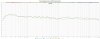
  • Sweep vs. MMM.jpg
    Sweep vs. MMM.jpg
    510.8 KB · Views: 243
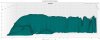
  • Acoustic Panel Behind Speaker.jpg
    Acoustic Panel Behind Speaker.jpg
    476.2 KB · Views: 262
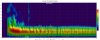
  • Spectrogram.jpg
    Spectrogram.jpg
    375.9 KB · Views: 268
OK but... where's the "high fidelity" on the scale of directivity?

I'm not quite sure anyone knows the answer for that, where to draw the line. Consider the M2 vs Salon2 again. You can't look at those two spins and easily assume the M2 Salon2 would win a blind test, but it did in the only one we know.

We should also acknowledge the L100 isn't actually bad.

I've been using MZKM's spreadsheet to calculate my own preference scores based on my own measurements. My measurements aren't more accurate than the NFS, but they might reflect what I heard in my individual samples more. The R3 gets a 7.8, the L100 gets a 7.3. That's easily within the 1.6 point difference required to be very confident one speaker will be preferred over the other.

That aside I also have a theory that the increased energy around 2k and decrease in the presence region for the L100 actually helps counteract the interaural crosstalk dip in a typical setup:
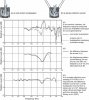
image (1).jpg

Compared to the R3, which had recessed vocals, I thought the L100 had the best vocals I'd heard at the time. Just a theory though.

Most importantly I'm just one listener. I have my known preferences on directivity. Remember spinorama anlysis/preference scores refer to large groups where individual preferences are diminished compared to the very consistent factors of flat on axis and smooth off axis. That doesn't mean those preferences don't exist.

You don't mind all those peaks/dips of L100 yet you are eqing couple dBs of nonlinearity of R3?
You're implying I didn't EQ the L100s too. That's wrong. I try EQ every speaker that comes through my home, even the perfectly flat on-axis ones. But I simply did not prefer the L100s after trying to EQ them. Mind you, they were just simple EQ filters on my receiver, so I probably could've done something more specific. With the R3 a simple low Q filter at 1K did the trick.

That said, keep in mind the L100 comes with tone controls that have a significant effect on measurements and sound. The measurements I shared was the default setting, but I did most of my listening with both knobs maxed out, which I thought sounded and measured flatter. Here's the range of knob settings.

Kbobs.png


I found I did not like to reduce the 2K peak(edit: maybe by a db or so, but not all the way). In fact, I consistently prefer a little more energy above flat around 2kHz, usually 2dB or so. Even with super flat speakers like the D&D 8C and Neumann KH80. I had the 8c at +1.5dB at 2kHz. For whatever reason, EQing the R3 worked for me, but EQing the L100s didn't.

Those are just my preferences. Please keep in mind that I'm not saying these experiences will apply to the general populace. As much as I enjoyed the L100 and would readily buy it over the R3, I recommend the R3 far, far more often. I just know what I preferred.

 
Last edited:
That aside I also have a theory that the increased energy around 2k and decrease in the presence region for the L100 actually helps counteract the interaural crosstalk dip in a typical setup:
View attachment 66830

Why is "interaural crosstalk" an issue for stereo music? It is standard for early reflections to be attenuated in the mixing process.
 
The R3s are now repacked. I know It has only been few days and I should have put more effort. But I simply can't manage to like these speakers... whatever how good they are in so many areas.:(

I felt similarly, did you happen to find them fatiguing or mostly just boring? Also, did you happen to try any of the EQ various folks have posted for these?
 
I felt similarly, did you happen to find them fatiguing or mostly just boring?
Both.
Also, did you happen to try any of the EQ various folks have posted for these?
I tried mine:
IMG_20200601_193518.jpg

Sounded better (or at least I felt it that way), but still not excited during long listening period.
 
Why is "interaural crosstalk" an issue for stereo music? It is standard for early reflections to be attenuated in the mixing process.

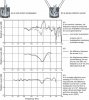
Different type of crosstalk. Interaural crosstalk cancellation happens independent of the mixing process. It is a phenomenom of stereo speakers. In an equilateral triangle setup, you will get a dip at 1.8 kHz with further dips higher up. You can't avoid it, and in fact having more reflections in the mix makes it less of a problem. This paper goes into it more http://www.aes.org/e-lib/online/browse.cfm?elib=14174 , Toole's summary is as follows:

"The solid curve is the “correct” one. It shows what a real center sound source delivers to the eardrum of a listener— it has the odd shape it has because of the acoustics of the external auditory system, the head-related transfer functions (HRTFs). The dashed curve, for a phantom center, includes the effects of acoustical interference caused by the acoustical crosstalk from the two loudspeakers and, the errors in HRTF processing because the incident sounds arrive at the ears from the wrong directions: ± 30 ° rather than straight ahead. This situation is one in which there is a conflict between the timbre of the sound where it is coming from and that for the location it is perceived to come from. This is not ideal."

Toole, Floyd E.. Sound Reproduction (Audio Engineering Society Presents) (pp. 160-161). Taylor and Francis. Kindle Edition.

The issue isn't as bad as it looks in a normalish room, but it is audible and easy to test. We usually get used it, but I find I always prefer a little extra energy here. YMMV.

Despite all that, 'fixing' it in the speaker's response is probably not the way to go, as as soon as you move out of the sweet spot then the dip moves. But I always listen from the sweet spot. I was just offering a haphazard theory of why it might've worked in my particular setup.

The R3s are now repacked. I know It has only been few days and I should have put more effort. But I simply can't manage to like these speakers... whatever how good they are in so many areas.:(

Nah. I know some people say you've got to get used to speakers, but that's not the case for me. I'm usually pretty confident about how much I'll like a speaker within the first few hours. Certainly within a day or two or extended listening.
 
Different type of crosstalk. Interaural crosstalk cancellation happens independent of the mixing process. It is a phenomenom of stereo speakers. In an equilateral triangle setup, you will get a dip at 1.8 kHz with further dips higher up. You can't avoid it, and in fact having more reflections in the mix makes it less of a problem. This paper goes into it more http://www.aes.org/e-lib/online/browse.cfm?elib=14174 , Toole's summary is as follows:

"The solid curve is the “correct” one. It shows what a real center sound source delivers to the eardrum of a listener— it has the odd shape it has because of the acoustics of the external auditory system, the head-related transfer functions (HRTFs). The dashed curve, for a phantom center, includes the effects of acoustical interference caused by the acoustical crosstalk from the two loudspeakers and, the errors in HRTF processing because the incident sounds arrive at the ears from the wrong directions: ± 30 ° rather than straight ahead. This situation is one in which there is a conflict between the timbre of the sound where it is coming from and that for the location it is perceived to come from. This is not ideal."

Toole, Floyd E.. Sound Reproduction (Audio Engineering Society Presents) (pp. 160-161). Taylor and Francis. Kindle Edition.

The issue isn't as bad as it looks in a normalish room, but it is audible and easy to test. We usually get used it, but I find I always prefer a little extra energy here. YMMV.

Despite all that, 'fixing' it in the speaker's response is probably not the way to go, as as soon as you move out of the sweet spot then the dip moves. But I always listen from the sweet spot. I was just offering a haphazard theory of why it might've worked in my particular setup.


Nah. I know some people say you've got to get used to speakers, but that's not the case for me. I'm usually pretty confident about how much I'll like a speaker within the first few hours. Certainly within a day or two or extended listening.

The dip is already compensated for in the mix.
 
That aside I also have a theory that the increased energy around 2k and decrease in the presence region for the L100 actually helps counteract the interaural crosstalk dip in a typical setup:
Very interesting. Someone check that on a couple of speakers!

The 305p Mkii has a big peak there.

The Aria 906 has a little peak there (see image below).

Edit: but the ELAC DBR62 and Revel M1y don't...
 

Attachments

  • fr_on1530.gif
    fr_on1530.gif
    32.8 KB · Views: 223
Last edited:
Back
Top Bottom