Or the tweeter is semi-functional:Tweeters that are blown usually make no noise at all; ....
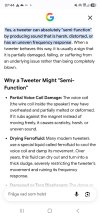
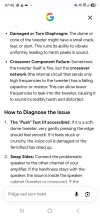
Gemini AI

Or the tweeter is semi-functional:Tweeters that are blown usually make no noise at all; ....
If I were you, I wouldn't mess with the drivers, since you mentioned that you still have a valid warranty.I contacted the service centre and will take them in next week. Warranty on the drivers is 5yrs, electronics 2yrs. I bought mine in 2022 so hoping it’s the drivers and they overlook a couple of toddler dings on them! Will post back on how I get on.
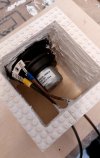
I took the driver out of one speaker and had a look - nothing smelly or burnt looking. It scratched the paint on the way out and was a pain to reseat so reluctant to do too much poking about inside whilst still a chance of warranty cover. Might give the outside test ago, although it’s not completely open space. The Bluetooth speaker tested fine so don’t think something off with the mic.
riiich88 might have blown both tweeters during a high-volume listening session. It’s not exactly uncommon for speakers to get blown out when listening at high volumes.
Have they always sounded the way you described?
Sorry, I missed what you said:...but never quite fully engaged with them.
Did you buy them new or used?
(The previous owner might have blown the tweeters.)
I thought they would be well out of warranty too until I checked this morning - will resist further peeking.If I were you, I wouldn't mess with the drivers, since you mentioned that you still have a valid warranty.
My suggestions for checking and examining the unit (unscrewing the drivers) were based on the assumption that there was no warranty.
But if they work as intended, they seem to be good speakers:...some dodgy LS50s....
 www.audiosciencereview.com
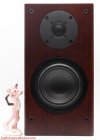
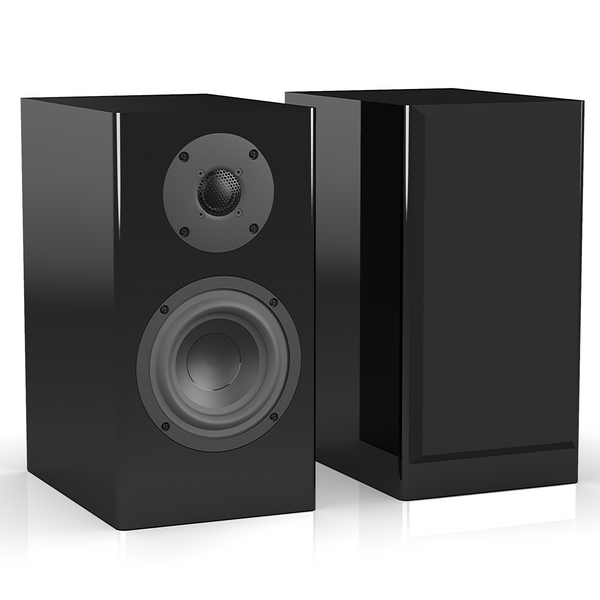
Harbeth speakers have a classic, old-school look. Otherwise, if you want something with a classic two-way bookshelf speaker aesthetic that is a bit cheaper than Harbeth but still good, there is:....and one eye on some used Harbeths.
 www.audiosciencereview.com
 www.ascendacoustics.com
 www.audiosciencereview.com
Yes, I think they are and that I’ve not had them setup right regardless of current issues.But if they work as intended, they seem to be good speakers
...that pair well together—I probably should have added that.There’s a certain appeal to having a pair of old school style speakers with a valve amp ....

Interesting idea. Guess would need a preamp that handle crossover.Use speakers that feature bi-amping capabilities. Let a Class D amp handle the bass, thereby relieving the tube amp of bass duties.
Active crossovers are a thingthat is the only sensible use I can see for the bi-amping function on speakers equipped with it.
Crossovers come in many flavors but that is rarely the job of "a preamp" (line gain and source switching) even those that offer tone controls or DSP based PEQ, loudness contour etcInteresting idea. Guess would need a preamp that handle crossover.
What you need to do is plug an RCA splitter into the WiiM Ultra's output:Interesting idea. Guess would need a preamp that handle crossover.
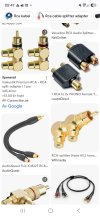
In the case of speakers with bi-amping capability, passive crossovers for the respective drivers are already built into the speakers. This simply provides a way to power them separately using dedicated amplifiers.Active crossovers are a thing
Note that Wiim Ultra can also now output RCA analog **concurrently** with either S/PDIF pairWhat you need to do is plug an RCA splitter into the WiiM Ultra's output:
...
Run cables from there to two amplifiers equipped with volume controls. Connect those to the bi-amp terminals on the speakers. Listen and set the appropriate volume level on each amplifier. Then, control the master volume using your WiiM Ultra.
That is certainly a possibility—especially if you want to venture into the DIY sphere and experiment a bit.Many people convert to bi/tri-amp, also active bypassing the built in passive xovers.
I was just responding to the specific text I quoted
I would love to do this one day, but so little free time at the moment with kids.DIY offers opportunities to build speakers
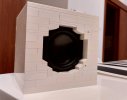
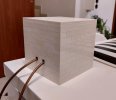
Build this with the kids (if they’re at the Lego-playing age):I would love to do this one day, but so little free time at the moment with kids.
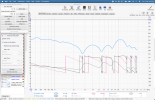
Anyway. For some reason I decided to ask Gemini about it rather than using Claude like I usually do, and it got me to generate 3 graphs. It seems to think the phase is inverted 180 deg, and is a fault from the factory.
- Impulse Response (IR): The initial high-frequency arrival spike went downward (-100%) first instead of upward (+), showing that the tweeter cone moves inward when given a positive voltage signal.
- Phase Graph: The measured phase line wraps by 180° precisely at each frequency dip, while the theoretical minimum phase line remains smooth.
View attachment 559176View attachment 559170
View attachment 559172
 www.audiosciencereview.com