• Welcome to ASR. There are many reviews of audio hardware and expert members to help answer your questions. Click here to have your audio equipment measured for free!

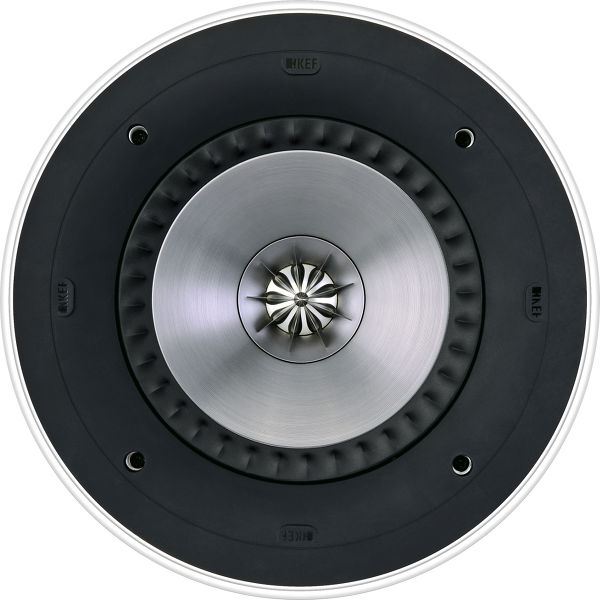
KEF Ci200RR-THX In-ceiling/In-Wall Speaker Review

Rate this speaker:

  • 1. Poor (headless panther)

    Votes: 2 1.2%
  • 2. Not terrible (postman panther)

    Votes: 29 17.3%
  • 3. Fine (happy panther)

    Votes: 87 51.8%
  • 4. Great (golfing panther)

    Votes: 50 29.8%

  • Total voters
    168
I suspected the KEF would be among the better ceiling speakers.
On the cheaper end, I wonder how something like the RSL C34E would do, which avoids having the tweeter blocking the woofer. Probably sacrifices low end extension though.
 
Great review as always… but unless you live in an environment where your only option is an in-wall / ceiling speaker for music playback - min $2k outlay for atmos is ridiculous, given what atmos delivers.

I use very basic tannoy and wharfedale ’cube’ type speakers firing upwards toward the ceiling for front and rear atmos effects, at a max cost $250, and get a great height effect (with some Dirac help for freq and distance tuning).

I’m struggling where the value here is. YMMV of course.
 
An amateur question on this one……I’m building a new kitchen, approx 8m x 6m. Would a couple of these in the ceiling make for decent music listening?
 
It it’s a big kitchen like my previous home with plenty of marble and Corian and aluminium and glass and hardwood parquetry flooring and not a single soft furnishing, then no. But define decent.

If your kitchen looks at commercial theatre or concert hall or Hans Zimmer’s “home” studio, then yes it can reach its optimum.

I also think a lot depends on one’s expectations and definition of “decent”.

I drive a Toyota hybrid which is decent but for some people whose daily driver is Ferrari and the weekender is a Porsche, it’s probably not.
 
An amateur question on this one……I’m building a new kitchen, approx 8m x 6m. Would a couple of these in the ceiling make for decent music listening?
Sure although sound coming from above is not the best way to enjoy music.
 
Do they work on a 100V system or only on a standard hifi system?
Standard hifi. These are for short distance playback. I would use thick gauge wire (12 awg for example) to be on the safe side.
 
It it’s a big kitchen like my previous home with plenty of marble and Corian and aluminium and glass and hardwood parquetry flooring and not a single soft furnishing, then no. But define decent.

If your kitchen looks at commercial theatre or concert hall or Hans Zimmer’s “home” studio, then yes it can reach its optimum.

I also think a lot depends on one’s expectations and definition of “decent”.

I drive a Toyota hybrid which is decent but for some people whose daily driver is Ferrari and the weekender is a Porsche, it’s probably not.

Yes, well aware of the compromises associated with both kitchen styles you describe and in-ceiling speakers. To refine my question further:

1. Would it be suitable for music listening, despite being designed for home cinema?
Amir has answered this.

2. If so, would this speaker perform better than other commonly installed ceiling speakers (sonos, revel etc), for pure music listening, based on Amir’s data?

I’m not expecting objective perfection, I have a listening room for that. I have the opportunity before building work completes to install something so I may as well try and put a ‘decent’ performing speaker in.
 
I am going to add the KEF Ci200RR-THX to my recommended list. It is the only proper way to build a ceiling speaker in my opinion especially for height channels.

Someone correct me if I'm actually wrong, but I'd go a few steps further:

-Non-coaxial designs for height speakers should be categorically rejected unless you have a single listener/position.

-The coaxial (dual coincident/concentric) design also solves the issues of center channel speakers and should be used unless you can place a vertical MTM behind your projector screen.

-Ceiling and Floor bounce are often the most ragged for most speakers which coaxial speakers also fix, so all things being equal coaxial speakers should be chosen for their inherently better design.

-Coaxial speakers aren't inherently acoustically compromised like the dispersion on 2 and 3 way speakers that has lobes where they should busted. Thus again, all things being equal the coaxial should be chosen.

-If you are mounting speakers on your walls for immersive audio, coaxial speakers can take up less room, and they can be mounted higher if needed and tilted down without having as many issues with inconsistent ceiling reflections... again, should be chosen all other things being equal.

-IMD and distortion caused by an air gap isn't a problem with modern coaxial drivers and those issues were solved 10+ years ago by Genelec.

Valid reasons to not use a coaxial:

-Currently main monitors can outperform coaxial speakers if a user decides they need extremely high SPL levels they don't for 'dynamics' because speakers don't act like dynamic range compressors and operating within their limits don't actually sound more dynamic. This is one use case where it could be correct to use a non-coaxial due to SPL requirements and operating things at extremely high levels.

-There is no coaxial that has dispersion as wide as some Revel speakers and this can be desirable when trying to make the soundstage larger.


I'm curious about companies that refuse to use coaxial drivers and would like to hear their actually legitimate rationale. Why are they making broken center channels? Why are they making broken sounding height speakers? Why are they okay with lobes?

Should we also accept state of the art prices for class A amps? Surround rot on archaic drivers? Technically they 'work' but they could be so much better.

At some point for an incredibly high price we should be expecting state of the art speakers that incorporate all of the things where "all things being equal" it's advantageous. (Non-parallel walls, flared ports, coaxial drivers, DSP correction, 3-way, minimal diffraction, maximum internal volume for the size, maximum stiffness without lowering internal volume, etc.)

Seems like a lot of companies simply rest on their laurels.

 
One question.

It seems, though it may be selection/sample bias, that I have seen several reports of blown KEF drivers. It always an underpowered amplifier playing too loud — perhaps the sensitivity being a bit worse than other speakers.

Is there anything that predicts failure, like distortion? I note that the LS50 Meta shows more distortion at 96 dB than this unit. Or is the failure sudden rapid unintended disassembly where the high distortion is of no issue as long as the amplifier is not clipping?

There’s a big difference when using Google Image Search for blown KEF vs blown Genelec driver
IMG_7362.png


IMG_7363.png
 
There’s a big difference when using Google Image Search for blown KEF vs blown Genelec driver
Because there is a big difference between both, Genelecs are active and have accordingly dimensioned amplifiers and protection circuits while most passive loudspeakers don't. I doubt you will find an active KEF with such a damage pattern.
 
I have the older version these with pretty much the same specs. I'm still floored at how good they are for atmos. I also have two pairs of their motorized version ci200qt, one for front heights and one for rear surround that's triggered to come down everytime I turn on my preamp. The rear surround is celing mounted and the front heights are wall mounted. I expected these to measure well. I have solid bass in all of my atmos channels down to 40hz. But I do cross them over at 50hz to be on the safe side. They never complain, and I have my setup to play at 105db. Not theater reference levels(which imo is way too much for home enviroments), but 105db is insanely loud in my home theater.
 
Ceiling speakers I've had in the past were really bad. This one looks great.

I recently found out that with Dolby Atmos, 4K UHD movies, digital photography, and Roon with DSD, the home router with a NAS drive becomes an essential hardware choice of the audiophile. I need an upgrade.
 
It looked like the old kef x300a and Q100 driver? Not bad considering the use case
 
An amateur question on this one……I’m building a new kitchen, approx 8m x 6m. Would a couple of these in the ceiling make for decent music listening?
Kef has different series of in-ceiling architectual speakers. No need to use these for the kitchen. I would choose one of their less expensive lines which will still sound great for your use case.

I'll mention that I have these Kef Ci200RR-THX (to mate with Kef Reference speakers) in a 7.2.4 setup and I believe they sound great in my system. My rears are placed above and slightly behind my seating. Excellent imaging.
 
Great review as always… but unless you live in an environment where your only option is an in-wall / ceiling speaker for music playback - min $2k outlay for atmos is ridiculous, given what atmos delivers.
Agreed. I'd go further and say if you are going to go through the trouble of installing Atmos, the minimum outlay here would be 4K (.2 Atmos still only provides channel based audio, whereas >.2 provides the actual goal of object-based audio).
 
With these frequency response and directivity patterns, it looks even a good option for in-wall mounting in those cases where a not fixed listening point is foreseen.
 
Just like we thought…coaxial speakers work exceptionally well for Atmos.

Would love to see more Kef in-wall / in-ceiling speakers reviewed.

Amir has my R8 Meta - I assume a review of those should be imminent (assuming Amir is using the same testing method for theCi200RR and R8M).
 
Because there is a big difference between both, Genelecs are active and have accordingly dimensioned amplifiers and protection circuits while most passive loudspeakers don't. I doubt you will find an active KEF with such a damage pattern.
Choosing Genelec was a bad example. My fault. If you use the same approach for Klipsch or Revel or even JBL, most of the image hits are intact speakers not the blown ones you see with KEF.
 
An amateur question on this one……I’m building a new kitchen, approx 8m x 6m. Would a couple of these in the ceiling make for decent music listening?
Kef provide a speaker placement tool. I assume the answer is no, for two speakers coverage will be very uneven. For a room your size, the tool won't let me go under 4 units, and even then it clearly shows quite large SPL differences.
1682953693786.png
 

Attachments

  • 1682953547463.png
    1682953547463.png
    211.7 KB · Views: 193
Back
Top Bottom