
I would say that he is not measuring the type of distortion that he's hearing, which would be equivalent to IMD of the relatively low level high frequency information in the recording - something that standard THD measurements would not pick up. I would suggest that he lowers the volume level so that he could listen, comfortably, "a few inches from the driver" - think, headphone listening ... does it still sound "fizzy"? And continue in that vein ...

-
WANTED: Happy members who like to discuss audio and other topics related to our interest. Desire to learn and share knowledge of science required. There are many reviews of audio hardware and expert members to help answer your questions. Click here to have your audio equipment measured for free!
You are using an out of date browser. It may not display this or other websites correctly.
You should upgrade or use an alternative browser.
You should upgrade or use an alternative browser.
JBL LSR 308 in the house
- Thread starter RayDunzl
- Start date
OP

- Thread Starter
- #62
Ultra-Nearfield - Red - 6 inches or so - and listening position - Green - 10 feet - unsmoothed of the left JBL:
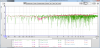
It's room interaction, not speaker.
Compare:
JBL Ultra-Nearfield - Red - 6 inches or so - and listening position - Blue - 10 feet - unsmoothed of the left ML:
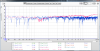
It's room interaction, not speaker.
Compare:
JBL Ultra-Nearfield - Red - 6 inches or so - and listening position - Blue - 10 feet - unsmoothed of the left ML:
Last edited:
OP
- Thread Starter
- #63
I don't think the class D amps are doing that. The effect went away when Ray measured up close to the speaker. Didn't Ray also show a distortion plot of both speakers, and while the panels were lower, the 308s didn't have high distortion levels other than in the low frequencies as I recall?
There is a slight broadband hiss measurable close to the speaker, shown earlier, doesn't seem to be correlated with the dips. Not measureable from the listening position, it's below the noise floor.
Distortion: Correct, higher by 10dB or so, at the listening position, like -40/-50dB instead of -50/-60dB with the panels.
Last edited:
OP
- Thread Starter
- #64
I would say that he is not measuring the type of distortion that he's hearing, which would be equivalent to IMD of the relatively low level high frequency information in the recording - something that standard THD measurements would not pick up.
I did some dual-tone measurements, the results were very similar between the JBl and ML, so much so that I didn't see that as a difference.

- Joined
- Feb 23, 2016
- Messages
- 20,690
- Likes
- 37,414
There is a slight broadband hiss measurable close to the speaker, shown earlier, doesn't seem to be correlated with the dips. Not measureable from the listening position, it's below the noise floor.
Distortion: Correct, higher by 10dB or so, at the listening position, like -40 -50dB instead of -50 -60dB with the panels.
Thanks for the measurements Ray. Just noticed you could go wireless on your subs.
http://www.parts-express.com/dayton...itter-receiver-system-for-subwoofers--300-580
Those might be useful if they work well. You wonder about them at $69.
OP
- Thread Starter
- #66
I have one, haven't used it with the subs as I still have them in "stereo", repurposed it to send what I was listening to in this room to Mother's sidewall-adjacent room.
It isn't bandwidth restricted that I notice causally - not for subs only or anything.
Muffled boom from behind the wall didn't seem nice to subject her to, so I fixed her up with the Infinity P-363 run off an old Pioneer SX-780 with the receiver attached to an input to disguise my noise with the actual program when we got too loud on Beer Saturdays.
Unfortunately its range isn't quite enough to get out to the garage or the main bedroom. I haven't experimented beyond "didn't work".
It was a $20 (or $40, I forget) add-on when buying the subs, so I took that chance.
It isn't bandwidth restricted that I notice causally - not for subs only or anything.
Muffled boom from behind the wall didn't seem nice to subject her to, so I fixed her up with the Infinity P-363 run off an old Pioneer SX-780 with the receiver attached to an input to disguise my noise with the actual program when we got too loud on Beer Saturdays.
Unfortunately its range isn't quite enough to get out to the garage or the main bedroom. I haven't experimented beyond "didn't work".
You wonder about them at $69.
It was a $20 (or $40, I forget) add-on when buying the subs, so I took that chance.
Last edited:
With conventional dual tonemeasuring, the levels of the tones would be comparable - I would be interested in what happens when the higher tone is much lower in amplitude than the lower, say 40dB down - what happens to the distortion spectrum directly related to the higher frequency, as the amplitude of the lower frequency varies.I did some dual-tone measurements, the results were very similar between the JBl and ML, so much so that I didn't see that as a difference.
What this could tell one is how much the variable current draw on the PS, in the JBLs, is impacting the distortion behaviour.
- Joined
- Feb 23, 2016
- Messages
- 20,690
- Likes
- 37,414
With conventional dual tonemeasuring, the levels of the tones would be comparable - I would be interested in what happens when the higher tone is much lower in amplitude than the lower, say 40dB down - what happens to the distortion spectrum directly related to the higher frequency, as the amplitude of the lower frequency varies.
What this could tell one is how much the variable current draw on the PS, in the JBLs, is impacting the distortion behaviour.
You are talking about the old SMPTE standard. 60 hz with 7 khz. With 60 hz being in a 4 to 1 ratio with the 7 khz to see if distortion of the 7 khz is modulated by the 60 hz tone. Then again, I would expect the class D switching amps in these using switching supplies aren't effected by the 60 hz so much.
OP
- Thread Starter
- #69
Somewhat incredibly to my antique eyes, this chip turns out to be the 2 x 50W "amplifier" in the 30x Series
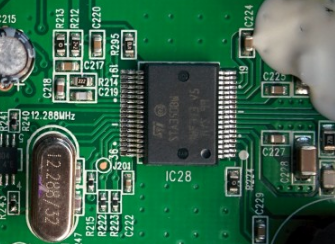
STA350BW
http://rdimitrov.twistedsanity.net/blog/show.php?entry=JBL LSR305 Teardown and Analysis
STA350BW
http://rdimitrov.twistedsanity.net/blog/show.php?entry=JBL LSR305 Teardown and Analysis

watchnerd
Grand Contributor
I have Christmassed myself with a pair of powered monitors.
http://www.jblpro.com/www/products/recording-broadcast/3-series/lsr308
View attachment 4010
Oops... Measurements aren't true below 200Hz - see post #5 below
Here are some initial measurements. They are on barstools directly in front of my main speakers. The microphone is located at the center of my brain between my ears at the listening position.
Sweep and Pink Noise, both speakers playing - 1/6 octave smoothing on the sweep, 1/48 on the pink:
View attachment 4011
Left, right, and both sweep at 1/12th octave smoothing:
View attachment 4012
Impulse (not normalized) for left, right, and both:
View attachment 4014
Step (not normalized) and Inverted for left, right, and both:
View attachment 4016
Distortion for both speakers - numbers at 1kHz:
View attachment 4017
Distortion for both speakers, normalized to fundamental, displayed as percent with 80dB fundamental:
View attachment 4020
Distortion for both speakers, normalized to fundamental, displayed as dB relative:
View attachment 4021
Waterfall, both speakers, 1/6 averaging, dropping into the ambient/measurement noise floor:
View attachment 4022
Impulse Response both speakers, dBFS setting, 350ms:
View attachment 4023
What software are you using?
All I can tell is that it's Windows-based and looks to run in Java.
Also would be curious to know what mic.
OP
- Thread Starter
- #71
Room EQ Wizard (free) and MiniDSP UMIK-1 ($100 or so when shipped)
DSP is MiniDSP OpenDRC-DI - $325 + shipping
DRC is AcourateDRC - $80 Euro + VAT if required
DSP is MiniDSP OpenDRC-DI - $325 + shipping
DRC is AcourateDRC - $80 Euro + VAT if required
Last edited:
watchnerd
Grand Contributor
Room EQ Wizard (free) and MiniDSP UMIK-1 ($100 or so when shipped)
DSP is MiniDSP OpenDRC-DI - $325 + shipping
DRC is AcourateDRC - $80 Euro + VAT if required
I thought it was probably REW -- but I use it on the Mac, so it looks a bit different.
I also have the MiniDSP + UMIK, too.
OP
- Thread Starter
- #73
Well, you're all set.
Go measure something and post it.
Go measure something and post it.
The chip shows borderline acceptable distortion figures, by audiophile standards - and they're not game to show figures for any frequency above 1kHz! I can't complain, because the class AB chip amp in my lowly Philips HT box showed poor figures too - yet delivered impressive subjective performance at times. However, may be the cause of the fizziness, in this case ...Somewhat incredibly to my antique eyes, this chip turns out to be the 2 x 50W "amplifier" in the 30x Series
View attachment 4118
STA350BW
http://rdimitrov.twistedsanity.net/blog/show.php?entry=JBL LSR305 Teardown and Analysis

I find it interesting how much "scrutinizing" is being done on such a inexpensive product.Somewhat incredibly to my antique eyes, this chip turns out to be the 2 x 50W "amplifier" in the 30x Series
View attachment 4118
STA350BW
http://rdimitrov.twistedsanity.net/blog/show.php?entry=JBL LSR305 Teardown and Analysis
Kind of shakes the timbers of the High End

I also have the MiniDSP + UMIK, too.
I also have the same gear as do many others.Well, you're all set.
Go measure something and post it.
How about doing a tutorial on doing some of these basic measurements you post
Amir did a basic step-up tutorial of REW but the promised followup still await.
http://audiosciencereview.com/forum...om-measurement-tutorial-for-dummies-part-1.4/
I find the REW help files a bit (lot) confusing and hard to follow.

Thanks Sal for the reminder. I will try to get that done soon.
OP
- Thread Starter
- #78
How about doing a tutorial on doing some of these basic measurements you post
Well, you're all set.
Go measure something and post it.
Start a WTF Am I Doing? thread.

Do,or do not..Thanks Sal for the reminder. I will try to get that done soon.
There is no try.
Last edited:
Similar threads
- Replies
- 6
- Views
- 549

- Replies
- 14
- Views
- 1K
- Replies
- 45
- Views
- 5K

- Replies
- 15
- Views
- 699

