• Welcome to ASR. There are many reviews of audio hardware and expert members to help answer your questions. Click here to have your audio equipment measured for free!

Is the "audiophile measurement mafia" to blame for the hi-fi market being flooded with systems that lack audiophile dynamic range?

Let me give it a quick try. It's a complex question.

Home theater speakers need to achieve high sound pressure levels with exceptional dynamics. For music I prefer dipoles like ESL's or Magnepans. I believe they produce a deeper sound stage that I really enjoy for the Jazz music that I listen to. These speakers are totally unsuitable for a home theater use as they are unable to produce the high sound pressure levels required and have too many placement restrictions for home theater use.

Home theater speakers can be smaller as they don't have to provide realistic musical scale of a larger speaker as the scale in home theater comes from multi channel effects placing you in the sound field as opposed to the creation of a sound stage in front of you.

Larger size speakers (not louder) are more important in music reproduction as the large radiating area of a larger stereo pair of speakers can more accurately reproduce instruments that also have a large radiating area such as a cello or a grand piano and therefore, with proper placement, can produce a more realistic, deeper frontal sound stage with a more realistic scale..

Home theater speakers don't need to produce a deep frontal sound stage as they rely on envelopment for a realistic "you are in the action" of the theater experience. Envelopment tends to destroy frontal sound stage depth because frontal depth is hidden by multi channel emersion.

Home theater speakers are usually more efficient and better suited to smaller less powerful amplifiers commonly found in AV equipment. With two channel stereo efficiency is not a priority because you only need one powerful stereo amplifier as opposed to many amplifier channels. Eliminating this restriction gives you a greater selection of speakers.

Reproducing music content is much different that producing the sounds of war, gunfire or natural disasters. It is not controversial that speakers need to be selected for their application for best results. There is not one speaker that does everything best and the very different needs of home theater and high end two channel music reproduction dictate different speaker selection for best results. Any professional sound contractor will select speakers according to the needs of the specific application. Home theater and two channel music reproduction are very different applications and therefore the best speaker for one is usually not the best for another.

This is my opinion of course but it starts with recognizing and appreciating the difference between what is required for producing the sonic envelopment of home theater and what is required to produce a frontal sound stage that highlights depth of imagery to the exclusion of envelopment.

People have different opinions of course but how many of us here when asked to design the ultimate home theater system and the ultimate 2 channel system for music reproduction would end up with the same speakers? I certainly would not.

Have a nice day.
I get that, dipoles do give more depth of image which can be nice in stereo.
I chose Apogee ribbons over ATC 50 speakers back in 1989 because of the effect and much enjoyed the Steinway Model D system a few years later.

The effect is a room interaction though not reproduction of the recording and whilst nice, and effective in most rooms I tried I did end up with a room where positioned to get the effect they blocked out too much light and I returned to conventional speakers, which I do indeed use as the front speakers in a 5.1 layout on the rare occasion I watch a film.
I only own a minuscule number of multi-channel recordings so almost never use the other 3.1 ways when listening to music.
 
Amplifiers like the Purifi 1ET9040BA are a direct consequence of the "audiophile measurement mafia":

index.php

Company specs the amp at 2 ohm so I ran that test as well:
index.php

Wow!

Makes a dinosaur like the McIntosh MC352 look a bit puny! How about that for some dynamics!
 
Last edited:
Dynamic range is definitely important, but hitting 120 dB clean across the full spectrum in a normal living room is a massive ask. The shift to smaller, less dynamic speakers seems way more driven by living space constraints than measurement preferences.
 
I recently posted this in a different thread; it can fit here too.

Presented at the 86th AES Convention 1989 March 7-10, Hamburg

"DESIGN OF A HIGH POWER ACTIVE CONTROL ROOM MONITOR"
I. Martikainen,A, Varla,T.Partanen
GenelecOy, lisalmi, FINLAND

Abstract:
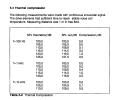
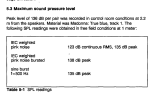
"This report describes the design of an active control room monitor for SPLs in excess of 130 dB(lin). To ensure good sound quality a new direct radiating midrange system was developed with an acoustic loading technique which allows 103 dB/W sensitivity and 1 kW peak power handling. Power amplifiers and driver unit protection logic are also presented."

A teaser snippet ;):

1791976125547.png

Screenshot 2026-10-14 at 12-40-30 - Design_of_High_Power_Active_Control_Room_Monitor.pdf.pngScreenshot 2026-10-14 at 12-40-14 - Design_of_High_Power_Active_Control_Room_Monitor.pdf.png
 

Attachments

  • Like
Reactions: DY2
But I was particularly drawn to her guitarist, Russell Malone. The man had the purest tone I've ever heard, just gorgeous.
Let me guess, for this pure tone he travels with multiple vintage guitar heads and quad 4x12s? Or even 4x15s, because the size makes the big sound.

... I wonder whether they already started making wooden guitar cable stands, if not, I think a business plan is in the making already...
 
Dynamic range is definitely important, but hitting 120 dB clean across the full spectrum in a normal living room is a massive ask. The shift to smaller, less dynamic speakers seems way more driven by living space constraints than measurement preferences.
Welcome to ASR, and agree.

I mean, we haven't actually established that highly dynamic (in the sense of going well beyond 95dB SPL or so) speakers were ever common at all, let alone whether a putative "measurement mafia" had anything to do with a decline. While I could agree that larger speakers were more common in the 1970s, AFAIK most of them were still direct radiators and not capable of super high SPL either.

As ever, this is an evidence-forward community, and there are a few unsubstantiated claims here in the original post.
On a more serious? note - did anyone ever see a 120dB dynamic range recording in the wild? I mean, with actual dynamics of 120dB anywhere.
 
Let me guess, for this pure tone he travels with multiple vintage guitar heads and quad 4x12s? Or even 4x15s, because the size makes the big sound.

... I wonder whether they already started making wooden guitar cable stands, if not, I think a business plan is in the making already...
A little research suggests he used Gibson Super 400 and L-5 guitars, and a Fender Twin Reverb amp. But I'm sure he could make a $100 amp sound good.

I don't think he was looking for a big sound, especially not for the albums mentioned.
 
A little research suggests he used Gibson Super 400 and L-5 guitars, and a Fender Twin Reverb amp. But I'm sure he could make a $100 amp sound good.

I don't think he was looking for a big sound, especially not for the albums mentioned.
Ah, so the Super 400 is a big boy, that's where the big sound comes from!
 
On a more serious? note - did anyone ever see a 120dB dynamic range recording in the wild? I mean, with actual dynamics of 120dB anywhere.
You'd need a very quiet room to listen to the full 120... and I would assume few if any such recordings exist. I mean CD is only 96dB at best, even high-end master tape doesn't do it either, vinyl is nowhere near that.

Maybe a more realistic version of this question is - what recordings are actually fun (and safe?) to listen to on a setup where peaks actually go to 120dB SPL?

I feel like really using the full 120dB of dynamic range is unrealistic, would you have a 24-bit recording where the average level of the music is somewhere down at -90dBFS or lower and peaks shoot up to nearly 0dBFS?
 
I recently posted this in a different thread; it can fit here too.

Presented at the 86th AES Convention 1989 March 7-10, Hamburg

"DESIGN OF A HIGH POWER ACTIVE CONTROL ROOM MONITOR"
I. Martikainen,A, Varla,T.Partanen
GenelecOy, lisalmi, FINLAND

Abstract:
"This report describes the design of an active control room monitor for SPLs in excess of 130 dB(lin). To ensure good sound quality a new direct radiating midrange system was developed with an acoustic loading technique which allows 103 dB/W sensitivity and 1 kW peak power handling. Power amplifiers and driver unit protection logic are also presented."

A teaser snippet ;):

View attachment 564301
View attachment 564299View attachment 564300
Yeah, but how could the resulting product possibly compare to a monstrous 60+ year old Altec-Lansing Voice of the Theater driven via a biamped all-analog signal chain?
 
Presumably any track recorded, mixed, and released at 24-bit or higher, with a fadeout.
In the digital realm you can easily represent that (and purely electronic music could follow), but for acoustic music it's important to account for microphones' own noise floor. Would need to read up, but even top Schoeps/DPA mics have self-noise >0dB.

You'd need a very quiet room to listen to the full 120... and I would assume few if any such recordings exist. I mean CD is only 96dB at best, even high-end master tape doesn't do it either, vinyl is nowhere near that.
In practice you'd probably find it hard to find a normal listening space with noise floor of 0dB SPL, let alone recording spaces which follow that noise floor, I think?

Maybe a more realistic version of this question is - what recordings are actually fun (and safe?) to listen to on a setup where peaks actually go to 120dB SPL?

I feel like really using the full 120dB of dynamic range is unrealistic, would you have a 24-bit recording where the average level of the music is somewhere down at -90dBFS or lower and peaks shoot up to nearly 0dBFS?
Wandelweiser/Onkyokei would be a suitable contender for this title, albeit even Cage's 4'33" easily shows the problem of actual noise floor. 120dB SPL peaks would be a deafening hazard if one considers an instantenous peak, which prevents acoustic reflex from kicking in (it's not instant).

Even with orchestral music, I would assume is compressed in dynamics in mastering, though that'd probably require reading a bunch of interviews.
 
What's dynamic range?


This is queued at JJ's remark about bass loudness, but I suggest the entire video for those interested in dynamic range metrics. Perceptually, it's not at all easy to estimate as perceived loudness is not about SPL directly. It can be expressed in a number of ways but if we talk about perception, for example, a very clean system may not sound as loud because of lack of bandwidth expansion. But of course recordings are all over the place as many examples in the video suggest.

20Hz multitone:

20multitone.jpg


Screenshot_2026.10.03_21.53.14.937.png
 
Let me give it a quick try. It's a complex question.

Home theater speakers need to achieve high sound pressure levels with exceptional dynamics. For music I prefer dipoles like ESL's or Magnepans. I believe they produce a deeper sound stage that I really enjoy for the Jazz music that I listen to. These speakers are totally unsuitable for a home theater use as they are unable to produce the high sound pressure levels required and have too many placement restrictions for home theater use.

I used to have an Xbox speaker system with Mirage speakers that worked very nicely for home theater. It didn't produce high SPL, but it did produce a really good surround experience. I didn't expect it to be exactly like what I'd hear in a movie theater though. That just isn't physically possible in my home.

It did really well on a classical concert disc (DVD?) that I had too. Home theater does not need to exclude music, and vice versa for stereo systems.

Does most jazz music really need (or warrant) a deep soundstage? A lot of it is multi-miked with panning right or left to give "stereo." There really isn't much in the way of depth being captured. Maybe Dixieland, swing, or big band... but certainly not for something like what you'd hear in a small, intimate jazz club.

Dipoles can work very well. Both Siegfried Linkwitz and Bob Carver produced excellent dipole speakers. I've heard these and thought they were very good indeed. (I preferred Linkwitz's.)
 
I'm not sure which position you are referring to specifically so your intentionally vague comments obviously are intended to prevent rational discussion and cause ire so lets not play games ok?

I also see no connection between di pole speakers, your opinion or my opinion of them and any of the subject matter at hand. Do you care to elaborate? Or is this a game as well?

It was my understanding that ASR was a place for serious audio related dialogue. Your comments make me question that. I don't appreciate it. Thank you.

Large flat panel speakers and accurate reproduction tend to be orthogonal. Your preference for them for listening to music may, in some people's minds, call into question your opinions regarding audio systems. You're welcome.
 
Audiophile and high sound pressure levels don't belong in the same sentence. Most audiophiles I know despise very high sound pressure levels.
Despise ? A bit of an extreme statement. Most have better sense than to listen at ear damaging levels, specially the ones past their 40th birthday. But one verb doesn't exclude the other.

People have different opinions of course but how many of us here when asked to design the ultimate home theater system and the ultimate 2 channel system for music reproduction would end up with the same speakers? I certainly would not.
I would. Way too often we run into those 2ch elitist attitudes that simply refuse to accept that all things being equal, a 2 ch rig is simply around 66% inferior to a 5.1 multich. ;)

An audiophile home theater: Take some indisputable hi-fi stereo speakers, and then put 5-7 of them around the room.
Yep, how would it get better than that? I know of a number HT systems consisting of Revel Salon2's and JBL M2's all around, others even more serious. It all boils down to the wallet, the room, and where any compromise (if any) may be made.

For music I prefer dipoles like ESL's or Magnepans. I believe they produce a deeper sound stage that I really enjoy for the Jazz music that I listen to.
If you like an "enhanced, inaccurate to the source" sound stage that you can alter at will depending on the rear&near sidewall damping, etc.
Much the same can also be accomplished in ProTools and with other source altering applications.

ah, your position makes a lot more sense knowing that you prefer non-neutral, colored speakers for music
Yep, right on point. ;)

"AVR limitations" do not apply to HT in general, nor to mch music systems
No more so than do inexpensive 2ch receivers set the SOTA bar for Stereo.
 
Back
Top Bottom