• Welcome to ASR. There are many reviews of audio hardware and expert members to help answer your questions. Click here to have your audio equipment measured for free!

Is a $5,500 professional Trinnov calibration objectively better than a knowledgeable DIY calibration?

etc6849

Active Member
Forum Donor
Joined
Apr 28, 2018
Messages
286
Likes
437
Location
Columbia, SC
I’m curious what the measurement-oriented crowd here thinks about this because a discussion on AVS recently went way further than I ever expected.

I posted on avsforum that I believe I can do just as good as a professional calibrator charging $5500. I never said professional calibration has no value, nor did I say anyone can do it themselves without any study.

A $5,500 two-day calibration can absolutely improve a system, particularly for an owner who lacks the knowledge, measurement equipment, time, or interest to do the work personally.

The disagreement started when another AVS member told me that by saying I could achieve results “just as good” myself, I was insulting highly trained professionals and that I would probably: “never know how good your system could potentially sound” without hiring one.

That eventually resulted in a well-known professional calibrator, Adam Pelz, whom does training and beta testing for Trinnov, is a Trinnov dealer, owns Bespoke Cinemas per his linked-in, sending me several unsolicited PM's describing his service.

The $5,500 calibration process
Adam provided a very detailed description of his two-day calibration process. It seems very thorough, in case I've missed something, you can see his description in PM 2.png that is attached:
verifying installation and connections
near-field speaker measurements
individual-driver measurements when something looks wrong
polarity verification
baseline frequency-response measurements
room dimensions and placement analysis
Speaker Boundary Interference Response (SBIR)
modal analysis
subwoofer optimization
seat-to-seat consistency
PEQ and other DSP work
spatial averaging
coherence and transfer-function measurements
running the room-correction system
independently verifying the correction afterward
crossover optimization
all-pass filters where appropriate
time alignment
level matching
acoustical phase matching
building multiple listening presets
extensive listening afterward

I have no problem saying that sounds like a thorough calibration process to be fair and honest.

What I question is the leap from that to saying a knowledgeable owner cannot achieve an equally good result themselves, or implying that other competent calibrators charging much less must somehow be “starving.” I would have no problem finding a calibrator near me for $1,500 or less.

Of course, his public rebuttal is sarcastic, and then in his PM he twists what I actually said. I never claimed someone was going to fly across the country, pay for airfare, hotels, rental cars, meals, and spend two days at my house for under $1,500 total. I said I can find competent calibration services near me in that price range. Those are obviously two very different things.

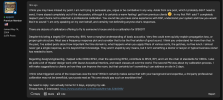
Screenshot 2026-08-23 at 09-06-08 Trinnov AltitudeCI Official Thread Page 44 AVS Forum.png


What is most interesting is after his check list, he talks about his subjective part of the professional process.
So after what I would have considered a thorough technical process, he then begins Day 2 by listening again to make sure he is still as happy with the result as the previous night. But once additional calibration changes are being made according to whether particular music sounds “great,” subjective judgment clearly becomes part of the final result, per his PM that is attached.

There can obviously be a technically well-integrated system followed by subjective voicing according to preference. But once preference is part of the optimization criterion, there cannot simultaneously be only one objectively correct answer. And if you have to revisit voicing subjectively, I'd be rethinking what target curve I'm using.

There's other finer points to consider: the owner has the time advantage.
This is probably the biggest reason I believe I can do as well or better in my own room. A visiting calibrator gets two days, it's not like they can order additional bass traps or subwoofers during that time if they can't fix a room mode.

I didn't start with eight subwoofers. I started with two, then four, then five, and continued changing and improving my system over the coarse of years; some of that is because I'm middle class so had to spread out my purchases. I also learned about room acoustics and added bass traps, etc...

To his credit, Adam specifically said he evaluates the room and makes recommendations for improvements, but also acknowledged that actually addressing these types of physical changes isn't something he can accomplish during a two-day visit as he'd have to order subs, etc... He will move speakers and subs though.

Adam's admission in PM and lack of commercial interest disclosure on his posts.
This is a secondary issue worth mentioning, but I really like how ASR makes it clear who is a dealer, industry insider, etc... Adam Pelz goes by applez and all that is on his profile is "Premium Member."

Of course if you read than one of his posts, you can figure out he's a dealer and industry insider. Per his linked-in, Adam owns Bespoke Cinemas and Integration, which Trinnov itself lists as a Trinnov dealer.

In his first PM he wrote:
“I only began posting after some manufacturers asked me to be a voice of reason, as they chose not to maintain a direct presence on a public forum”

Nothing wrong with that inherently, I guess, but I like audiosciencereview much better.

But I do think there is a meaningful difference between an unaffiliated owner saying: “You really need to hire a professional to get the best from your Trinnov" versus someone who charges $5500 to quoting and PM'ing me.

One other comment that surprised me was in his last PM he states:
“Despite this being a largely DIY community, 99% have a marginal understanding of basic acoustics” and: “I almost never get a single response, as it is beyond their knowledge.”

To be completely fair, he immediately said those people: “aren't stupid by any means”

That philosophy is pretty much the opposite of why I participate in enthusiast forums though. I think knowledgeable people should help other owners learn this stuff.

I do agree that professional calibration has value if you don't understand measurements, are short on time, etc... I'm just not sure if you should go the $5,500 route, especially if you plan to add more subs later... then what, you have to pay again?!?

My main disagreement is with the idea that hiring a particular professional at all is necessary to reach the best performance available from a Trinnov system, which has a fairly decent auto-calibration system called Optimizer, which Adam says he uses in his PMs?

Clearly my statement triggered Adam, but is a technically competent owner saying, “I can do this just as well myself,” really somehow insulting to professionals? Presumably it was based on the first two PMs. I didn't even respond to his first one. I responded once after the second, then he responded again. I didn't answer and let him have the last word... however, hours later he started quoting my posts publicly again.

I actually didn't see his new posts quoting me until the next day, and I posted the attached, now-deleted post that I thought was a very fair technical rebuttal. At least my ban from the Trinnov thread is only temporary lol. Go figure. Having an end user temporarily banned from the a DIY Trinnov thread for my rebuttal, while the industry professional goes back and quotes my posts after I literally let him have the last word in his PMs, which honestly came across as pretty condescending...

Legal Dislaimers
This post represents my own opinions, but I've tried to be objective and fair in how I've presented everything. I've shared the full PM exchange, and users can decide for themselves.

I also don't want to drag ASR into someone else's controversy. I have a lot of respect for Amir, especially as a fellow EE and all the work he does to educate users, and I appreciate him clarifying the policy before I posted anything. If Amir ever wants to independently verify any of this, I'm happy to provide whatever screenshots, timestamps, or even access to my AVSForum account so he can log-in himself to confirm that I've represented the exchange accurately.

I'm also not trying to attack a professional who's simply trying to make a living. But when a business reaches out to you through unsolicited PMs discussing and defending their paid service, I think it's fair for those messages to be part of the discussion. I would not post private messages from an ordinary end user.
 

Attachments

  • PM 1.png
    PM 1.png
    101 KB · Views: 93
  • Deleted Post.txt
    Deleted Post.txt
    10 KB · Views: 68
  • temp thread ban by moderators.png
    temp thread ban by moderators.png
    176.9 KB · Views: 86
  • PM 4.png
    PM 4.png
    154.8 KB · Views: 82
  • PM 3.png
    PM 3.png
    121.8 KB · Views: 76
  • PM 2.png
    PM 2.png
    224.7 KB · Views: 79
I'll just say this, I haven't read the screenshots but the list of tasks he performs doesn't include anything I haven't seen people here do on their own systems. So I agree with your overall thesis. Of course there is nothing stopping anyone from having the skills to DIY what he or any other system integrator does. Many people at ASR aren't professionals per se but operate with that level of knowledge.

Maybe similarly, you often see DIY speakers with performance that compares favorably to commercial speakers.

On the other hand he's probably correct that 99% of people don't have much or any correct understanding of acoustics. Keep in mind that just posting on ASR, already means you're probably in the 99th percentile compared to the general public and close to it even among people with fancy home theaters.

So in that sense he's right that most people can't do what he does. You really think the average forum person knows what an all pass filter is and when to use one?

Whether his service is worth $5K+ is a separate question, I guess. If he spends a full 16+ hours on it, it's $340 an hour, but if you're also effectively flying him out and putting him up in a hotel I don't think it's insane.
 
Whether his service is worth $5K+ is a separate question, I guess. If he spends a full 16+ hours on it, it's $340 an hour, but if you're also effectively flying him out and putting him up in a hotel I don't think it's insane.
Yep, he said it's a $5500 flat rate too, so he probably makes more on some jobs and less on others after expenses.

For my circumstance, considering he's in TN, and I'm in SC, it'd be about 7 hours each way driving. He says he always fly's though, so it's more like 3 hours of travel time each way, but you'd have 2-3 hotel stays, meals and a rental car. That still leaves about $4000 for 2 days of work or 3.5 days if you count travel. I guess his public post is honest in that he's probably not starving lol.
Yeah if he's booked every working day of the year he'll gross $500K or so. I'd guess it's closer to half that in practice. After taxes he's not making Magico money but he's not eating scraps either.
 
The thing is you're probably right and that may appear a threat to someone's job.

I understand your question more like can a consumer who spent lots of time knowing all the bits and bobs perform the same job as a professionaly trained one? And to that they answer is yes, if you know what you're doing and eq and measuring is part of your hobby.

For many enthusiasts the answer can be no if they don't want to invest the time in it. Same for a professionally designed and installed media room.

I think, however there will also be many who settle for good enough from an automated measurement.
 
Some people mow their grass, survey their own land, build their own house, change their car oil, mop their floors, hunt and clean their own game and grow vegetables.

Other people hire others to do those tasks. The world is a big enough place to fit everyone.
 
The thing is you're probably right and that may appear a threat to someone's job.

I understand your question more like can a consumer who spent lots of time knowing all the bits and bobs perform the same job as a professionaly trained one? And to that they answer is yes, if you know what you're doing and eq and measuring is part of your hobby.

For many enthusiasts the answer can be no if they don't want to invest the time in it. Same for a professionally designed and installed media room.

I think, however there will also be many who settle for good enough from an automated measurement.
It's the same as any specialized task really. Am I technically capable of (say) building a new wall inside my house? Sure. I can even buy the same tools the pros use and still save money. Look up what to do online and take my time, no problem.

Would it be smart for me to try? Maybe not. Would I finish as fast? Definitely not.
 
Likely much more than that, but I don't know his expenses, and I'm sure he volunteers his time for some stuff (trade committees, etc...). He says he is only home 30 days out of the year though. Make of that what you will.

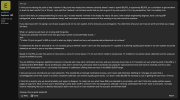
Screenshot 2026-08-23 at 10-43-04 Trinnov AltitudeCI Official Thread Page 42 AVS Forum.png


Yeah if he's booked every working day of the year he'll gross $500K or so. I'd guess it's closer to half that in practice. After taxes he's not making Magico money but he's not eating scraps either.
 
This is a fair point, but where it gets interesting from a Trinnov perspective is that, by Adam's own description, he does as much as he can with speaker and sub placement beforehand. Trinnov also lets you define PEQ filters prior to running any optimization. I actually did this externally with my Xilica XD4080 connected to my 8 subs. Adam does this as well, and mention PEQ.

However, there are limits to what can be done with the Trinnov settings prior to optimization, and he doesn't mention adding external DSPs, etc. After that initial setup work, he runs Trinnov Optimizer, verifies and manually adjusts the results as needed, and then ultimately does subjective listening and fine-tuning.

A large part of his, and mine and many DIY'ers final workflow is still built around Trinnov's automated Optimizer, followed by manual verification/correction and subjective voicing. None of that strikes me as something inherently unavailable to a knowledgeable owner with the right measurement tools and enough time. It's not hidden knowledge by any means, I believe I read about doing PEQ prior to optimization in one of Trinnov's white papers, but there's also many knowledge base articles like this one for novice and experienced users:

https://kb.trinnov.com/en/knowledge-base/setup-calibration-workflow

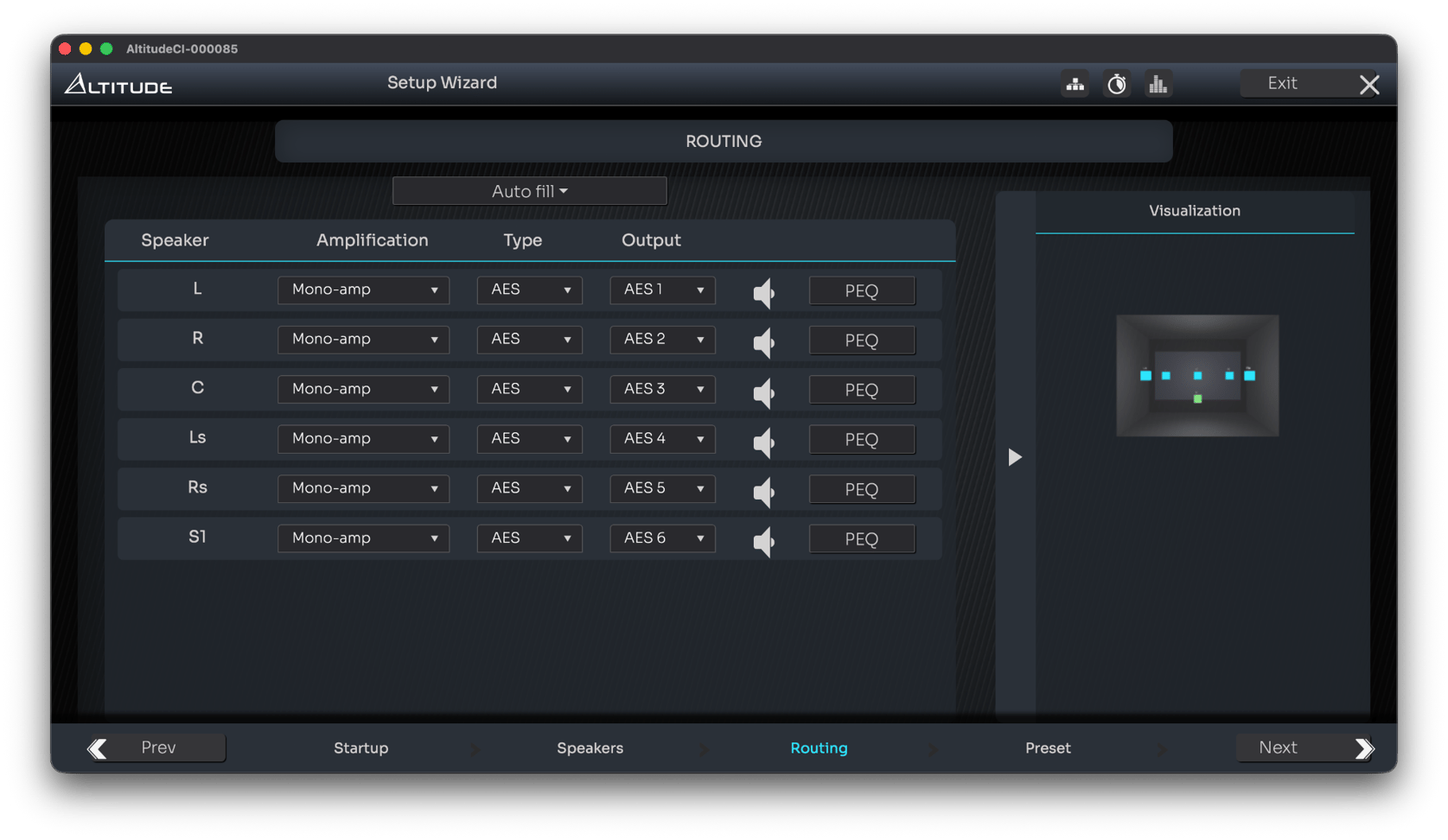
If you're curious, the PEQ setting is on the Routing screen and prior to any optimization.
undefined-Dec-09-2025-09-36-23-9327-AM.png

As you can see, there doesn't appear to be a way to use an all-pass filter prior to the automated Optimizer calibration. Trinnov does let you apply pre-calibration PEQ on the Routing screen, but its documented pre-calibration tools are aimed at things like manufacturer EQ curves and gentle shaping.

An all-pass filter is different because it deliberately changes phase/group delay while leaving magnitude essentially unchanged. So if Adam is somehow trying to influence how Optimizer corrects phase before the main calibration, he would need some other mechanism to do that.

Maybe he temporarily uses an external DSP to impose a phase change before calibration, lets Optimizer compensate for it, and then removes that temporary filter afterward. That is possible in principle, but I have no idea if that's what he actually does because he doesn't describe anything like that in his process.

So in that sense he's right that most people can't do what he does. You really think the average forum person knows what an all pass filter is and when to use one?
 
After installing my home theater, I used MSO to calibrate my subs, then the Trinnov Wizard to calibrate my system. Many iterations later, results were very good, but I wondered if they could be improved via professional calibration, so, I hired Adam to visit. The process spanned a couple of days, was very comprehensive and the system sounded better as a result. The most notable improvements were in the consistency of bass response (seat-to-seat) and dialog clarity. Use of Trinnov profiles allowed me to compare pre to post calibration, but not using fast ABX testing. IMO, the improvements were modest yet tangible. My wife was enthusiastic about the improvements, but both she and I discerned similar changes.

While expensive, It was a worthwhile experiment with reasonable value for services provided. Hiring any specialist contractor to fly to your region and spend two, full days working in your home will result in considerable expense. In retrospect, it is obvious that there is only so much improvement to be made when working in a modestly-treated, non-customized domestic family room that maintains some spousal acceptance. So, I do not intend to employ professional calibration again.

I have subsequently examined the filter changes used to improve vocals and the target curves for each profile. I am an experienced engineer, classical guitarist and a long-time audiophile - knowledgeable, but not expert in acoustics. As I migrate from the Altitude 16 to the CI, I will import specific filters and curves as a starting point. I have ordered a fourth subwoofer, so that I can experiment with Waveforming.
 
Oh wow, this is really interesting. I had wondered if he's using a custom target curve and doing more than he described in his PM...

Please share if you desire. I can't speak for him, but my read from his post below is that he's totally open to people sharing (which is kinda cool), although there are no posts that I could find. It would be great to see measurements and details, especially from someone as experienced as yourself.

https://www.avsforum.com/threads/tr...333448/page-44?post_id=64774477#post-64774477
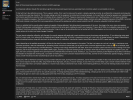
Screenshot 2026-08-23 at 12-29-25 Trinnov AltitudeCI Official Thread Page 44 AVS Forum.png


After installing my home theater, I used MSO to calibrate my subs, then the Trinnov Wizard to calibrate my system. Many iterations later, results were very good, but I wondered if they could be improved via professional calibration, so, I hired Adam to visit. The process spanned a couple of days, was very comprehensive and the system sounded better as a result. The most notable improvements were in the consistency of bass response (seat-to-seat) and dialog clarity. Use of Trinnov profiles allowed me to compare pre to post calibration, but not using fast ABX testing. IMO, the improvements were modest yet tangible. My wife was enthusiastic about the improvements, but both she and I discerned similar changes.

While expensive, It was a worthwhile experiment with reasonable value for services provided. Hiring any specialist contractor to fly to your region and spend two, full days working in your home will result in considerable expense. In retrospect, it is obvious that there is only so much improvement to be made when working in a modestly-treated, non-customized domestic family room that maintains some spousal acceptance. So, I do not intend to employ professional calibration again.

I have subsequently examined the filter changes used to improve vocals and the target curves for each profile. I am an experienced engineer, classical guitarist and a long-time audiophile - knowledgeable, but not expert in acoustics. As I migrate from the Altitude 16 to the CI, I will import specific filters and curves as a starting point. I have ordered a fourth subwoofer, so that I can experiment with Waveforming.
 
@etc6849 I haven't read any of the threads or discussions being referred to, but I guess you both may have a point. Trinnov is an awesome but pretty complicated product, and it's quite easy to do stupid things with it. And sometimes it does stupid things all by itself, which may not be so easy to detect if you don't know the product intimately.

So while I'm sure you personally is competent enough to set it up, plenty of people will not be. So that you specifically can do a good job is probably true, but that anyone can is probably wrong. :) 5500USD seems excessive though. I can understand the price if they fly across the country, but not much point in that if local Trinnov consultants are available.

So paying a bit more after paying the first 20-30,000USD for a processor to actually get it set up properly is probably a good idea for most customers.
 
Last edited:
The disagreement started when another AVS member told me that by saying I could achieve results “just as good” myself, I was insulting highly trained professionals and that I would probably: “never know how good your system could potentially sound” without hiring one.
I don't know your skill set, but certainly a motivated experienced end user CAN achieve "results just as good".

That said, it will likely take you much longer and there is always a subjective component to a room calibration. The seasoned pro having done hundreds of rooms will likely hit a subjective solution you prefer much more quickly than your tweaking for weeks as you second guess your choices.
They might do it quicker. But the joy you get from doing it yourself is also important.
It’s very similar to hiring a professional decorator to do a room. They will do faster than I can, but my finish is just as good and in a few cases better.
 
This is a fair point, but where it gets interesting from a Trinnov perspective is that, by Adam's own description, he does as much as he can with speaker and sub placement beforehand. Trinnov also lets you define PEQ filters prior to running any optimization. I actually did this externally with my Xilica XD4080 connected to my 8 subs. Adam does this as well, and mention PEQ.

However, there are limits to what can be done with the Trinnov settings prior to optimization, and he doesn't mention adding external DSPs, etc. After that initial setup work, he runs Trinnov Optimizer, verifies and manually adjusts the results as needed, and then ultimately does subjective listening and fine-tuning.

A large part of his, and mine and many DIY'ers final workflow is still built around Trinnov's automated Optimizer, followed by manual verification/correction and subjective voicing. None of that strikes me as something inherently unavailable to a knowledgeable owner with the right measurement tools and enough time. It's not hidden knowledge by any means, I believe I read about doing PEQ prior to optimization in one of Trinnov's white papers, but there's also many knowledge base articles like this one for novice and experienced users:

https://kb.trinnov.com/en/knowledge-base/setup-calibration-workflow

If you're curious, the PEQ setting is on the Routing screen and prior to any optimization.
undefined-Dec-09-2025-09-36-23-9327-AM.png

As you can see, there doesn't appear to be a way to use an all-pass filter prior to the automated Optimizer calibration. Trinnov does let you apply pre-calibration PEQ on the Routing screen, but its documented pre-calibration tools are aimed at things like manufacturer EQ curves and gentle shaping.

An all-pass filter is different because it deliberately changes phase/group delay while leaving magnitude essentially unchanged. So if Adam is somehow trying to influence how Optimizer corrects phase before the main calibration, he would need some other mechanism to do that.

Maybe he temporarily uses an external DSP to impose a phase change before calibration, lets Optimizer compensate for it, and then removes that temporary filter afterward. That is possible in principle, but I have no idea if that's what he actually does because he doesn't describe anything like that in his process.
All true, but I think in this discussion it's easy for us to hand-wave "knowledgeable" and undervalue the fine tuning relative to what someone might be willing to pay for that. I'd say clients of someone like this might be paying a lot of money for the last 5% or so of sound quality, but they are also paying for the peace of mind that they're not missing out on anything.
 
They might do it quicker. But the joy you get from doing it yourself is also important.
It’s very similar to hiring a professional decorator to do a room. They will do faster than I can, but my finish is just as good and in a few cases better.
Among this crowd you are probably right, but for many of us, it is the difference between painting the room yourself or hiring a professional.
 
I posted on avsforum that I believe I can do just as good as a professional calibrator charging $5500. I never said professional calibration has no value, nor did I say anyone can do it themselves without any study.
I agree with you.
1) you can do as good as a professional calibrator with enough time/effort
2) professional calibration does things much more quickly with no study required

WHY?
1) Trinnov doesn't gate features behind a dealer (the way a Control4 or Creston might)
2) The Trinnov microphone is calibrated to a superior level to most other available tools (±0.1 dB from 20 Hz to 24 kHz)
3) Within reason, you cannot break anything. This isn't like saying you can do open heart surgery with enough effort and study as well as a cardiothoracic surgeon. Don't like the sound, no big deal, you haven't done any damage [again, ignoring obvious stuff like DC blowing out your speakers]


verifying installation and connections
Easy for knowledgeable user. Not for all owners.

near-field speaker measurements
If you have ASR's measurements or something like Meyer Sound's own anechoic measurements, or have Harman's own SDP-75 data, you'll have superior results than any near field speaker measurement. When the microphone making the near-field speaker measurements is not as well calibrated to Trinnov's own microphone, you're adding problems.

Something like Magic Beans Audio @joentell helps end-users take near-field speaker measurements. I can't speak from personal experience -- but conceptually the app is designed to make these types of measurements more reliable.

individual-driver measurements when something looks wrong
Easy, but if something doesn't go wrong, it's OK. Nothing that you couldn't do.
polarity verification
Easy.
baseline frequency-response measurements
Trinnov's own mic will be the best. It'll be a question of tripod and position repeatability, shockmount, and orientation (level or not, etc.)
room dimensions and placement analysis
Placement analysis is valuable -- saves time. That said, Trinnov offers a lot of documentation on speaker position. Where it would have helped is for cinemas built from scratch and/or room treatments

Speaker Boundary Interference Response (SBIR)
Not sure how the bass measurements don't already capture this?
modal analysis
Yes, with the room being a factor, this can help. But with something like Waveforming, you are almost always better off putting your subs as best as you can to wave forming standards and then having the Waveforming do its job.
subwoofer optimization
Same. In era of Dirac ART and Waveforming, human modification is not likely to make a meaningful improvement
seat-to-seat consistency
Yup. Reproducibility in measurements is critical.

But again, for regular Audyssey XT32 or Dirac, this is pretty important. For Trinnov, you still need to do a good job about pointing the mic properly but you can rebuild models for "single viewer" and "whole room" or "first row only" etc. Trinnov reports distance (incl. delay) and angle/position which you could verify. Most professional calibrators have a tried-true method. This is going to be time consuming for hobbyists -- although the argument is that the perfect alignment stops mattering as soon as someone slouches or sits up...

PEQ and other DSP work
Sure. I think of this like the target curve.

spatial averaging
Important for Dirac/AudysseyXT32 less important for Trinnov in that you can post-measure make modifications as you like
coherence and transfer-function measurements
Sounds great. How does coherence and transfer function change the calibration?

running the room-correction system
independently verifying the correction afterward
Running the system is easy.
Independently verifying works when you're working with Dirac/Audyssey XT32.
When your verification has a UMIK-1 with +/- 1.0 dB and your Trinnov mic is +/- 0.1 dB and gets 4 repeated measurements...

crossover optimization
all-pass filters where appropriate
time alignment
level matching
acoustical phase matching
Most of which is handled by Trinnov. The crossover optimization is potentially valid.
building multiple listening presets
extensive listening afterward
This -- but the end user gets weeks and months of that. To Adam's credit, he can do the measurements and the end user can still add to this.
I have no problem saying that sounds like a thorough calibration process to be fair and honest.
It's probably the "flagship" experience. Low stress and you don't even have to be home. Think about how many hours you've put into tweaking your system? Then think about minimum wage -- you've "spent" more than $5000 --> it's just that you've enjoyed the process. That's the trade off. When you go through AdamG's list, you'll either say "oh no, that sounds too much. I'm going to give this to a trusted expert." or "this is exactly why I paid big bucks for Trinnov -- this is going to be fun."

My best proof?

Directors and creative professionals need to sign off on mixes even when they aren't close to Skywalker Sound in Northern California. They'll need to sign off even when listening in a "conference room." Random room, random seating. Trinnov lets them avoid sending the top experts for calibration. So, if it's good enough for directors/creative professionals to sign off at a high-level...

Trinnov is very different from every other system though in terms of individual user capabilities. It's not looking to correct a razor-flat line *even though it could*. In an old thread, I show how Trinnov will correct a Meyer Sound to less flat of a frequency response than Dirac with a Bose 901. Of course, Dirac w/Bose 901 is using the same mic for pre-and-post whereas Trinnov is using its mic and my REW is with a UMIK-1/2 in similar but not identical position.
 
I agree, it is certainly easier and faster to hire a pro, like most things. However, what really sucks is spending $5500 then adding another sub a year or two later and having to pay that amount again. I can't speak for if Adam offers a discount the second time around, but if he's flying across the country,

My skill set is pretty in-depth when it comes to room acoustics and audio stuff. I started a build thread here:
https://www.audiosciencereview.com/...eci-review-and-32-channel-build-thread.71992/

Still a work in progress, as I'm now working towards removing the 6 Xilica DSPs I was using with my Trinnov AltitudeCI-10, and bought 22 channel upgrades to get to 32 channels.

@jhenderson0107
As they have a new and improved WaveForming firmware coming early next month (well dang, I guess they removed it from the blog post now, but at least the new WF will be demonstrated?!?), I may try WF as well.
https://www.trinnov.com/en/blog/posts/trinnov-audio-at-cedia-expo-2026/

I don't know your skill set, but certainly a motivated experienced end user CAN achieve "results just as good".

That said, it will likely take you much longer and there is always a subjective component to a room calibration. The seasoned pro having done hundreds of rooms will likely hit a subjective solution you prefer much more quickly than your tweaking for weeks as you second guess your choices.
 
After installing my home theater, I used MSO to calibrate my subs, then the Trinnov Wizard to calibrate my system. Many iterations later, results were very good, but I wondered if they could be improved via professional calibration, so, I hired Adam to visit. The process spanned a couple of days, was very comprehensive and the system sounded better as a result. The most notable improvements were in the consistency of bass response (seat-to-seat) and dialog clarity. Use of Trinnov profiles allowed me to compare pre to post calibration, but not using fast ABX testing. IMO, the improvements were modest yet tangible. My wife was enthusiastic about the improvements, but both she and I discerned similar changes.

While expensive, It was a worthwhile experiment with reasonable value for services provided. Hiring any specialist contractor to fly to your region and spend two, full days working in your home will result in considerable expense. In retrospect, it is obvious that there is only so much improvement to be made when working in a modestly-treated, non-customized domestic family room that maintains some spousal acceptance. So, I do not intend to employ professional calibration again.

I have subsequently examined the filter changes used to improve vocals and the target curves for each profile. I am an experienced engineer, classical guitarist and a long-time audiophile - knowledgeable, but not expert in acoustics. As I migrate from the Altitude 16 to the CI, I will import specific filters and curves as a starting point. I have ordered a fourth subwoofer, so that I can experiment with Waveforming.
Curious, did you (or he) use GLM at all?
 
Very true and valid point. I don't use a UMIK-1 USB mic, but not saying my equipment is as nice as Adam's $50k in equipment he mentions. Retail wise, I probably have $9-10k in total of stuff I used based on MSRP. I bought most of my stuff used as I saw it cheap on eBay, so it's not nearly that bad.
photo_4924954319207992564_y.jpg


When your verification has a UMIK-1 with +/- 1.0 dB and your Trinnov mic is +/- 0.1 dB and gets 4 repeated measurements...
 
Back
Top Bottom