• Welcome to ASR. There are many reviews of audio hardware and expert members to help answer your questions. Click here to have your audio equipment measured for free!

Introducing DSPi | A powerful, user friendly and open source DSP for less than a cup of coffee

I can't comment on EPICENTER as I've never used it. I'm looking forward to the Subharmonic Synthesizer. As a lifelong fan of the band Traffic, I enjoy their music immensely but their earlier recordings are quite deficient in the bass department. Hoping the SS breaths new life into those songs.
 
I can't comment on EPICENTER as I've never used it. I'm looking forward to the Subharmonic Synthesizer. As a lifelong fan of the band Traffic, I enjoy their music immensely but their earlier recordings are quite deficient in the bass department. Hoping the SS breaths new life into those songs.
You're referring to what mentioning within this thread exactly?
 
WOW, just wow.

Best wishes for speedy and FULL recovery!

To anyone - I've been using AudioControl Epicenter - analog only I believe? Feedback please...

And over time, please help me understand how (functionally) this new "Subharmonic Synthesizer" feature compares?
Thank you! The Subharmonic Synthesizer works in exactly the same way as the Epicenter (and A120), while offering a little bit more customization.
1789491404644.png

I've been redesigning the effect module UIs, so this looks a little bit different from the current beta. You have control over three different frequency bands, each represeting subharmonics generated from content an octave above them. This is in addition to selectivity controls which enable you to decide whether bass is generated only for short impulses like kick drums or for sustained notes like bass guitars.

The Threshold imposes an upper limit as to the volume of the generated bass (headroom cost) and the 70Hz bell replicates the singular wide EQ band offered by the dbx A120.

EDIT: As suggested, here are the Ko-fi and Patreon links for those interested in supporting the project. :)
 
Last edited:
works in exactly the same way as the Epicenter (and A120)
Fantastic! So for my digital sources one less layer of A/D roundtrip conversion...

The customization options look great!

My Epicenter Pro offers a physical remote with knobs for effect "intensity" as well as volume level – overall vs a "bass boost level" depending on setup configuration.

Please consider exposing these aspects if possible, I'm a huge fan of physical controls at MLP if not a Big Knob right at hand - maybe allow for a few user preset buttons?

Without replacing the same level of control over Loudness Contouring?

JDS Labs Element IV is my next "to become redundant" target, with its LC updates.

But I need those Big Knobs!! 8-D
 
Last edited:
PS please re-post the donation button - everyone please be as generous as you can afford! (my kids are getting old enough to buy their own puddings 8-D )
 
Fantastic! So for my digital sources one less layer of A/D roundtrip conversion...

The customization options look great!

My Epicenter Pro offers a physical remote with knobs for effect "intensity" as well as volume level – overall vs a "bass boost level" depending on setup configuration.

Please consider exposing these aspects if possible, I'm a huge fan of physical controls at MLP if not a Big Knob right at hand - maybe allow for a few user preset buttons?

Without replacing the same level of control over Loudness Contouring?

JDS Labs Element IV is my next "to become redundant" target, with its LC updates. But I need those Big Knobs!! 8-D
The ceiling control is effectively Intensity but I will look into the possibility of a more direct equivalent. Presets are absolutely possible.

PS please re-post the donation button - everyone please be as generous as you can afford! (my kids are getting old enough to buy their own puddings 8-D )
I have added the links to my previous post.
 
In the spirit of my Modularised DSP ™ thinking

Has anyone used DSPi to process MSO filters?

I'm thinking of dedicating an ADAT-fed processor to JUST a group of mono trueSubs, freely placed

as opposed to those embedded in my front 3/5-way L/C/R stacks

to better attempt wranging room resonances, modes etc.

Then I could test to decide where effects like Subharmonic Synthesizer and Loudness Contour were (optionally) deployed – maybe that whole mono bass signal chain gets attenuated / surpressed sometimes, per content type or even album

when striving for envelopment perception, testing "pure stereo" vs mch immersion effects when critical listening

Or cranking it for films, dance parties etc
 
I thought it might be fun to use DSPi and make it into a Sendspin target, i.e. turn it into a network audio streamer. Sendspin is the recent free and open standard by the Open Home Foundation for whole-home, synchronized audio streaming, used by e.g. Music Assistant. Combining DSPi with it would make that into an interesting and very powerful option for audio streaming.

A few days ago I paired up an ESP32-S3 (running ESPHome) with DSPi to play around with this. Using ESPHome provides two benefits here:
  • It already has Sendspin support, and can stream audio received over the Sendspin protocol over WiFi, out over I2S (to DSPi)
  • Home Assistant integration along with it for free.
To control DSPi from ESPHome, I also connected UART/TTL between the two boards, and built an ESPHome component (esphome-dspi) to communicate with DSPi using its excellent, well-documented (serial) protocol. That component only does the bare minimum now (volume control, mute, input select), but can easily be extended and used for any use case.

The actual Sendspin network audio streamer I called dspin, and is basically an ESPHome YAML configuration making use of esphome-dspi and standard ESPHome functionality. The only ESP32-S3 with PSRAM (needed for Sendspin audio buffering) I had lying around was a ESP32-S3-Box-3 which also came with an LCD/Touch screen, so besides a headless configuration (only as a Sendspin network target) I also built simple touchscreen UI. Artwork display, artist/track info and basic play controls turned out to be easy to do.

When @Weeb Labs released DSPi a 1.1.6 beta with spectrum analyzer support a few days ago I thought that would be fun to play with and make work on the little screen as well. So the third display page now has a live spectrum analyzer bar graph running surprisingly smoothly. Not because this feature made sense yet at this point - dspin supports little else yet of DSPi's functionality - but... why not! ;)

dspin-now-playing.png
dspin-spectrum.png


Sendspin streaming from the ESP32 to the DSPi has worked remarkably stable the last few days, and overall this little project has been very quick and smooth. The excellent spec files and documentation inside DSPi have also helped (and my little robot intern) a lot with that. This has been fun.

Anyway, the ESP32-S3-Box-3 is not ideal hardware for this, and quite expensive and probably not that common. I just happened to have one. I'll order and play around with some alternate hardware options soon, and expand its features a bit.

 
Last edited:
possible to integrate (or just allow to add?) a minimal Slimproto client as renderer?

Headless wrt your local screen is fine, the Control Point UI can remain on other devices

EDIT: Maybe better to move this over to
 
The ceiling control is effectively Intensity but I will look into the possibility of a more direct equivalent. Presets are absolutely possible.
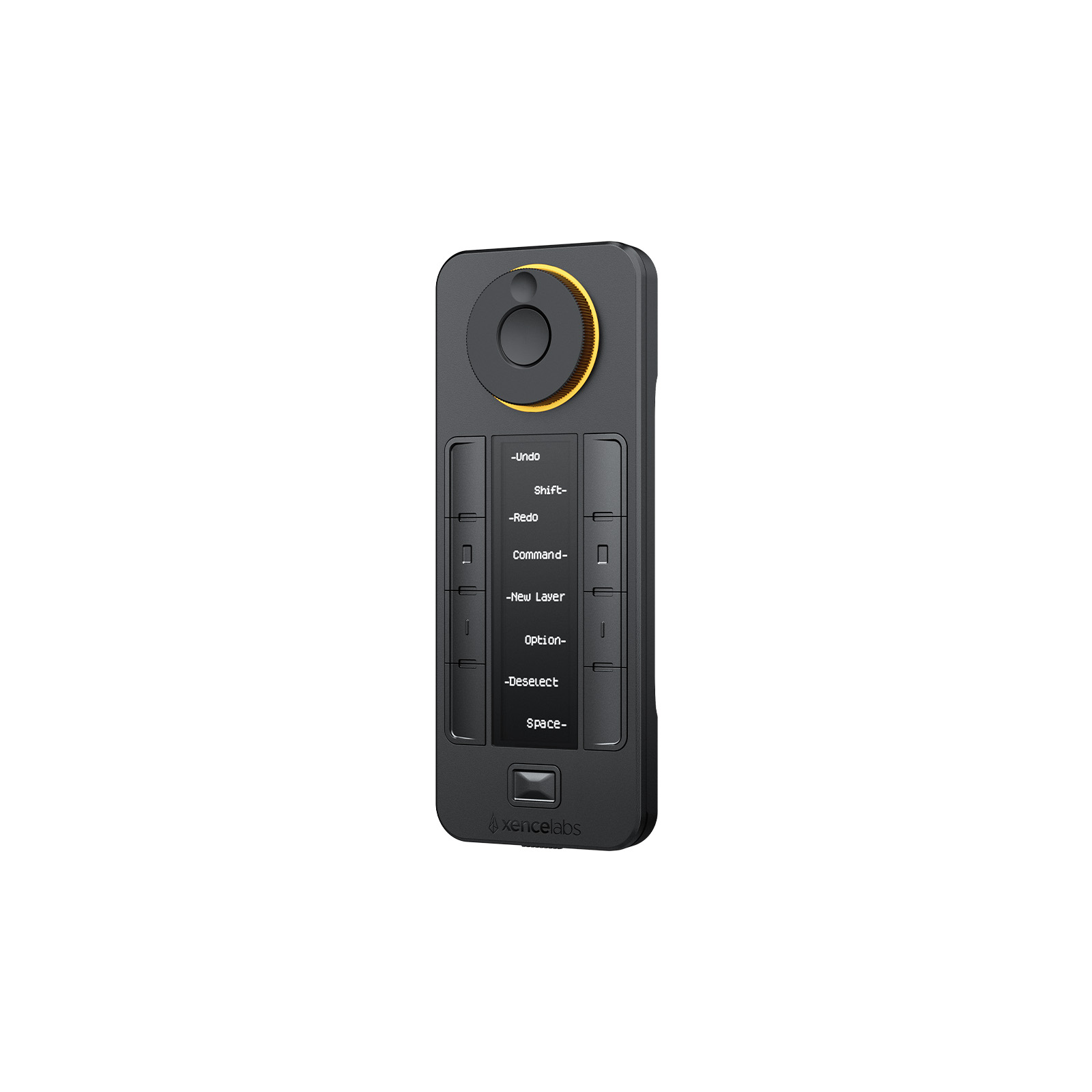
Not a real "Big Knob" but looks like maybe a possible "DSPi remote"?

Uses keystroke macros over BT so maybe existing or general purpose UX / APIs can do the heavy lifting? 41 macro / presets !!

Knob has four modes, so ?

A main volume no LC
B main volume w/ LC
C bass level relative to main
D control "intensity" of Subharmonic Synthesizer effect

Users not so bass obsessed could (besides Level) do OG Tone knobs LC + Mid + Treble
 
For a board at this price the things I would want documented are latency and sample-rate handling, plus whether it can host a 2-way plus sub crossover with biquads and a bypass for measurement. If the analogue output is clean enough to feed a power amp directly, that is the interesting use case - most people do not need another DAC, they need a crossover.
 
Many of those factors will rely on more finished implementations with different components already integrated, right?

DACs will usually be required for higher-frequency output channels, I think the PWM direct output is said to be targeting bass only?
 
Is there a way to get I2S pins working with old R2R DACs like PCM63/ad1862/ad1865. they use mono, right-justified, MSB-first serial input format using Binary Two's Complement (BTC) coding (according to Gemini)...

Thanks
 
Dear Troy.
Some news about Automated Room Correction ? Just out of curiosity—I would never want to ask for anything more than what you have incredibly done so far!!!!
 
Dear Troy.
Some news about Automated Room Correction ? Just out of curiosity—I would never want to ask for anything more than what you have incredibly done so far!!!!
Hello. Room correcton is still in active development but there are a few changes that need to be folded in before it's ready to go.

This weekend's beta will include several useful enhancements, in addition to a new module called Tube Modeller which does exactly what one might expect. :)

1789832407137.png

1789832424975.png

This module can accurately model the behavior of 16 popular vacuum tubes, with or without a transformer. Multiple channels are supported.
 
Last edited:
Just in case you weren't aware, GPIO numbers and physical pin numbers on the Pico 2 are different. Quite a few people have made this mistake while setting things up.


Planned for the next beta!


As it happens, I have been developing a little utility called Wiregen to help me generate comprehensive wiring and setup guides for the project. The PCM1808 is the first guide that I have produced. :)

View attachment 539345
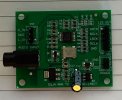
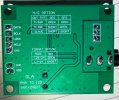
A dummie/newbie question here but I'm posting assuming that I may not be the only dummie/newbie out there. My PCM1808 pcb from Aliexpress is a wee bit different from the one in Troy's diagram. My assumption is that 'MCLK' on this board is the equivalent of 'SCK' on Troy's, and that VDD goes to the 3.3v supply on the pico? At the top of the board I short op2 and op3 to operate in slave mode nd keep op1 open for I2S.
I'm currently running DSPi on a pico feeding three Ali Express PCM5102's as a three way crossover that together with the pico still costs only two coffees and replaces what I prevoiusly used a DAC8x and Rpi5 for (= 30 to 40 coffees).
 

Attachments

  • PCM1808.jpg
    PCM1808.jpg
    301.4 KB · Views: 98
  • PCM1808_2.jpg
    PCM1808_2.jpg
    372.7 KB · Views: 93
MSCK is the master clock (GPIO13 in the DSPi example). I also had this board. If I remember correctly, the power supply must be 5V, because the board has a 5->3.3V regulator and is configured as open, short, short for 48kHz slave.
I'm glad for your health: 30 cups of coffee a day is really too much :D
 
I roast my own beans and the day doesn't even start until after the second espresso.o_O Thanks for the heads up.
 
This PCB version of the PCM1808 works with the DSPi in master mode; in this case, you must connect MCLK to the DSPi's GPIO13. I was unable to get it working in slave mode.
 
Back
Top Bottom