• Welcome to ASR. There are many reviews of audio hardware and expert members to help answer your questions. Click here to have your audio equipment measured for free!

Interspace PCBB3 Hum Eliminator/Converter

Rate this converter

  • 1. Poor (headless panther)

    Votes: 81 94.2%
  • 2. Not terrible (postman panther)

    Votes: 5 5.8%
  • 3. Fine (happy panther)

    Votes: 0 0.0%
  • 4. Great (golfing panther)

    Votes: 0 0.0%

  • Total voters
    86
I really wonder about the genesis and developement process of such products.
Is it that hard to make a performing device of this type?
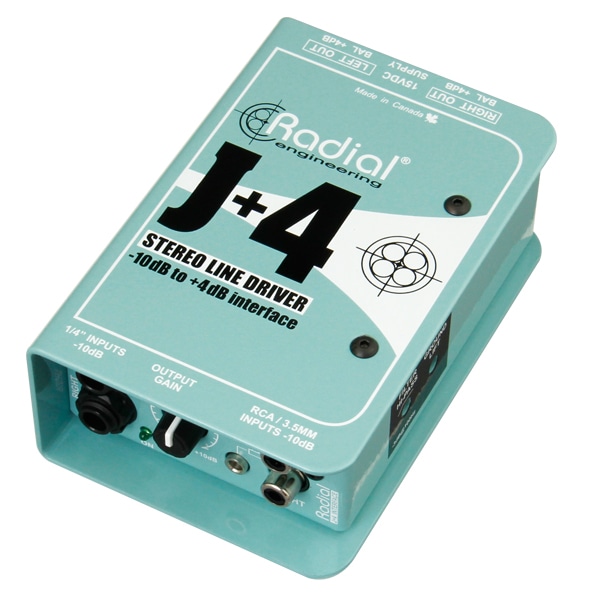
Go to Jensen transformer website (radial engineering) and copy one of there designs that have been used for 50 years.
Good audio transformers are not cheap and this manufacture makes more money using chaep ones, thats all.
 
Clearly not this particular one :-D
We all know the simple approaches to solve ground loop issues - which IMO should really not happen these days. I personally have had not an issue with ground hiss in years immemorial, which makes me often wonder why others encounter them still.
Pro situations can be much more complex, with dozens of pieces of gear with multiple in/outs often in other rooms sometimes even powered from different breaker panels.
Even with everything completely electronically balanced sometimes transformers are the only fix for hum.
 
Good products do exist, but they are pricey:

I have a few of those and this one as well. They are pricey but good enough to replace an audio interface and go from the headphone out of a Mac or PC directly to a balanced input in a sound board next to the computer. They make things less complicated for volunteers (and for me) running audio in a church with small venues around campus. In our large venues, the computer audio connects with either Dante, Waves Soundgrid or USB audio.

 
Does it eliminate ground loops?
No, the DRV134 is an integrated solution consisting of three op-amps on a single chip, designed to ensure high-quality conversion from unbalanced to balanced signals.
 
Pro situations can be much more complex, with dozens of pieces of gear with multiple in/outs often in other rooms sometimes even powered from different breaker panels.
Even with everything completely electronically balanced sometimes transformers are the only fix for hum.
The best insurance against grounding issues is a solid mains power setup with a proper ground connection. This should be paired with high-quality cables fitted with premium plugs and sockets—ideally using both crimped and screwed connections.
Naturally, the same applies to small-signal cables.
Every one to three weeks, I integrate new units—ranging from Hi-Fi to studio and pro audio gear—into one of my setups for testing. In over twenty years, I can recall only a handful of devices that caused grounding issues; almost all of them were cheap, compact units with even cheaper external power supplies.

Cheap computers and their low-quality power supplies, in particular, can cause grounding problems when used with external DACs. Often, the grounding within the computers themselves is substandard.

Transformers can certainly be a solution, but they always come with downsides. Moreover, they don't actually solve the underlying problem; they merely suppress the symptoms.
 
The best insurance against grounding issues is a solid mains power setup with a proper ground connection. This should be paired with high-quality cables fitted with premium plugs and sockets—ideally using both crimped and screwed connections.
There are more issues than this for unbalanced/RCA connections. Internal current leakage gets multiplied by shield impedance to create a noise signal even if you feed perfect power to both devices from the same point. This is why when you have a ground loop, messing with power strips, cables, etc. makes little difference.
 
Pro situations can be much more complex, with dozens of pieces of gear with multiple in/outs often in other rooms sometimes even powered from different breaker panels.
Even with everything completely electronically balanced sometimes transformers are the only fix for hum.
Optical fibres are a cure. Transformers have their issues.
 
It costs less than €10 including shipping,
But no galvanic isolation - so an eventual hum would remain..... I suppose the poor performance of the DUT is due to a very cheap transformer used?

//
 
Optical fibres are a cure. Transformers have their issues.
Sure if your gear is all digital but hows that work when your running 64 analog inputs from 4 different machines into a large analog mixing desk? You would need another set of A to D and D to A conversions.
Everything has issues.
 
The best insurance against grounding issues is a solid mains power setup with a proper ground connection.
Not that simple.
Transformers can certainly be a solution, but they always come with downsides. Moreover, they don't actually solve the underlying problem; they merely suppress the symptoms.
They do solve the problem. Galvanic isolation means no conduction path for the ground currents to flow between the source and the destination. You can have hundreds of volts difference between the 2 grounds and still have no ground current between the devices.
 
To be pedantic a transformer have some capacitive coupling too, so at higher frequencies you have a coupling between in and out ?

I don’t know how high it is for practical Adium transformers ( here I lack knowledge and experience ) .

But in industrial applications there is slouch a thing as a screen winding in power transformers.

And transient network disturbances, travels trough transformers at higher rate than the winding ratio suggests due the capacitive coupling. A spike can be of almost the same size at the other side ?
 
I’d find it really interesting to see a test of one of those cheap AliExpress DRV134 dual-channel unbalanced-to-balanced board modules for comparison. It costs less than €10 including shipping, and I’ve had good experiences with it so far.

View attachment 555993
View attachment 555994

How can they be considered equivalent?

Where is the power coming from to power an active converter ?

People use the passive converters .. err, for situations when they don't want to supply power to such a thing !

Then, where is the ground lift switch, where is the casework, the 3 year guarantee, the wiring, the XLR connectors, the jack plug ? And in the case of the product above, where is the power supply ?

How much are you going to pay someone to solder it together, put it in a useable case, build the PSU .. certify it for safety (now that it is powered) ?

And then test it for noise, distortion etc .. and make sure it works with all devices, doesn't introduce it's own hum or interference to the output of a laptop or phone or tablet ?

By the time you've finished, you've spend more like £400 , including paying a technician to divert their skill and work away from other jobs in your A/V company ..

AND, you've now got a powered product that could, due to wear and tear being used on the road every day, cause it's own issues .. or even damage a client's device and land you with an insurance headache.

 
Looks like transformers inside, small ones, thus the LF distortion. I would have hoped for ASR not to deal with such s..t products.

I think it is yet another example of a valuable service being provided for everyone !

It's not a shit product .. it's a product that has a use case outside or most ASR member's experience or even imagination.

It is surprising to me how poorly small transformers perform though !

And that education from Amir.. is interesting and valuable, so thank you @amirm for the effort taken to test this !
 
Err .. yep, just to reiterate what some have already said :

Firstly, it's a UK product that costs £90 here ($120)

The Lundahl equivalents come to about £250 and without the switched features ( Lundahl SIB15).

This device is for use with things such as a laptop output for presentations, one the client will bring to the gig and that the audio engineer has absolutely no control over .. therefore it needs to be passive (else hum can be introduced via ground potential differences ) and in the analogue domain only.

It needs to have quick and easy to use trouble shooting options like ground lift, pad etc And then be robust enough to last being chucked in a flight case and buried by other cables .. over and over, gig after gig (I mean, I wouldnt chuck it in, but some other crew member may do) .

The devices it is going to be taking audio from are unlikely to have much dynamic range over 80dB .. and the frequency response needed is probably only realistically down to 80Hz or so at most.

Then this audio is going to be headed straight for a compressor or limiter plug-in on the desk (mixer) and then EQ.

It does what it does as a tool for commercial audio use in venues. And the measurement goes to show it is NOT intended for the likes of any forum audiophile ..
 
Have you tried any risers for those balanced cables?o_O
But then they would sound so much better than the rest of the system! ;)
 
You have a ground loop and have tried everything but it won't go away. These things are a solution for that especially since they convert unbalanced to balanced.
Most people have no idea how it works on stage, or in a recording studio with many interconnected audio systems. Just plugging in unbalanced devices, and expecting noise free performance is not reality, and it leaves many perplexed as to how something that produces clean clear output on it's own, suddenly seems to sound terrible.

The Rane Notes are an excellent technical resource for anyone interested in understanding audio system interconnection and ground loops. An interesting exploration of why you commonly can't just plug stuff in and get noise free audio. Essential reading for anyone getting involved in environments with interconnected audio systems.


Last edited:
Back
Top Bottom