• Welcome to ASR. There are many reviews of audio hardware and expert members to help answer your questions. Click here to have your audio equipment measured for free!

Inexpensive Automated Speaker Measurements: Using an Off-the-Shelf Motorized Turntable for CEA-2034 Spinorama

They're not expensive. But they are out of budget for many people. Luckily there are good products in all price categories these days.

?

I was mostly asking why a company that sells 30k speakers cant foot the bill for a klippel and has to resort to perusing diy projects. Doesnt really add up.
 
?

I was mostly asking why a company that sells 30k speakers cant foot the bill for a klippel and has to resort to perusing diy projects. Doesnt really add up.

When a business sells a 30k product, they don't pocket 30k.

Further, a Klippel NFS mainly makes things easier to do, it's not impossible without it. So there are lot of things to spend 100k on before a Klippel NFS.
 
@ObjectAudio It seems a bit strange to me that the CTA2034 standard suggests such an impractical way to measure (not having the speaker centered on the platter).

Looking at Erin's videos he doesn't seem to place the speaker off-center, and I don't think Amir does either. Does the Klippel NFS software have this type of correction too?
Yes, ANSI/CTA-2034 explicitly specifies that the rotational reference point (the origin of the coordinate system) must be on the speaker's reference axis—typically defined as the front baffle surface at the tweeter center.

When you rotate around the physical center of a deep cabinet instead, the front baffle shifts closer and farther from the mic at different angles, introducing distance (level/phase) and angular errors into traditional far-field sweeps.

The Klippel NFS avoids this physical limitation entirely because the speaker stays static on its stand while a robotic arm scans around it. Its software calculates the spherical wave field, allowing the operator to mathematically define the rotational origin right at the tweeter on the front baffle regardless of where the box physically rests—which is conceptually the exact same coordinate transformation my software performs on centered turntable sweeps.
 
So, how is the quality of ComXim programmable turntables? Do they work as you had hoped, or have you run into any issues? If these work well, I'm pretty sure I will get one.
It’s been working great for me, very precise angle positioning, and the USB commands make automation effortless.
 
Amir measured the JBL 306P MkII on the Klippel NFS a while ago. I wanted to see how close my current setup—a USB turntable, a standard mic, and custom software I am developing—could compare with those results.


Comparison Plots​

1. ASR / Klippel NFS Baseline (from Amir's review)

1791219034177.png


2. Current System Measurement — Left Speaker

1791219079181.png


3. Current System Measurement — Right Speaker

1791219132724.png


4. Pair Comparison — Left vs. Right

1791219176846.png


Quick Takeaways​

  • Spot-on Directivity & Bass: The DI curves and bass extension down to 40 Hz track the Klippel almost perfectly, including the crossover dip around 1.5 kHz.
  • Gating vs. Klippel Detail: Indoor gating acts as a mild natural smoother while the Klippel reveals fine structural detail along with occasional mathematical and scanning artifacts.
  • Speed & Efficiency: A full 360° plane takes about 8-minute hands-off process. Including close-mic bass sweeps, the whole run takes under 20 minutes net—compared to a couple of hours on a Klippel NFS.
  • Smart Axis Correction: The speaker rests physically centered on the turntable for balance and stability. The software mathematically transforms every angle to the tweeter reference axis, so there's no need for awkward off-center physical mounting
 
Clever. I was going to suggest having the mic sit on an xy positioning track (like used to move the extruder of a corexy 3d printer) moving to keep its distance from the axis point constant, but your software-only solution is more practical for diyers.
 
Clever. I was going to suggest having the mic sit on an xy positioning track (like used to move the extruder of a corexy 3d printer) moving to keep its distance from the axis point constant, but your software-only solution is more practical for diyers.
Another possibility... Build a stationary speaker stand (with adjustable height if desired) that rests on the floor rather than the turntable. Hang the ComXim programmable turntable from the ceiling and attach the microphone on an arm and let it rotate around the speaker baffle. The mic and arm weigh practically nothing, so you can use the smallest (and cheapest) turntable.
 
Another possibility... Build a stationary speaker stand (with adjustable height if desired) that rests on the floor rather than the turntable. Hang the ComXim programmable turntable from the ceiling and attach the microphone on an arm and let it rotate around the speaker baffle. The mic and arm weigh practically nothing, so you can use the smallest (and cheapest) turntable.
And a counterweight could be on the other end of the mic's boom arm. Would need a pretty big room to keep all positions of the mic on a long arm at a reasonable quasianechoic distance from room boundaries, though. Mid/low frequencies could be a problem.
 
...Would need a pretty big room to keep all positions of the mic on a long arm at a reasonable quasianechoic distance from room boundaries, though...
Yes! And I think this is why DIYers don't tend to attempt this. If you are doing measurements in a normal room in your house, I think this is ruled out for most of us. But if you have a large garage or similar space it's an option. I have a 3-car garage with 10 ft ceilings, so I'm debating what I should do. The two smallest turntables are on sale right now, maybe due to Prime Day.
 
@ObjectAudio: Truly AMAZING work! I'd already want to contribute with measurements of speakers that have not yet passed any Klippel NFS.

Any estimation on whether also omnidirectional loudspeakers could be measured meaningfully?

They're not expensive. But they are out of budget for many people. Luckily there are good products in all price categories these days.
Objectively speaking they are expensive. Not super crazy expensive but definitely expensive. Comparing them to other active speakers objectively, there are some available at a similar price or even at less than half their cost with better performance by standards like CEA-2034 Spinorama or CEA-2010 (judging from the somewhat incomplete sets of measurements on your website). This objective comparison with the competition is one reason that makes speakers look expensive or not.

Please don't get me wrong; I am not talking about whether the cost for your speakers is justified. That's a different story.

Subjectively, I find them visually very appealing* and I hope to be able to audition them soon (in an acoustically well-treated room). In any case it is commendable to find more players also within Europe, which strive to build accurate speakers!

*Addendum: Part of what my eyes like are the enclosures' sharp edges. But unless such speakers would theoretically be flush mounted in a wall, what my eyes like, my ears won't (sharp edges causing diffraction).
 
Last edited:
Objectively speaking they are expensive. Not super crazy expensive but definitely expensive. Comparing them to other active speakers objectively, there are some available at a similar price or even at less than half their cost with better performance by standards like CEA-2034 Spinorama or CEA-2010 (judging from the somewhat incomplete sets of measurements on your website). This objective comparison with the competition is one reason that makes speakers look expensive or not.

If you take some time to understand what is offered, I think you will find it quite competitive.
With regards to measurements, there are full CEA-2034 on spinorama.org of two of our three systems if you want to dive in.

Please don't get me wrong; I am not talking about whether the cost for your speakers is justified. That's a different story.

Subjectively, I find them visually very appealing* and I hope to be able to audition them soon (in an acoustically well-treated room). In any case it is commendable to find more players also within Europe, which strive to build accurate speakers!

You are welcome to stop by. We even cover your travel costs if you end up buying.

*Addendum: Part of what my eyes like are the enclosures' sharp edges. But unless such speakers would theoretically be flush mounted in a wall, what my eyes like, my ears won't (sharp edges causing diffraction).

Sharp edges causing diffraction is exaggerated. Sharp edges causing audible issues is even more exaggerated. Look at highly praised and well measuring speakers like the Kef Reference series. Hard edges. Or the Genelec 8380A. The latter has slightly rounded edges, but not really much.
 
If you take some time to understand what is offered, I think you will find it quite competitive.
With regards to measurements, there are full CEA-2034 on spinorama.org of two of our three systems if you want to dive in.


You are welcome to stop by. We even cover your travel costs if you end up buying.


Sharp edges causing diffraction is exaggerated. Sharp edges causing audible issues is even more exaggerated. Look at highly praised and well measuring speakers like the Kef Reference series. Hard edges. Or the Genelec 8380A. The latter has slightly rounded edges, but not really much.
Yes, I found the spinorama.org measurements but since they are based on your published measurements they lack measured data due to simulation below 200(?) Hz; and meaningful distortion measurements (as the whole spinorama.org database).

Regarding the speakers you mentioned:

KEF Reference are not their reference speakers as I am sure you are aware.^^ One can see diffraction artifacts or resonances on KEF's own Reference 5 Meta measurements starting at 1 kHz, as they are present on: On Axis, Listening Window, Early Reflections and Sound Power. Their true reference speakers, the KEF Blade series do not show these issues at higher frequencies; not even on Erin's higher resolution measurements of the Blade 2 Meta. Source: https://erinsaudiocorner.com/loudspeakers/kef_blade2_meta/

Simply put, if money is not an issue and somebody goes for KEF they'd choose the Reference over the Blade only for the looks; not for the sound. PR and marketing is a different story.

Genelec's 8380A is built this way as a Main Monitor to offer the option for flush mounting in a wall, which will remove such issues (+ SBIR if it is a properly built hard wall like in control rooms). As per their Operating Manual on page 3: "[...] When soffit (flush) mounting, the wall surface should extend to the monitor, forming a continuous surface." – which otherwise could not be achieved.


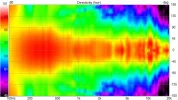
If we take your Saranna speakers (with somewhat bevelled edges), to have a comparison of single front mounted driver - a coaxial one (with KEF Blade | round edges); especially on your Horizontal directivity / polar map the areas of issue starting at around 2 kHz, then 3 kHz, roughly 4.5 kHz [human hearing's most sensitive areas!], 6 kHz etc. can be easily identified. This also poses a challenge for possible overcorrections during automated room-EQ.
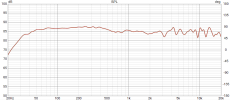
measurementsimulated.png : Hor-Directivity.webp

I'll leave it to the eye of the beholder to judge, whether this can be accepted as quite competitive given the price point.

Would your speaker systems offer a built-in fool-proof setup software, since adding (1 or) 2 - 4 (or more) subwoofers is never an easy task, I might be more willing to accept their call for value. In terms of integration into the full system, the only "easy" option is when putting the subwoofer(s) directly below the main speakers so it basically becomes one physical sound source per (stereo) channel. Every other option requires a lot more tinkering. Room simulators only work reliably in "standard" rooms, which almost never is the case. So one would require to place, measure, place, remeasure etc. all subwoofers in different locations to find the right spots. Software would be required which automates these steps and suggests the best locations of all involved subwoofers (and main speakers) based on their measurements (of the single subwoofers and combinations to multiple simultaneous outputs) + integrates them automatically (which probably would require some additional, external "hub" DSP device). Then, further choices have to be made like whether to integrate the subwoofers as a mono channel to flatten room response over a wider listening area or to improve stereo bass - or to do both if subwoofer groups are involved. To crossover (HPF) or not to crossover and so on. Another issue when using cardioid speakers is, that subwoofer integration might "cancel" effectiveness of the main speakers' cardioid bass response if they overlap.

So if a speaker system offered an easy but accurate tool to tackle all these (and more) issues one inevitably faces - and made it usable without asking for a degree in acoustics, then I would be impressed and willing to pay (reasonable) more. :)
 
Last edited:
Would your speaker systems offer a built-in fool-proof setup software, since adding (1 or) 2 - 4 (or more) subwoofers is never an easy task, I might be more willing to accept their call for value.

That is good, since first of all they're designed to be integrated and have preset crossovers. And active help from me to get it properly set up is indeed included in the price (as clearly described on the website). Setup software is also in the works.

In terms of integration into the full system, the only "easy" option is when putting the subwoofer(s) directly below the main speakers so it basically becomes one physical sound source per (stereo) channel. Every other option requires a lot more tinkering.

Some work is for sure required to get the best possible sound, but as mentioned you will get help with this. If one would like to trade the work with less optimal bass, that is a choice everyone is free to make.

So if a speaker system offered an easy but accurate tool to tackle all these (and more) issues one inevitably faces - and made it usable without asking for a degree in acoustics, then I would be impressed and willing to pay (reasonable) more. :)

As with the diffraction issues, you are exaggerating some of the issues (I'm not commenting further on diffraction since it is already clear we will have to agree to disagree), and the rest of them are handled to a degree where I think you would indeed be impressed with the results.
 
  • Like
Reactions: 829
That is good, since first of all they're designed to be integrated and have preset crossovers. And active help from me to get it properly set up is indeed included in the price (as clearly described on the website). Setup software is also in the works.


Some work is for sure required to get the best possible sound, but as mentioned you will get help with this. If one would like to trade the work with less optimal bass, that is a choice everyone is free to make.


As with the diffraction issues, you are exaggerating some of the issues (I'm not commenting further on diffraction since it is already clear we will have to agree to disagree), and the rest of them are handled to a degree where I think you would indeed be impressed with the results.
I would out of respect for your work not have started this conversation and I can see your speakers' merit; but it is also clear by pure objective evaluation of data that the competition you chose to mention continues to prove why they are constantly being referenced among the references.^^

Yes, I am sure I will enjoy listening to your speakers in a well-treated room. Our brain is quite forgiving if no direct comparison is available or if no double-blind equal-loudness test is being conducted among several of the best contenders, incl. the ones you mentioned.

Also if comparing your Manta with Erin's higher resolution measurements of the Genelec 8380A one sees that the 8380A plays in a whole different league even when not flush mounted in a wall. This becomes more evident when looking at the directivity indexes: Sound Power DI based on the differences between On Axis and Sound Power but even more important Early Reflections DI based on the Early Reflections curve. Mismatches which show in these curves, i.e. directivity issues cannot be EQed and require better loudspeakers. Surely the 8380A's huge wave-guide plays an important role.

Fun fact: The KEF Blade series achieves their stellar performance without having the advantages of digital crossover.
 
If we take your Saranna speakers (with somewhat bevelled edges), to have a comparison of single front mounted driver - a coaxial one (with KEF Blade | round edges); especially on your Horizontal directivity / polar map the areas of issue starting at around 2 kHz, then 3 kHz, roughly 4.5 kHz [human hearing's most sensitive areas!], 6 kHz etc. can be easily identified. This also poses a challenge for possible overcorrections during automated room-EQ.

Most coax diffraction issues aren't from the cabinets geometry, it's from discontinuities between the tweeters loading as it transition to the woofer, and from the woofers surround. One can typically deduce the causes, and remedies from a visual stand point. The genelec coax units are quite the engineering marvel, almost like they asked what the problems with coax units are, and just fixed almost all of them.
 
Most coax diffraction issues aren't from the cabinets geometry, it's from discontinuities between the tweeters loading as it transition to the woofer, and from the woofers surround. One can typically deduce the causes, and remedies from a visual stand point. The genelec coax units are quite the engineering marvel, almost like they asked what the problems with coax units are, and just fixed almost all of them.
Absolutely. I had a look at the crossover points before and thus am more impressed by their engineering.

KEF Reference 5 Meta: 450 Hz / 2.1 kHz
KEF Blade 2 Meta: 450 Hz / 2.2 kHz
Sigberg Saranna: 600 Hz / 2.5 kHz
 
Last edited:
I would out of respect for your work not have started this conversation and I can see your speakers' merit; but it is also clear by pure objective evaluation of data that the competition you chose to mention continues to prove why they are constantly being referenced among the references.^^

But you did start the conversation, does that mean you do not respect my work? I am confused.

Yes, I am sure I will enjoy listening to your speakers in a well-treated room. Our brain is quite forgiving if no direct comparison is available or if no double-blind equal-loudness test is being conducted among several of the best contenders, incl. the ones you mentioned.

Also if comparing your Manta with Erin's higher resolution measurements of the Genelec 8380A one sees that the 8380A plays in a whole different league even when not flush mounted in a wall. This becomes more evident when looking at the directivity indexes: Sound Power DI based on the differences between On Axis and Sound Power but even more important Early Reflections DI based on the Early Reflections curve. Mismatches which show in these curves, i.e. directivity issues cannot be EQed and require better loudspeakers. Surely the 8380A's huge wave-guide plays an important role.

Fun fact: The KEF Blade series achieves their stellar performance without having the advantages of digital crossover.

I could counter all of this but it would bad form to discuss the competition in such a way, so I am afraid I am unable to directly contradict this. Further, these systems clearly are not for you, which is perfectly fine. Thank you for still taking the time to explore what we offer. If you ever are in the market for something like this, I invite you to listen - your trip will be paid if you end up purchasing.

This is also clearly off topic in this thread, you are welcome to continue the discussion in our main discussion thread or in any of the threads specific to any of the products..
 
Absolutely. I had a look at the crossover points before and thus am more impressed by their engineering.

KEF Reference 5 Meta: 450 Hz / 2.1 kHz
KEF Blade 2 Meta: 450 Hz / 2.2 kHz
Sigberg Saranna: - no mention -

600hz and 2.5khz
 
  • Like
Reactions: 829
But you did start the conversation, does that mean you do not respect my work? I am confused.

[...]
All I did was alleviate your comment that your speakers were not expensive. I did purposely not make any specific comparison and I did show my appreciation for your strive to build accurate speakers. So yes, I appreciate your work but I also see room for improvement.

I agree, this shall be my last comment on this topic. :)
 
Back
Top Bottom