For that, something like AVAAs exist, but pretty expensive.@829 Mostly agreed except bass traps. Personally I use acoustic treatments for the frequencies above 200hz or so, and EQ below. Effective treatment of the bass is unrealistic in most domestic spaces.

-
Welcome to ASR. There are many reviews of audio hardware and expert members to help answer your questions. Click here to have your audio equipment measured for free!
You are using an out of date browser. It may not display this or other websites correctly.
You should upgrade or use an alternative browser.
You should upgrade or use an alternative browser.
If Room Treatment is difficult, expensive and often ineffective, why are so many on reddit in love with it?
- Thread starter Mort
- Start date

YouDontHaveEnoughBass
Active Member
- Joined
- Feb 13, 2026
- Messages
- 174
- Likes
- 247
I honestly think most room treatment and EQ is done because it’s “the proper thing to do” and following overly broad guidance they’ve found online
I think a better mindset is that those things are to fix problems, actual perceivable problems you notice while listening; when this approach is taken you suddenly go from some crazy auto generated EQ with a dozen filters to just one PK trimming that one room mode that rings a noticeable amount - for room treatment you end up doing far less too maybe nothing, for example mine consists of a rug which I would’ve put down for aesthetic reasons anyway and a big thick tapestry on the wall to fix flutter echo (an actual perceivable issue not some vague concept like ‘first reflections’ which are often better untreated anyway)
I think a better mindset is that those things are to fix problems, actual perceivable problems you notice while listening; when this approach is taken you suddenly go from some crazy auto generated EQ with a dozen filters to just one PK trimming that one room mode that rings a noticeable amount - for room treatment you end up doing far less too maybe nothing, for example mine consists of a rug which I would’ve put down for aesthetic reasons anyway and a big thick tapestry on the wall to fix flutter echo (an actual perceivable issue not some vague concept like ‘first reflections’ which are often better untreated anyway)

If we are talking absorbers, Yes.@829 Mostly agreed except bass traps. Personally I use acoustic treatments for the frequencies above 200hz or so, and EQ below. Effective treatment of the bass is unrealistic in most domestic spaces.
Helmholtz and quarter wave tubes are far more effective and does not have to take up a lot of room.
But they can mostly be used on modes, not the overall deacay.

Tell
Major Contributor
- Joined
- Mar 30, 2024
- Messages
- 1,139
- Likes
- 1,633
DIY absorbers are very effective and doesn't cost much at all.... is expensive and often impractical.
If you can't get the best, then priorities have to be established. Good speakers come first, then EQ-capable devices, then room treatment. For the average person I would never suggest buying treatment.
Sure I can hear that there are issues in say the bass and I can take a shot at a PEQ filter to fix that, or I just use my UMIK1 and get an objective truth instead. Measuring is always the broad guidance, not trying to listen for it because that can't really be sone reliably.I honestly think most room treatment and EQ is done because it’s “the proper thing to do” and following overly broad guidance they’ve found online
I think a better mindset is that those things are to fix problems, actual perceivable problems you notice while listening; when this approach is taken you suddenly go from some crazy auto generated EQ with a dozen filters to just one PK trimming that one room mode that rings a noticeable amount - for room treatment you end up doing far less too maybe nothing, for example mine consists of a rug which I would’ve put down for aesthetic reasons anyway and a big thick tapestry on the wall to fix flutter echo (an actual perceivable issue not some vague concept like ‘first reflections’ which are often better untreated anyway)
YouDontHaveEnoughBass
Active Member
- Joined
- Feb 13, 2026
- Messages
- 174
- Likes
- 247
I use my umik 1 too and look at the scale and decay of each peak and produce cuts accordingly; most have an insufficient blend of size and decay time to be worth fixing though in my experience and i do this by producing the filters then toggling them on and off to see what the perceivable effect is - after this process most prove unnecessary
Most rooms I’ve measured have that ‘one big peak’ that, once trimmed down, leads to a balanced enjoyable sound
“sometimes graphs bother the eyes more than the ears” - Floyd (paraphrased)
Most rooms I’ve measured have that ‘one big peak’ that, once trimmed down, leads to a balanced enjoyable sound
“sometimes graphs bother the eyes more than the ears” - Floyd (paraphrased)
Last edited:
This is a shame. If someone has the motivation to get the best gear possible (within ones own limits), then it would only be logical to try and get the best out of it.[...] For the average person I would never suggest buying treatment.
"The best" of course always also is relative to ones possibilities but since we are talking about direct enjoyment of music and not just background or ambient playback, this approach sounds quite doable:
1) Good speakers
2) Best possible placement in the room
3) Treatment of early reflections. DIY if on a budget
4) Room-EQ especially to tame bass peaks
5) Good music! (well produced and without destructive DR compression; example)
6) All the other equipment
The most effective lever for further increasing audio fidelity would be expansion of 3) *towards the bass region, before buying "better" 1).

Last edited:
YouDontHaveEnoughBass
Active Member
- Joined
- Feb 13, 2026
- Messages
- 174
- Likes
- 247
1 and 3 seem contradictory, if the speakers are good that implies good horizontal dispersion behaviour and so reflections are welcome
1 and 3 seem contradictory, if the speakers are good that implies good horizontal dispersion behaviour and so reflections are welcome
The reasons are explained in the linked articles I provided before.Room acoustics treatment and correction are always needed. Yes. Even with cardioid pattern, without perfect room acoustics EQ is needed to tame the in room response.
But decent cardioid is not just narrow directivity. This feature can result less dip, less phase error, less spreaded image. Initial reflections are the most important things to handle.
Well designed cardioid pattern helps a lot for room acoustics that's why there is W371A too.
Source. I believe AsciLab's speakers would qualify for your definition.


Yes and no. Of course it always comes down to which possibilities one has and is willing to make use of. But when it comes to effectiveness of bass absorption even below 100 Hz, the important aspect is the area of absorption in a room - not only the (appropriate thickness and material of) bass traps in (as many) corners (as possible).
Bass Trap Myths
This article busts several myths about bass traps and low frequency behavior in small rooms.ethanwiner.com
But I agree, a minimum should be early reflections and this can basically be done without huge sacrifices and by still maintaining a reasonable WAF.
DIY would also be very inexpensive...
I don't subscribe to any of those myths, it's more that to get a decent effect you need so many and large traps that it is completely unrealistic in anything except a 100% dedicated listening room. And even there I'm unsure if it's worth it compared to simply using EQ + multiple bass sources. But I know some

YouDontHaveEnoughBass
Active Member
- Joined
- Feb 13, 2026
- Messages
- 174
- Likes
- 247
I’ll have to dig out sources later but for conventional hifi listening most people (and I’d include myself in this list) prefer a more defuse soundstage to pinpoint imaging in a blind AB comparison, if I remember right even many who stated they prefer precise imaging before the test came out afterwards having learned they prefer the other
... is expensive and often impractical.
What is expensive in your book?
I think this is what people tell themselves because they don't want to spend the time and work needed to treat the room (and understanding how). That is completely fair and okay, but don't say that it doesn't work or isn't worth the effort, because that is just wrong. No one has to go to the gym and work out, it's a personal choice. But the effect is pretty well established.
If you can't get the best, then priorities have to be established. Good speakers come first, then EQ-capable devices, then room treatment. For the average person I would never suggest buying treatment.
I don't know how you define an average person, but for anyone serious about getting good sound I would 10/10 suggest installing acoustic treatment (properly done of course).
I’ll have to dig out sources later but for conventional hifi listening most people (and I’d include myself in this list) prefer a more defuse soundstage to pinpoint imaging in a blind AB comparison, if I remember right even many who stated they prefer precise imaging before the test came out afterwards having learned they prefer the other
Would be interested to see that reference. I'm also curious to understand how they define the alternatives objectively (since soundstage and imaging aren't easily measured).
YouDontHaveEnoughBass
Active Member
- Joined
- Feb 13, 2026
- Messages
- 174
- Likes
- 247
I suspect this varies wildly in this threadI don't know how you define an average person
for me it’d be someone with very limited budget and technical know-how who just wants to slap down a pair of speakers in their living room and get good soundFor someone like that I’d suggest something like the Ascend CBM-170SE2 and if you look at its measurement data it’s reliant on the reflections of a typical untreated room to balance out the sound

My problem—or challenge—lies more in how to furnish, arrange, paint, or wallpaper my living room. I painted it "Stockholm White" (NCS code S 0502-Y):

.... a few years ago, but even though it’s a "warm" white, it doesn't feel quite... hmm... up to date. I’m considering something more vibrant or colorful, or perhaps something with a wood finish. Maybe I’ll put up those acoustic panels that have become so popular lately—covering an entire wall with them:
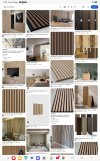
It’s a combination of good looks and acoustic benefits (they aren't super effective, but still). Alternatively, I could treat the room by installing acoustic studs and a partition wall between my apartment and the neighbor's—about 10 cm/4 inches thick—and filling it with insulation. Sound travels quite easily between my apartment and my neighbor's.
So, I’m rethinking the interior design and considering suitable acoustic measures at the same time. For instance, I plan to buy really thick curtains specifically, like:
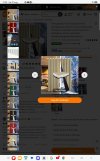
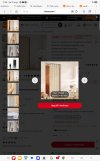
... for the acoustics; the ones I have now are too thin.
I’m going to ask a friend or my sister to move a small mirror along the side walls while I sit in my listening position to spot where the first reflection from the speakers hits. Then I’ll try dampening that area to see if I like the effect.
.... a few years ago, but even though it’s a "warm" white, it doesn't feel quite... hmm... up to date.
I’m considering something more vibrant or colorful, or perhaps something with a wood finish. Maybe I’ll put up those acoustic panels that have become so popular lately—covering an entire wall with them:It’s a combination of good looks and acoustic benefits (they aren't super effective, but still). Alternatively, I could treat the room by installing acoustic studs and a partition wall between my apartment and the neighbor's—about 10 cm/4 inches thick—and filling it with insulation. Sound travels quite easily between my apartment and my neighbor's.
So, I’m rethinking the interior design and considering suitable acoustic measures at the same time. For instance, I plan to buy really thick curtains specifically, like:
... for the acoustics; the ones I have now are too thin.
I’m going to ask a friend or my sister to move a small mirror along the side walls while I sit in my listening position to spot where the first reflection from the speakers hits. Then I’ll try dampening that area to see if I like the effect.
I agree with that, since I think we have roughly the same idea of what a well-furnished room looks like—BUT you know how it is. Or how it has been; I think the trend is starting to turn now, away from sparsely furnished rooms, hard wood floors without rugs, and so on. I mean combined living rooms/listening rooms that look and are furnished like this:Sometimes people think that thousands of euros are needed to get good treatment, but the truth is that often a normal but well-furnished room—bookcases, sofas, rugs, curtains, shelves, etc.—provides a more than decent treatment.
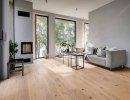
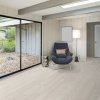

It was a popular interior design style until a few years ago, but now I find those rooms simply sterile.
____
General tip:

Wood acoustic diffusers have become a decorative item - loved the idea!
Hi As an acoustician I am tired to tell people not to think room treatment only as absorption. In most small rooms absorption often creates more issues than it solves. Diffusion is a better solution. However, all I hear: they are expensive, ugly and difficult to place in a room. I am hence...
www.audiosciencereview.com
Last edited:
Well, physics don't care about our human strive for comfortableness or complacency. That's just not how rooms influence the sound. I'd also love to not need to spend any time and effort on all of this and just slap down a pair of speakers in my living room and get good sound!I suspect this varies wildly in this thread
For someone like that I’d suggest something like the Ascend CBM-170SE2 and if you look at its measurement data it’s reliant on the reflections of a typical untreated room to balance out the sound
Early Reflections Are Not Beneficial
If the Ascent CBM-170SE2, as any other speaker, would rely on the reflections of a typical untreated room to balance the sound, then the design would be broken by definition.
I believe the key for correct interpretation is to know what the Klippel NFS does, how and why. I myself lack the expertise but this might be a starting point.
The key is finding a good balance—one that you personally like.I honestly think most room treatment and EQ is done because it’s “the proper thing to do” and following overly broad guidance they’ve found online
I think a better mindset is that those things are to fix problems, actual perceivable problems you notice while listening; when this approach is taken you suddenly go from some crazy auto generated EQ with a dozen filters to just one PK trimming that one room mode that rings a noticeable amount - for room treatment you end up doing far less too maybe nothing, for example mine consists of a rug which I would’ve put down for aesthetic reasons anyway and a big thick tapestry on the wall to fix flutter echo (an actual perceivable issue not some vague concept like ‘first reflections’ which are often better untreated anyway)
The examples in the video below illustrate two extremes; neither sounds good. There is too much reverb in an unfurnished room, versus the super-dry, unnatural sound of an anechoic chamber:
That sounds like a plan! However, never buy tools for acoustic room treatment where you don't have standardized measurements for their effectiveness. Else you won't be able to know whether they are suitable or not for your application and you also cannot estimate the outcome.My problem—or challenge—lies more in how to furnish, arrange, paint, or wallpaper my living room. I painted it "Stockholm White" (NCS code S 0502-Y):
View attachment 553299
.... a few years ago, but even though it’s a "warm" white, it doesn't feel quite... hmm... up to date.
View attachment 553302
It’s a combination of good looks and acoustic benefits (they aren't super effective, but still). Alternatively, I could treat the room by installing acoustic studs and a partition wall between my apartment and the neighbor's—about 10 cm/4 inches thick—and filling it with insulation. Sound travels quite easily between my apartment and my neighbor's.
So, I’m rethinking the interior design and considering suitable acoustic measures at the same time. For instance, I plan to buy really thick curtains specifically, like:
View attachment 553303View attachment 553304
... for the acoustics; the ones I have now are too thin.
I’m going to ask a friend or my sister to move a small mirror along the side walls while I sit in my listening position to spot where the first reflection from the speakers hits. Then I’ll try dampening that area to see if I like the effect.
Even for acoustic curtains their manufactures should provide the relevant data; like this one does.
.... a few years ago, but even though it’s a "warm" white, it doesn't feel quite... hmm... up to date.
View attachment 553302
It’s a combination of good looks and acoustic benefits (they aren't super effective, but still). Alternatively, I could treat the room by installing acoustic studs and a partition wall between my apartment and the neighbor's—about 10 cm/4 inches thick—and filling it with insulation. Sound travels quite easily between my apartment and my neighbor's.
The slates can be made pretty effective if you use one that is fastened to a felt surface (rather than MDF or something like that), and add insulation behind it. I've built out 50mm of insulation + wooden slats behind the system (covering 3x2.4m). Looks pretty decent and helps bring down the overall reflected energy.

Curvature
Major Contributor
- Joined
- May 20, 2022
- Messages
- 2,479
- Likes
- 3,971
Of my friends, and frankly most people I know, who has the space and is willing to spend even $1k USD on treatment? One has the space, none are willing to spend the money, none are willing to make room for the only kind of treatment that matters: pressure based absorbers.What is expensive in your book?
I think this is what people tell themselves because they don't want to spend the time and work needed to treat the room (and understanding how). That is completely fair and okay, but don't say that it doesn't work or isn't worth the effort, because that is just wrong. No one has to go to the gym and work out, it's a personal choice. But the effect is pretty well established.
I don't know how you define an average person, but for anyone serious about getting good sound I would 10/10 suggest installing acoustic treatment (properly done of course).
They may be willing to spend a few thousand on speakers. If there is money left over, it is better allocated to a capable autoEQ source than to treatment. If there is money and willingness after that, then treatment can follow.
Similar threads
- Replies
- 29
- Views
- 3K

- Replies
- 10
- Views
- 2K
- Replies
- 2
- Views
- 450

- Replies
- 6
- Views
- 1K
