- Joined
- Dec 28, 2021
- Messages
- 47
- Likes
- 26
I recall people complaining DT880 600R had no bass back in the day but this one is next level!



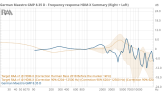
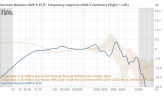
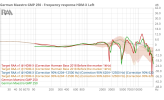
The seemingly high distortion peak (percentage) at 4kHz is caused by the null. Notice how sharp the peak is and realize that the output at 4kHz is 20dB lower than the rest of the spectrum anyway (about 4x lower audibly).And even if the intention was like @KSTR suggested and marketing accidentally released the right text for the wrong headphone, why accept such a strange distortion behavior?
The seemingly high distortion peak (percentage) at 4kHz is caused by the null.

It actually shows up in absolute level as well:The seemingly high distortion peak (percentage) at 4kHz is caused by the null.
Sure it causes by the cancellation. Do you have an idea how to fight with that? As I've previously said - i saw such behaviour on various cheap aliexpress drivers. But even expensive headphones like Aune SR7000 has about -12-15 db at 4 khz. With all its internal resonators etc.
Yep, and/or with acoustic feedback in the cups.Clearly something is going wrong there with the driver.
It is true that levels will be dropping sharply as frequencies go up. But therein is the problem. The driver break up/issue is around 4 khz. The generated non-linearity is 2nd harmonic so manifests itself around 8 kHz. The actual music energy at that frequency is quite low. This means the harmonic distortion can stomp it much harder especially when we are talking about distortion that is whopping 30 dB higher than before we hit 4 kHz! Result would be harsher sound.Besides ... you should try listening to a 4kHz tone at 90dB SPL.. you will throw the headphone off immediately and it would need to be a 110dB 'signal' in this case in music so >> 120dB average level.
But ... if it is caused by nulling than there are no harmonics and it is just a dip.PIt is true that levels will be dropping sharply as frequencies go up. But therein is the problem. The driver break up/issue is around 4 khz. The generated non-linearity is 2nd harmonic so manifests itself around 8 kHz. The actual music energy at that frequency is quite low. This means the harmonic distortion can stomp it much harder especially when we are talking about distortion that is whopping 30 dB higher than before we hit 4 kHz! Result would be harsher sound.


Some can even be used to torture reviewers.Studio headphones are tools, not items for pleasure.
...beyerdynamicSome can even be used to torture people.


I might just have found the perfect matching speaker then. A true monitoring dream combo![...]
Still quite usable as a monitor for singers etc due to high isolation, flat for human voice range, build quality.


The frequency response of these headphones would actually probably work pretty well for recording of live vocals and other instruments, as especially for male vocals, rolling off the bass gets rid of boominess / feeling like you're stuffed up inside your own head when you're recording.Company positions the headphone for professional use so maybe someone in that domain likes this kind of response.


Studio monitors just have to isolate really well (so the mic won't pick anything up).
Not have distracting bass, not have any sharpness and sibilance (3-6kHz range) but does have treble for the finer nuances.
All it needs to do is have a good midrange for vocals (200Hz to 3kHz) and that's what it does.
Isolate well, extremely sturdy (like Beyerdynamics) because they sometimes drop on the floor, are accidentally sat on etc.
No one wants these working tools at home to enjoy music or mix on.
The K92 does not match that description though
On top of that the GMP can be driven from just about any device.
Did you read the descriptions from AKG and other brands of similar 'purpose' headphones ?Have you read the description on the manufacturer's website?