• Welcome to ASR. There are many reviews of audio hardware and expert members to help answer your questions. Click here to have your audio equipment measured for free!

Fosi CA30 Four Channel Car Audio Amp Review

Rate this car audio amplifier:

  • 1. Poor (headless panther)

    Votes: 0 0.0%
  • 2. Not terrible (postman panther)

    Votes: 24 25.8%
  • 3. Fine (happy panther)

    Votes: 62 66.7%
  • 4. Great (golfing panther)

    Votes: 7 7.5%

  • Total voters
    93
Id say 20-25 year old cars ? All cars I had the last decades had integrated systems that won’t lend themselves to an easy upgrade for a consumer . Maybe the head unit in my wife’s old car can be exchanged but Carnot the speakers without destroying the interior?

In my youth this was very popular :) especially badly mounted aftermarket speakers that probably would fly around in the interior in case of a crash :P

Maybe in you camper van or mobile home ?
Upgraded the system in my 12 yo X3 M sport no problem, no need for head unit change.
 
why not just rig up some desktop TPA amps such as V3 monos or Topping mini300 or Aiyima A70 for the car, using an inverter to power the stock power supply or a DC-DC replacement power supply? Is there anything this amp does that makes it better for automotive other than run on 12 volts?
If you were to do that, you would probably run into noise issues if the system was connected to anything grounded with car chassis (like a head unit).

Could work for a headless system as long as you get a good power supply figured out.

The main thing is there's no point to doing that unless you will often listen while parked with the car off. If you're driving, the signal to noise ratio of a car is really bad.

BTW, for those dismayed by what a pain it is to interface with modern head unit/infotainment, remember you don't have to do that. A headless system is completely viable. Connect to your system with Bluetooth, maybe add a volume knob. All you really need to put in a system is 12 volts.
What's the signal to noise ratio of a living room with the window open, or with kids in the house, or the washing machine running in the next room? None of us live or listen in anechoic chambers. Don't forget most factory ICE speaker/amp combinations severely distort above 30% of volume, often much less, so you would be fitting much more capable speakers too. The difference from factory with aftermarket kit is MASSIVE, and easily heard, ESPECIALLY at motorway speeds (high cabin S/N) when volume has to be increased significantly.
 
If you were to do that, you would probably run into noise issues if the system was connected to anything grounded with car chassis (like a head unit).
Are you sure about that? That strikes me as counterintuitive. A car doesn't have a ground. There's only two conductors. The car chassis is the same as the negative.
 
Are you sure about that? That strikes me as counterintuitive. A car doesn't have a ground. There's only two conductors. The car chassis is the same as the negative.
The term ground is used in the car audio/modding community and I believe it was clear what I was actually referring to. But yes I'm talking about the car chasis. For whatever reason balanced signaling is not used in car audio, it's all single ended rca.

The - serves as a reference voltage for you audio system. The car chasis has a lot of electrical noise so even with car amps it is importsnt that all audio equipment be grounded to the same point. Merely using different ground locations on the same chassis can introduce unwanted noise, and that becomes more of a problem as you increase the gain. If you don't get your wiring right your amp quality will not matter, signal to noise ratio will be dominated by ground noise. Although some amps are more sensitive than others to it.

If your amps are referenced to the isolated inverter output, and the inverter itself is wired differently than the head unit, there will be probably a huge difference between them.

That's why I think for such a system, you're better off not connecting to a head unit. Leave the dac isolated from the car chassis too.

An inverter adds its own noise to the system. DC-DC converter is probably better.

Also if you use home amps you need to make sure the input voltage accepted and the gain is suitable. The gain is not as easily adjustable as car amps. The home amps may have some advantages like conpactness.
I was not aware of all of that, especially that different points on the same chassis can introduce unwanted noise. Thank you!
 
I remembered in the 90's, car audio was a thing, a big thing. We would admire the cool kids who's car had a subwoofer box in the trunk, upgraded speakers and separate amp. Back then, everything was modular, with standard DIN and double DIN size.

But nowadays, it's near impossible to upgrade your car audio but on the other hand, cars comes with better audio systems.

I have a Subaru Forester, it comes with a Harman system with an integrated sub in my trunk.
The Bose system (with sub-woofer???) in my 2024 Subaru CrossTrek is awful (it must be meant to validate that old saying about Bose: "If it has no highs and it has no lows, it must be Bose"). If I want sorta decent audio on one of my vehicles, my 2004 Chevy Silverado SS (that originally had a awful Bose system) but now has a Pioneer DVD, CD and very good FM head unit with 7" display, and the Bose speakers are gone, too (replaced by some brand that I had never heard of and can't remember, unknown but much better than Bose speakers). When people are in the vehicle and hear it, they comment (because the speaker grills in the doors still say Bose): "I did not know that Bose sounded so good". I respond: "They did not sound good at all. I just did not bother to replace the speaker grills, as I did the speakers on the cheap. There is nothing Bose about this system except the name on the speaker grills". Their typical reaction is something to the effect of: "No wonder it doesn't sound bad as bad as I thought it might when I saw Bose on the speaker grills".
 
Yeah. I be very surprised if the sale volume of this is going to be high.

If I recalled correctly, Dr. Olive worked on a Mark Levison project for Lexus. Many of the premium cars comes with a premium systems now. Why would anyone in their right mind "upgrade" the system in their car that was custom engineered and tuned by Dr. Olive with this $140 Fosi?

I would imagine the market for this is probably 10-15 years old entry level, based model cars. At least in the US.
I can answer that… the amp in a mark levinson lexus will be very low power and quality compared to this amplifier, plus with Dsp in the mix it is very possible to get higher quality in a one seat tune for the drivers seat with a fair few of these and some good tuning… you can also use the signal from a levinson system as Natan Budiono who actually engineered the levinson system as head engineer does in his competition car (he’s the only guy in the world that can potentially use a Lexus headunit and Dsp/amp in a Suzuki and have it integrate and work for competition purposes and uses the upmixer to make his car work far better for two seat competition and also single seat), however it demands a decent level of investment to better the levinson system… I would use a Dsp amp with high level in to offer a ‘all seats’ setup with aftermarket Dsp amp like the match up14, or even a helix v18dsp with a dedicated subwoofer setup and also use a digital source to effectively bypass the factory processing which includes all pass filters for a single seat tune which will be driver focused

The fact is when you realise how little the levinson system costs per vehicle and the budget per speaker you would then be shocked by the dealer price for the same the same goes for any oem branded setup… Harmon kardon, b&w, and many other after market manufacturers who put their name to car setups

Dsp setup and tuning is my second job for many competition cars and I teach Dsp tuning around the world, I use Smaart and also proprietary Dsp software to tune and setup systems if anyone ever needs help, mainly with Audiotec Fischer products from Germany by match, helix and Brax
 
On my BMW I just paid the $1000 to get the Helix Match UP DSP amp, plug and play. Took 15 minutes to install and has Helix DSP. I didn't want to run wires and wanted a top class DSP, which is $650 anyway by itself. Aftermarket has the BMW and Mercedes stuff figured out. Kenwood Excelon has a lot of brands figured out too, I can keep my steering wheel controls and everything.

Then I piggy backed the Foci CA30 off the Helix with a short run to the trunk battery and now I have a subwoofer too.
The match Dsp isn’t as high spec as any of the dedicated solo helix dsps, the software is the same with the same features, however the internal sample rate of the helix standalone dsps is 96khz generally, the match and some of the helix dsps amps are 48khz internal sample rate, it effects things like ta steps due to the sample rate and resampling of digital inputs also

Helix is a brand of its own from Audiotec Fischer as is Match it’s an excellent software setup though that I am one of the developer team for Audiotec Fischer and have 6 or 7 helix dsps and am a technical trainer for the software if you ever get issues or find glitches and I can feed them back to the developer team in Germany

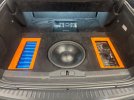
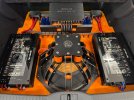
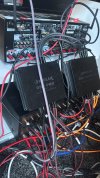
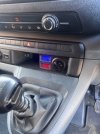
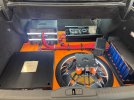
My denon 3700 AVR has a helix Dsp ultra S and a dsp pro 3 sat at the back of it which then feed an 11ch power amplifier for good measure, my competition car has a dsp ultra S in it, and my workshop system has an amplify 206dsp in it… all tuned with Smaart and pc tool software… here’s a few random pics of various iterations of my car setup and the twin av receiver setup… the boot with the edge lit LEDs and a Brax Dsp and Brax RX2 pro (based on purifi eigentakt two channel tech) is roughly £25k+ in kit at retail
 

Attachments

  • IMG_6018.jpeg
    IMG_6018.jpeg
    807.5 KB · Views: 56
  • IMG_5692.jpeg
    IMG_5692.jpeg
    850.2 KB · Views: 62
  • 423495DB-E6C9-457D-ACAF-998AB48FDFD7.jpeg
    423495DB-E6C9-457D-ACAF-998AB48FDFD7.jpeg
    509 KB · Views: 51
  • IMG_4467.jpeg
    IMG_4467.jpeg
    528.1 KB · Views: 56
  • IMG_3674.jpeg
    IMG_3674.jpeg
    825.1 KB · Views: 48
The last few 12V audio ads showing up in my feed have headlined "DC Audio..."

Any chance the surveillance has marked me as caring about the distinction, and know I am not as amenable to "Automotive" or "Car Audio" ??
 
The match Dsp isn’t as high spec as any of the dedicated solo helix dsps, the software is the same with the same features, however the internal sample rate of the helix standalone dsps is 96khz generally, the match and some of the helix dsps amps are 48khz internal sample rate, it effects things like ta steps due to the sample rate and resampling of digital inputs also

Helix is a brand of its own from Audiotec Fischer as is Match it’s an excellent software setup though that I am one of the developer team for Audiotec Fischer and have 6 or 7 helix dsps and am a technical trainer for the software if you ever get issues or find glitches and I can feed them back to the developer team in Germany

My denon 3700 AVR has a helix Dsp ultra S and a dsp pro 3 sat at the back of it which then feed an 11ch power amplifier for good measure, my competition car has a dsp ultra S in it, and my workshop system has an amplify 206dsp in it… all tuned with Smaart and pc tool software… here’s a few random pics of various iterations of my car setup and the twin av receiver setup… the boot with the edge lit LEDs and a Brax Dsp and Brax RX2 pro (based on purifi eigentakt two channel tech) is roughly £25k+ in kit at retail
Thank you! That is an amazing setup. My next future steps are to update the drivers and start working to measure and tune for accuracy. But right its family life, lol!
 
Any devices designed for "12V" usage MUST accept a very wide voltage input range, say even 9-16V but that is wider than necessary, a Good Thing.

14.4 is a common nominal spec for an alternator or other power source to put out while charging, near the end of the cycle.

Some may interpret a single voltage spec as that is specifically required, which was never the case.

So, really should not matter much, so long as well above that nominal 12V
With modern start stop, the requirements can be far wider, most of the Audiotec Fischer range are fine down to 6.5v for start stop vehicles, and a lot of the helix V, P (and soon Z series), C series and all the Brax amplifiers have fully regulated power supplies so they will do rated power even in modern cars where the alternator is not used on acceleration and cruising some of the time

We also have one amplifier which is fine from 6.5v to 32v due to the stabilised power supply… a lot are stable to 18v for modern cars like Tesla which have a higher charging voltage and lithium tech for the secondary battery
 
What's the signal to noise ratio of a living room with the window open, or with kids in the house, or the washing machine running in the next room? None of us live or listen in anechoic chambers. Don't forget most factory ICE speaker/amp combinations severely distort above 30% of volume, often much less, so you would be fitting much more capable speakers too. The difference from factory with aftermarket kit is MASSIVE, and easily heard, ESPECIALLY at motorway speeds (high cabin S/N) when volume has to be increased significantly.
I think you are not listening to many oem systems which are now quite competent and composed to well over those levels (30% is laughable) and the amplifiers often don’t distort until 75-80% or more in some cases, I know my simple van system is fine to 25/30 and more if the music isn’t too bass heavy

In modern cars when upgrading we mostly have to use the factory high level signal to feed the aftermarket amps, so if they distorted at 30% the results of amplifying that would be poor also
 
Back
Top Bottom