• Welcome to ASR. There are many reviews of audio hardware and expert members to help answer your questions. Click here to have your audio equipment measured for free!

First DIY Active 3‑Way Build – Faital 12RS430 Inspired

serag4fx

Member
Joined
Nov 21, 2025
Messages
10
Likes
21
Shout‑out to the DIY audio community for inspiring me to take this path, and special thanks to Troels Gravensen for his original Faital 12RS430 design that set me on this journey.

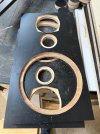
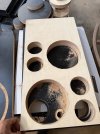
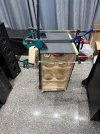
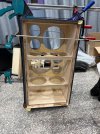
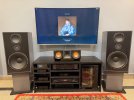
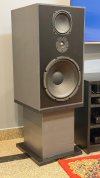
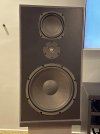
This is my first ever DIY active speaker build, executed with respect to Troels’ design but adapted into a fully active architecture using 24mm plywood for the cabinet:
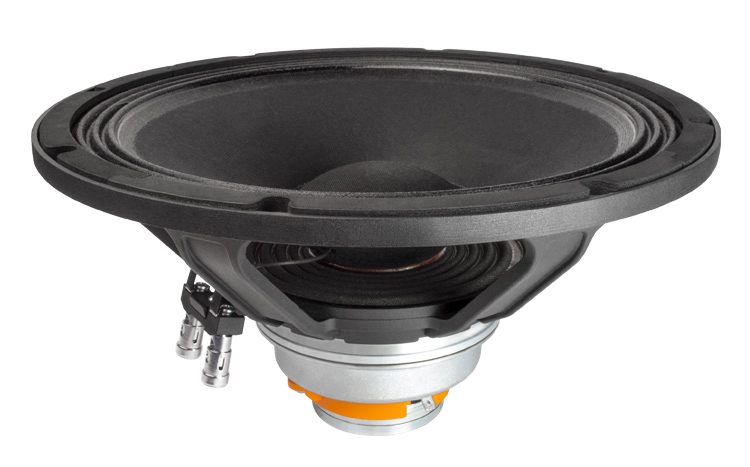
  • Woofer: FaitalPRO 12RS430 powered by Crown XLS1002
  • Midrange: FaitalPRO 6RS140 powered by 3eAudio A7
  • Tweeter: ScanSpeak D3004/660000 powered by 3eAudio A5
  • DSP: miniDSP Eight with crossover points at 300 Hz (woofer → mid) and 2200 Hz (mid → tweeter), plus EQ and time alignment
I set the midrange driver flush to the front baffle, and thanks to the active design I compensated for delay in DSP. Other than that, I respected every aspect of Troels’ original design.

Listening Impressions​

I’m honestly surprised by the final result. This is my first experience with a classic 3‑way design, and it’s a revelation compared to what I was used to.
  • Coming from a Klipsch RP-600M II and RP-1000SW subwoofer, I thought bass was all about impact. Now I understand what controlled bass means—balanced and leveled seamlessly with mids and highs.
  • The integration across all drivers makes music more lifelike and immersive.
My only struggle is room reflections, which I know isn’t speaker‑related but part of the bigger acoustic rabbit hole I’ve stepped into.

Measurements & Questions​

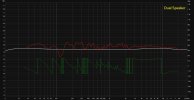
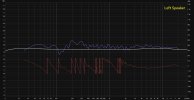
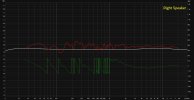
I’ll attach frequency response graphs for both left and right speakers, plus a dual‑speaker sweep. I’d love to hear opinions on:
  • My current EQ tuning
  • Any advice regarding phase alignment
  • Whether going active was the right choice given these responses, or if a passive crossover might yield a better overall listening experience
At the end of the day, I want to listen to them, not only measure them—but I value the community’s input on how to refine the setup further.
 

Attachments

  • Dual.jpg
    Dual.jpg
    177 KB · Views: 168
  • LFT.jpg
    LFT.jpg
    176.6 KB · Views: 130
  • RGHT.jpg
    RGHT.jpg
    175.2 KB · Views: 128
  • 001.jpeg
    001.jpeg
    400.8 KB · Views: 122
  • 002.jpeg
    002.jpeg
    316.6 KB · Views: 124
  • 003.jpeg
    003.jpeg
    498.4 KB · Views: 123
  • 004.jpeg
    004.jpeg
    466.7 KB · Views: 146
  • 005.jpeg
    005.jpeg
    406.1 KB · Views: 158
  • 006.jpeg
    006.jpeg
    184.7 KB · Views: 176
  • 007.jpeg
    007.jpeg
    232.3 KB · Views: 176
Shout‑out to the DIY audio community for inspiring me to take this path, and special thanks to Troels Gravensen for his original Faital 12RS430 design that set me on this journey.

This is my first ever DIY active speaker build, executed with respect to Troels’ design but adapted into a fully active architecture using 24mm plywood for the cabinet:
  • Woofer: FaitalPRO 12RS430 powered by Crown XLS1002
  • Midrange: FaitalPRO 6RS140 powered by 3eAudio A7
  • Tweeter: ScanSpeak D3004/660000 powered by 3eAudio A5
  • DSP: miniDSP Eight with crossover points at 300 Hz (woofer → mid) and 2200 Hz (mid → tweeter), plus EQ and time alignment
I set the midrange driver flush to the front baffle, and thanks to the active design I compensated for delay in DSP. Other than that, I respected every aspect of Troels’ original design.

Listening Impressions​

I’m honestly surprised by the final result. This is my first experience with a classic 3‑way design, and it’s a revelation compared to what I was used to.
  • Coming from a Klipsch RP-600M II and RP-1000SW subwoofer, I thought bass was all about impact. Now I understand what controlled bass means—balanced and leveled seamlessly with mids and highs.
  • The integration across all drivers makes music more lifelike and immersive.
My only struggle is room reflections, which I know isn’t speaker‑related but part of the bigger acoustic rabbit hole I’ve stepped into.

Measurements & Questions​

I’ll attach frequency response graphs for both left and right speakers, plus a dual‑speaker sweep. I’d love to hear opinions on:
  • My current EQ tuning
  • Any advice regarding phase alignment
  • Whether going active was the right choice given these responses, or if a passive crossover might yield a better overall listening experience
At the end of the day, I want to listen to them, not only measure them—but I value the community’s input on how to refine the setup further.
Great build indeed! Congrats! :)
Can you please post the mdat file too?
 
Ah, I missed my 4-way sealed enclosure Sansui speakers from 80th. Although ceramic super-tweeter was a waste with my ears.
 
Last edited:
looks great, one question - are your stands not a bit too high? The axis is the midrange not the tweeter. Or are you very tall?

I have the Faital 3WC15 and that's the same. Axis on the midrange not the tweeter.
 
looks great, one question - are your stands not a bit too high? The axis is the midrange not the tweeter. Or are you very tall?

I have the Faital 3WC15 and that's the same. Axis on the midrange not the tweeter.
I’m about 190 cm (around 6.2 ft), and based on both my listening seat height and my own, the speakers will be used in a dual‑function room. It serves as my office during the day, but at night it transforms into an entertainment space where I can listen to music or take a break and watch a match. My main listening seat is an office chair, not a couch, so positioning and alignment were set with that in mind.
 
I’m about 190 cm (around 6.2 ft), and based on both my listening seat height and my own, the speakers will be used in a dual‑function room. It serves as my office during the day, but at night it transforms into an entertainment space where I can listen to music or take a break and watch a match. My main listening seat is an office chair, not a couch, so positioning and alignment were set with that in mind.
Thanks for the explanation. I suspected you'd thought it through but I just wondered.
 
Really fantastic! I'd say this is much more advanced than a "classic 3‑way design".

Now you can raise the TV a bit and do a center channel with one of these babies. :)

 
Really fantastic! I'd say this is much more advanced than a "classic 3‑way design".

Now you can raise the TV a bit and do a center channel with one of these babies. :)

Thanks! Great idea—I actually have a plan in mind to replace the center later. I was considering a WMTW design using the FaitalPRO 8PR200‑8 as the woofer, with the same mid and tweeter to complement the mains. I’ve already set the TV height to match the cabinet design, so it should integrate nicely.

To be honest, this is my first time building my own speakers. I do woodworking on weekends, but I was nervous about how it would turn out—how they would sound, and whether I could manage measurements, EQ tweaks, and time alignment. Thanks to online tutorials, the huge archive of community discussions, and even some help from AI , I pulled it off.

For now, I want to enjoy listening to them before diving into the center channel project, which I’ll probably start in the new year. I hadn’t thought much about coaxials before, so I’ll definitely look more into the 12HX240—thanks a lot for the suggestion!
 

Attachments

  • Center.jpg
    Center.jpg
    230.4 KB · Views: 35
My current EQ tuning
Is the measurement in the mdat file after EQ-ing already?

If yes, I would still apply some more to further linearize the response, something like this:
1793889797534.png


And then you could apply some low-shelf and high-shelf filters to taste

Any advice regarding phase alignment

Looking at your phase graph shows that it turns upwards pretty soon, right below your crossover frequency

1793889972188.png


I am not sure if/how this would be audible but you can try fixing it either with a refined delay setting or with crossover linearization using RePhase or using linear phase crossover (I think miniDSP does have some FIR capabilities)

The reason I think it might be audible is that I can see the same irregular behavior on your Wavelet graph too:

1793890137637.png


The peak energy time (the dashed line) should go wild only in the bass range (below 200Hz) and not already at 2kHz

Whether going active was the right choice given these responses, or if a passive crossover might yield a better overall listening experience
Yes, definitely forget going passive! With active you have sooooo much more control and you can apply advanced techniques (flexible crossover settings, delay, phase manipulation, etc.). You are certainly on the right track already.

One more thing that you could try if you have not done it yet: some (normalized) off-axis measurements for your tweeter/mid to better determine the ideal crossover frequency and slope

Again, great project!
 
Very well done, congratulations. My only comment is that in room measurements of any kind are not suitable for speaker design. They are OK for room correction below 300 Hz, but you want to apply this after the speakers themselves are working optimally. If you really want to optimize your design, which you can certainly do because it is active, you will need to take measurements outside both on and off axis. VitruxCad documentation https://kimmosaunisto.net/Software/VituixCAD/VituixCAD_help_20.html has a good step by step explanation of the process. It is no doubt a lot of work but it is not expensive (free software and you have a MIC and home made turntables are cheap to build) and you will learn a lot if you go through the process and most likely end up with a more optimal result than you could ever achieve with in room measurements (which may very well lead you in the wrong direction) . In any case enjoy your new speakers.
 
Last edited:
Is the measurement in the mdat file after EQ-ing already?

If yes, I would still apply some more to further linearize the response, something like this:
View attachment 569515

And then you could apply some low-shelf and high-shelf filters to taste


Looking at your phase graph shows that it turns upwards pretty soon, right below your crossover frequency

View attachment 569516

I am not sure if/how this would be audible but you can try fixing it either with a refined delay setting or with crossover linearization using RePhase or using linear phase crossover (I think miniDSP does have some FIR capabilities)

The reason I think it might be audible is that I can see the same irregular behavior on your Wavelet graph too:

View attachment 569517

The peak energy time (the dashed line) should go wild only in the bass range (below 200Hz) and not already at 2kHz


Yes, definitely forget going passive! With active you have sooooo much more control and you can apply advanced techniques (flexible crossover settings, delay, phase manipulation, etc.). You are certainly on the right track already.

One more thing that you could try if you have not done it yet: some (normalized) off-axis measurements for your tweeter/mid to better determine the ideal crossover frequency and slope

Again, great project!

Thanks a lot for your detailed response! I followed your advice and re‑did the EQ, and overall I think it’s improved. The tweeter felt a bit hotter, but that was easy to tame with a shelf filter. The phase looks cleaner now too.

I’ve attached the mdat files for before and after so you can see the changes. Really appreciate your input—it helped me push the tuning further in the right direction.
 

Attachments

Very well done, congratulations. My only comment is that in room measurements of any kind are not suitable for speaker design. They are OK for room correction below 300 Hz, but you want to apply this after the speakers themselves are working optimally. If you really want to optimize your design, which you can certainly do because it is active, you will need to take measurements outside both on and off axis. VitruxCad documentation https://kimmosaunisto.net/Software/VituixCAD/VituixCAD_help_20.html has a good step by step explanation of the process. It is no doubt a lot of work but it is not expensive (free software and you have a MIC and home made turntables are cheap to build) and you will learn a lot if you go through the process and most likely end up with a more optimal result than you could ever achieve with in room measurements (which may very well lead you in the wrong direction) . In any case enjoy your new speakers.
Thanks a lot for your response! I’ll take some time over the weekend to carefully read through the VituixCAD documentation and understand the process. It looks like a solid path forward, and I’ll definitely give it a try. Really appreciate your guidance.
 
Back
Top Bottom