
-
Welcome to ASR. There are many reviews of audio hardware and expert members to help answer your questions. Click here to have your audio equipment measured for free!
- Forums
- Audio, Audio, Audio!
- DACs, Streamers, Servers, Players, Audio Interface
- Audio Interfaces (ADC & DAC)
You are using an out of date browser. It may not display this or other websites correctly.
You should upgrade or use an alternative browser.
You should upgrade or use an alternative browser.
E1DA Cosmos ADCiso Review
- Thread starter amirm
- Start date


IVX
Major Contributor
No. Although ES9822 supports PCM2DSD conversion, I decided not to use it.
And for capture and digitizing Vinyl Records? This E1DA Cosmos ADCiso is better digitizing to DSD, or must I go with the Tascam DA-3000 (digitizing to DSD)?Not really. 90dB SINAD is plenty transparent enough to record great music.
But it's no question which is the better ADC.

Not sure why you would want to digitize vinyl to DSD, but you could also use RME ADI-2 Pro or ADI-2/4 SE Pro. Both can record at DSD256.And for capture and digitizing Vinyl Records? This E1DA Cosmos ADCiso is better digitizing to DSD, or must I go with the Tascam DA-3000 (digitizing to DSD)?
Noise floor of Vinyl records is usually so high that it masks noise and digital artefacts of converters. It's like dithering to 10-11 bit.
I would still use a good and clean converter but no need for 120dB S/N.
p.s.: There is no "microdynamics" far beyond the noise floor! When a random signal (noise) is significant bigger as your music signal you can't decide any more if it's from the original signal or if it's noise - the fine detail is masked and lost. We can hear "into" the noise floor for signals like pure sine (means we can hear sine waves UNDER the noise floor) but give it 1-2 extra bits ... you are EASY fine with 90dB of S/N for vinyl recordings.

staticV3
Grand Contributor
- Joined
- Aug 29, 2019
- Messages
- 15,913
- Likes
- 28,531
Vinyl has extremely limited fidelity and can be captured in its entirety even with basic ADCs.And for capture and digitizing Vinyl Records? This E1DA Cosmos ADCiso is better digitizing to DSD, or must I go with the Tascam DA-3000 (digitizing to DSD)?
Also, the Cosmos ADCiso cannot digitize to DSD.
The nice feature with ADCiso is the digital RIAA correction. Then the extra 40 dB S/N ratio is handy.
The bandwith can be 300k+ so software recoding from PCM to DSD should be "lossless" if used in "preproduction"
Think the noise of the ADCiso is on par with the best analog RIAAs. And the balanced conection can be used. Often that reduses 50Hz buzz from pickup considerably bacause of common mode rejection.
IVX
Major Contributor
ES9822 makes DSD from 32-bit PCM, I see no reason to use that.

So I am OK with the PCM4202 Burr-Brown (Tascam DA-3000).Vinyl has extremely limited fidelity and can be captured in its entirety even with basic ADCs.
Also, the Cosmos ADCiso cannot digitize to DSD.
I know vinyl has extremely limited fidelity, so I want to capture records whose doesn't exist on CD or very obscure albums/recordings very limited to Vinyl/Cassette, just like DeWolfe or Muzak catalog
And mastering on vinyl from early CD releases from the 80s (previously released in the 70s) (rare jazz music like Spyro Gyra, or Bob James) sounds tremendously better on original pressing vinyl than the Japanese early CD, and also are even superior over reissues & remasters.
IVX
Major Contributor
I've never seen a DAC perform better in DSD, it's always worse than PCM. The best way to accurately record audio is PCM (>96kHz, even 768kHz if you believe in hell), and then if you want to save the audio material in DSD (no reason, but it's up to you) use some software PCM/DSD converter.
Last edited:
I originally meant DSD recording straight from the DSD source from studio recording, and/or AAA All-Analog recordings (from the 60s, or early 70s) whatever from a R2R tape, a Vinyl Record, or Master Tapes. At least DSD128 or higher. If you record audio in PCM from scratch you'll lose impulse response. The key point is to preserve the Analog/DSD impulse response, then converting the DSD capture to Hi-Res PCM. A possible similar lineage method done by MoFi, Analogue Productions and Pink Floyd DSotM 2003 and 2023 Remasters.I've never seen a DAC perform better in DSD, it's always worse than PCM. The best way to accurately record audio is PCM (>96kHz, even 768kHz if you believe in hell), and then if you want to save the audio material in DSD (no reason, but it's up to you) use some software PCM/DSD converter.
Agreed PCM is insanely accurate, but again, you will lose impulse response of the original recording, well at least this is my POV for now.

Sokel
Grand Contributor
- Joined
- Sep 8, 2021
- Messages
- 12,189
- Likes
- 13,625
I have:I've never seen a DAC perform better in DSD, it's always worse than PCM.

PCM vs DSD
Did a little comparison and I was wondering if any friend with better gear here has tested this. Results you're about to see is probably narrowed to the specific DAC but it's interesting to see how it handles things differently. I will not try to decipher the results other that DSD seems much...
www.audiosciencereview.com
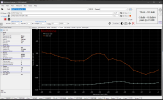
PCM 96kHz
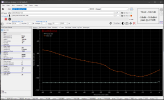
DSD128
Reduces ESS hump to minimum at this one.
Now, better DACs won't have the problem I suppose.
Edit: charts for easy view.
Last edited:

J N L, Could you give an example of impulse response of the analog source like 15 ips tape? With high sampling rate PCM you will be able preserve it. Anyway, sounds like another myth in audio community. Do you want to digitize Studer 240 kHz ac bias frequency?
Last edited:
I wish I could do an example but later, not now. And Yes, glad DXD can handle impulse higher than 192kHz.J N L, Could you give an example of impulse response of the analog source like 15 ips tape? With high sampling rate PCM you will be able preserve it. Anyway, sounds like another myth in audio community.
But I wonder still if DSD is a myth, so why labels like Analogue Productions/Acoustic Sounds and MoFi uses it? And the people who uses it: Bernie Grundman, Ryan K Smith, Rob LoVerde, Krieg Wunderlich, Kevin Gray, etc; and they do AAA lacquer cuts professionally.

- Joined
- Mar 7, 2020
- Messages
- 1,340
- Likes
- 2,142
Because they sell mythology.I wish I could do an example but later, not now. And Yes, glad DXD can handle impulse higher than 192kHz.
But I wonder still if DSD is a myth, so why labels like Analogue Productions/Acoustic Sounds and MoFi uses it? And the people who uses it: Bernie Grundman, Ryan K Smith, Rob LoVerde, Krieg Wunderlich, Kevin Gray, etc; and they do AAA lacquer cuts professionally.
If you record audio in PCM from scratch you'll lose impulse response. The key point is to preserve the Analog/DSD impulse response, then converting the DSD capture to Hi-Res PCM.
Agreed PCM is insanely accurate, but again, you will lose impulse response of the original recording, well at least this is my POV for now.
Impulse response ... from a needle going through a groove ...
What impulse should there happen?
1st - imagine there is a step in the groove of your LP (=impulse). What would the system do? You barely scratch the 20kHz (normally you don't reach it) - it can't reproduce a step electrical and mechanical.
2nd - there are VERY little instruments which produce content >20kHz! It's pretty hard to find anything up there, when you don't think dangling keys are a musical signal ;-)
Something like a snare hit is a large impulse but not a rectangle. You would need to listen to explosions or starting clappers (which are used for room acoustics, works great for higher frequencies) to have signals with a real step response.
3rd - these comparisons of digital filters and conversions and cables and whatever are often done with VERY unreal signals. Measurement signals.
There ARE differences between filters and conversions and in signal processing it's important to test these and design them right. Therefore you use impulse or square or other signals to show the behaviour or differences. But these are as far as possible from real music signals! You would need to do these measurements with a 20kHz low pass filter (or 17-16kHz for us older folks) BEFORE entering the chain and look at the differences then to get something similar to music.
I found a study about content >20kHz in music instruments a while ago. they looked really hard and actually found a little! I will dig around, maybe I can find it again.
For the effort it took them ... they found VERY little ...
Sokel
Grand Contributor
- Joined
- Sep 8, 2021
- Messages
- 12,189
- Likes
- 13,625
Seasoned folks used to judge performance by the recorded applause, not instruments for realism.sic.
I found a study about content >20kHz in music instruments a while ago. they looked really hard and actually found a little! I will dig around, maybe I can find it again.
For the effort it took them ... they found VERY little ...
Probably that's why (me applauding REW) :
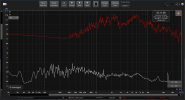
RTA window for hearing resemblance
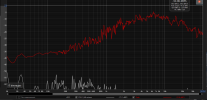
...and dBFS scale
EJ3
Master Contributor
Hey, I was born in Salzburg!Impulse response ... from a needle going through a groove ...
What impulse should there happen?
1st - imagine there is a step in the groove of your LP (=impulse). What would the system do? You barely scratch the 20kHz (normally you don't reach it) - it can't reproduce a step electrical and mechanical.
2nd - there are VERY little instruments which produce content >20kHz! It's pretty hard to find anything up there, when you don't think dangling keys are a musical signal ;-)
Something like a snare hit is a large impulse but not a rectangle. You would need to listen to explosions or starting clappers (which are used for room acoustics, works great for higher frequencies) to have signals with a real step response.
3rd - these comparisons of digital filters and conversions and cables and whatever are often done with VERY unreal signals. Measurement signals.
There ARE differences between filters and conversions and in signal processing it's important to test these and design them right. Therefore you use impulse or square or other signals to show the behaviour or differences. But these are as far as possible from real music signals! You would need to do these measurements with a 20kHz low pass filter (or 17-16kHz for us older folks) BEFORE entering the chain and look at the differences then to get something similar to music.
I found a study about content >20kHz in music instruments a while ago. they looked really hard and actually found a little! I will dig around, maybe I can find it again.
For the effort it took them ... they found VERY little ...
From what I understand @J n L was dealing with reel to reel tape & Master Tapes (as well as LP's). I do not know the in's and outs of this (what he is doing: that is a next year project for me, if all goes well this year). While I understand what you are saying, it may not apply to his other formats (which also happen to be my other formats), which is why I am trying to learn here.
Instruments have "holes" in their spectrum or better said they only excite some frequencies. Every instrument has some frequency area where it has information/signal and some where it is weak or doesn't play at all.Seasoned folks used to judge performance by the recorded applause, not instruments for realism.
Applause from many persons is similar to white noise - a really good measurement signal. You get way more information out of it cause it has a wide bandwidth and dense frequency representation. It really tells a lot about a system - but needs to be recorded properly.
A single clap is like what I wrote, compare it to a starting clapper. It's a little explosion.
reel to reel tape & Master Tapes (as well as LP's).
Good studio tape machines go beyond 20kHz but we are talking a bandwidth of >90kHz with A/D conversion ... that's above anything analog could do. I found these links:
Analog Tape Can Never Be HD: Here’s Why – Real HD-Audio
 www.realhd-audio.com
What people also often overlook - what MICROPHONES where used to record these recordings?
Every large membrane mic existing will not give any reasonable signals above 20kHz! It's pretty hard to achieve 20kHz with these. You use selected Earthworks omni mics with a capsule diameter of about 6mm to get at least to 50kHz (and get plenty of noise). No normal recording microphone can reach this range. As far as I know there where no recording microphones available at the analog times which went significant beyond 25-30kHz. Only 1/8" measurement microphones but these have horrible noise.
So your high end 2-track stereo to tape direct Orchester recording was done with these great big membrane tube mics? Nice, you had your low pass filter directly built in your source ;-) (but of course it can still sound great cause you don't have Orchester instruments anyways who produce signals up there, esp in 10m distance).
p.s.: I'm located about 1h away from Salzburg

At least they're fighting the loudness warBecause they sell mythology.
Similar threads
- Replies
- 104
- Views
- 6K
- Replies
- 16
- Views
- 2K
- Replies
- 7
- Views
- 1K


- Poll
- Replies
- 154
- Views
- 23K

- Replies
- 107
- Views
- 20K