• Welcome to ASR. There are many reviews of audio hardware and expert members to help answer your questions. Click here to have your audio equipment measured for free!

Dutch & Dutch 6c

Thank you for your prompt response and understanding. I still don't know how I'll cope with waiting probably another month to receive replacement stands and listen to these speakers again... but I understand this is a defect that's not really your fault. If there's any possibility of getting replacement stands to me before the next production run, I'd be interested; I'm waiting to hear back from customer service. Besides, the 6c are truly magnificent, both in the sound they produce and their aesthetics. Congratulations!
 
Last edited:
Thank you for your prompt response and understanding. I still don't know how I'll cope with waiting probably another month to receive replacement feet and listen to these speakers again... but I understand this is a defect that's not really your fault. If there's any possibility of getting replacement feet to me before the next production run, I'd be interested; I'm waiting to hear back from customer service. Besides, the speakers are truly magnificent, both in the sound they produce and their aesthetics. Congratulations!
You must have something to put them on so you can listen to them, a chair, your previous speakers. The wait would kill me.
 
You must have something to put them on so you can listen to them, a chair, your previous speakers. The wait would kill me.
I've got nothing acceptable yet, so I'm forcing myself to hold off until I get the placement and room matching right. That's tonight's plan but let's be honest, tomorrow I'll probably have my TV boxed up and these speakers badly positioned but already running in its place instead haha
 
Hi everyone,

I’ve been the happy owner of the 6c for a week now, after a truly impressive first listen.
Sorry to hear about the bad stand, but congratulations on getting the 6C! How long did you have to wait after placing the order? Did the estimated delivery time turn out to be accurate?
 
D&D is one of the few pleasant surprises I have had in audio for 35+ years, it’s worth the wait. But man, that reminds so bad of this:

[
 
Hi,

To get these speakers I contacted a local dealer back in January, a business that's actually more focused on mastering but also resells D&D speakers for non-professional hifi use. As soon as the speakers arrived, I went to their place for a listening session, and left with them right then and there :-)

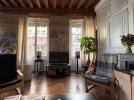
I'm getting back to you with more interesting news, because I finally gave in and set up my speakers as best I could ! I'm attaching a photo. I'm not a professional, so please only read this as an humble, enthousiastic, first impression.

They sound fantastic, the app is very well designed, and a microphone is supplied with the speakers, allowing you to perform the room matching directly from your phone. That said, the available options and graphs are simplified compared to REW. Repeating the measurements with the microphone shows reliable readings and familiar room modes. The stereo image was pulled toward the left speaker. It's possible to mute each speaker via the app, and the right one is MUCH weaker than the left, with very little bass presence. So I swapped the two speakers and redid the room matching: the one that was previously loud now plays quietly. So, both speakers work perfectly, haha! That said, I would have liked the option to slightly increase the gain of the right speaker, but I haven't found a way to do that so far. I had noticed exaggerated upper mids when I auditioned them at the showroom, but the salesman told me he had boosted that range himself and showed me the app. I don't hear that at home, but the app lets you create as many presets as you like.

* Just to keep you posted, I've been in direct contact with Martijn during the day. Thank you for this quality of customer service, I have no doubt the situation will be resolved soon!
 

Attachments

  • WhatsApp Image 2026-07-07 at 17.26.53.jpeg
    WhatsApp Image 2026-07-07 at 17.26.53.jpeg
    268.2 KB · Views: 397
Last edited:
Martijn is a class act - I recently had the pleasure of talking to him briefly at High End Vienna. He was probably the only person there having had measured the room his speakers were in. I didn’t get to hear the 6c, only their bigger sibling, and left with some very positive impressions - D&D really are as good as people say they are. Highlight of the show, easily outshining that new JBL monstrosity that was also presented there and which I was inclined to like.

I second what @Mart68 wrote above btw - that looks like a gorgeous room. Though I find the description of the sound veering left a bit peculiar - the right side seems to be the more reflective one from the picture due to all the hard surfaces
 

Attachments

  • IMG_1772.jpeg
    IMG_1772.jpeg
    342.8 KB · Views: 182
@PYPY13 Do the 6C also have support for measuring and setting up filters in REW, or are you forced to use the D&D app only ?

I can see why D&D would want to simplify the measurement process and make it more accessible to less technical users, but it would be nice to cover all bases.
 
Hi,

To get these speakers I contacted a local dealer back in January, a business that's actually more focused on mastering but also resells D&D speakers for non-professional hifi use. As soon as the speakers arrived, I went to their place for a listening session, and left with them right then and there :-)

I'm getting back to you with more interesting news, because I finally gave in and set up my speakers as best I could ! I'm attaching a photo. I'm not a professional, so please only read this as an humble, enthousiastic, first impression.

They sound fantastic, the app is very well designed, and a microphone is supplied with the speakers, allowing you to perform the room matching directly from your phone. That said, the available options and graphs are simplified compared to REW. Repeating the measurements with the microphone shows reliable readings and familiar room modes. The stereo image was pulled toward the left speaker. It's possible to mute each speaker via the app, and the right one is MUCH weaker than the left, with very little bass presence. So I swapped the two speakers and redid the room matching: the one that was previously loud now plays quietly. So, both speakers work perfectly, haha! That said, I would have liked the option to slightly increase the gain of the right speaker, but I haven't found a way to do that so far. I had noticed exaggerated upper mids when I auditioned them at the showroom, but the salesman told me he had boosted that range himself and showed me the app. I don't hear that at home, but the app lets you create as many presets as you like.

* Just to keep you posted, I've been in direct contact with Martijn during the day. Thank you for this quality of customer service, I have no doubt the situation will be resolved soon!
hello @PYPY13 ; when you described the stereo image pulled towards the left speaker, is this post the DSP room correction?
 
Hello! No, at this stage we're indeed forced to use only the D&D app, which doesn't allow going through REW. I agree with you @tw99.


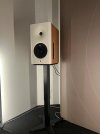
@creed: Yes, it was a balance issue after room matching. A friend who isn't particularly an audiophile also spontaneously noticed this on her first listen. That said, after receiving the new feet and optimizing the positioning, this problem completely disappeared. I can't really explain why, since the right speaker is in (almost) the same spot: the only differences are a precise positioning (I used a laser meter ahah) + the addition of IsoAcoustics gaia because I have a wood floor with resonances (I haven't redone the room matching yet, but that's planned).
 
The feet almost certainly will not make the slightest difference.
Keith
 
@PYPY13 Do the 6C also have support for measuring and setting up filters in REW, or are you forced to use the D&D app only ?

I can see why D&D would want to simplify the measurement process and make it more accessible to less technical users, but it would be nice to cover all bases.
Correct. This is one of the main reasons we created what we call RoomMatching Align.

The 6c comes with a completely new Dutch & Dutch app and platform. And before going further, this platform will absolutely be brought to our 8c users as well. We have not forgotten about the 8c. Longevity is one of the cornerstones of Dutch & Dutch, and features and functionality will continue to be shared across the 6c and 8c platform.

You are also right about the measurement process. From the feedback we received over the years, REW was simply too advanced for many users and could leave a lot of questions if you weren't already familiar with it.

RoomMatching Align was created to solve this. It is a guided, step-by-step process that takes you through the speaker setup, boundary settings and measurements. The data is then processed, the filters are calculated, and everything is sent back to the speakers.

At the same time, we understand that more advanced users want the freedom to experiment and work with the filters themselves. We are currently testing beta versions that allow the 6c to be found and calibrated using REW in much the same way as the 8c today.

So in the future, the idea is to give you both options: the simple guided RoomMatching Align process, or a more advanced manual approach using REW.

And if anyone is interested, I recently started a YouTube channel called Dutch & Dutch Daily, where I post very unedited and unscripted videos about the 6c, 8c and the Dutch & Dutch platform. As I'm writing this, I'm actually uploading an almost 16-minute video showing the complete RoomMatching Align process from start to finish.

https://www.youtube.com/@DutchDutchDaily

Jannis
Sales & Product Strategy
Dutch & Dutch
 
[System Showcase] Ultra-High-End Roon & Dutch & Dutch 8C Reference Configuration
Hi everyone,
I wanted to share the current state and upcoming roadmap of my reference audio system. The entire setup is built around active digital crossover architecture, with every single link in the signal, power, grounding, and mechanical isolation chains meticulously optimized for ultra-high-end standards.
Any feedback or thoughts on the upcoming upgrades are more than welcome!


1. Digital Signal Topology & Master Clock Architecture
The digital front-end utilizes a cascaded isolation approach designed to eliminate common-mode network noise, cross-talk, and phase noise before the signal hits the DSP stage.

[Modem] ➔ (CAT6) ➔ [SOtM Iso Cat7 Filter] ➔ (SOtM Cat6 SE) ➔ [LHY Audio EFI] ➔ (DM Connect) ➔ [Silent Angel NX Switch]
│ │ │
┌───────────────────────[Silent Angel Genesis GX Clock] (50Ω Tubulus) ────────┼────┘ │
▼ ▼ ▼
[Silent Angel Rhein Z1 Plus] ◄─── (Platinum Starlight 10) [Port 5] [Port 6]
(Roon Core) │ │
(SOtM Cat7SE) (SOtM Cat7SE)
│ │
[SR Powercell] [SR Powercell]
│ │
[D&D 8C Left] [D&D 8C Right]
  • Network Ingress & Isolation: The long CAT6 run from the main router enters a SOtM Audio Iso Cat7 LAN filter to suppress high-frequency EMI. From there, a dedicated SOtM dCBL-CAT6 Special Edition cable feeds the linear power supply-driven LHY Audio EFI active network isolator.
  • Switch & Core Routing: The pristine ethernet stream leaves the LHY EFI via a Silent Angel DM Connect Ethernet cable into Port 1 of the Silent Angel NX Audiophile Switch. Port 8 of the NX Switch feeds the Silent Angel Rhein Z1 Plus (Roon Core) via a silver-conductor Wireworld Platinum Starlight 10 Twinax Ethernet cable.
  • Master Clock Synchronization: To minimize phase noise and sub-harmonic jitter, a Silent Angel Genesis GX Word Clock serves as the central master clock. It synchronizes both the Rhein Z1 Plus and the NX Switch via ultra-stable 50-ohm Tubulus Ximius BNC Clock Cables, lock-stepping the network packet timing.
  • Endpoint Termination: From the optimized Ports 5 and 6 of the NX Switch, two factory-custom, single-filtered 3m SOtM dCBL-Cat7 Special Edition cables deliver the digital stream directly to the integrated DSP inputs of the Dutch & Dutch 8C active loudspeakers.


2. Power Distribution & Active Grounding Topology
A true star-grounding scheme combined with dedicated power filtration ensures a virtually non-existent noise floor and unrestricted macro-dynamics.
  • AC Mains Infrastructure: A dedicated phase is pulled directly from the main breaker panel through an audiophile-grade fuse, running via Oyaide bulk cable and Schuco outlets into a Furutech E-TP 80 ES NCF (Nano Crystal² Formula) power distributor. The entire system is fed from this single point.
  • Linear Power Supplies & Digital Stack: The Silent Angel digital stack (Z1 Plus, NX, GX) is energized by the Silent Angel FX Linear Power Supply, which has been upgraded with a Synergistic Research PINK (5x20mm) fuse. The FX LPS is linked to the Furutech NCF distributor via a Synergistic Research Atmosphere SX-EXCITE power cord. DC power delivery between the units relies on Silent Angel Bastei Snowy White (0.5m) cables. The LHY Audio EFI is powered independently by a Furutech FP-3TS762 power cable terminated with FI-11 N1(G) / FI-E11-N1(G) plugs.
  • Loudspeaker Power Conditioning: The Dutch & Dutch 8C internal amplifiers are upgraded with Hifi Tuning Supreme³ (5x20mm) fuses. They are fed via two 3m Wireworld Silver Electra 10 power cords, conditioned locally by inline Synergistic Research Powercell One Conditioners.
  • Centralized Active Grounding: To eliminate stray chassis currents and ground loop mud, a Synergistic Research Active SX Ground Block acts as the central star-ground drainage point. Utilizing 1-meter Synergistic Research Foundation Ground Cables, it grounds the Silent Angel FX, NX, and GX units, alongside the Dutch & Dutch 8C backplanes via the Powercell One filters.


3. Structural Mechanical Decoupling & Room Acoustics
Katatropic and resonance-damping regimes are applied at every physical contact point to eliminate microphonic coupling in the electronics and energy storage in the stands.

[Silent Angel Z1 Plus] [LHY Audio EFI]
│ (4x Bassocontinuo Level 2) │ (3x Silent Angel S28 Shock Mounts)
▼ ▼
┌────────────────────────────────────────────────────────┐
│ Dual-Layer Corian Platform │
└────────────────────────────────────────────────────────┘
│
▼
┌────────────────────────────────────────────────────────┐
│ SOLIDTECH ROS 1 REGULAR (Sand-Filled Rack) │
├────────────────────────────────────────────────────────┤
│ Solidtech Disc of Silence Isolation │
├────────────────────────────────────────────────────────┤
│ 4x ISOLATOR SUPPORT Isolator Feet │
├────────────────────────────────────────────────────────┤
│ Hun Audio Steel-Ball Isolation Discs │
└────────────────────────────────────────────────────────┘
  • The Extreme Stack Isolation: The digital electronics are stacked on a high-mass, dual-layer Corian platform. The Silent Angel Z1 Plus is decoupled using 4x Bassocontinuo Ultra Feet Level 2 kinetic energy absorbers, while the LHY Audio EFI sits on 3x Silent Angel S28 Stainless Steel Shock Mounts.
  • Rack & Sub-Chassis Decoupling: The Corian platform rests on a sand-filled Solidtech ROS 1 Regular Hi-Fi Rack. The rack frame itself is mechanically decoupled from the floor via Solidtech Disc of Silence spring-loaded systems sitting on 4x Isolator Support feet. The spiked feet of the rack finally rest on 4x steel-ball Hun Audio vibration isolation discs.
  • Loudspeaker Interface & Cable Management: The Dutch & Dutch 8C monitors are mounted on Dynaudio Stand 20s, heavy-filled with an optimized ratio of silica sand and lead shot to suppress internal standing waves. The stands sit on IsoAcoustics Gaia II decoupling feet. To prevent airborne vibrations from affecting the dielectrics of the heavy 3m Wireworld power cords and thick SOtM Cat7SE cables, they are systematically floated off the floor using Cable Elevators.
  • Acoustic Calibration: The room response has been strictly mapped via REW (Room EQ Wizard). Geometry, distance mapping, millimetric Toe-in adjustments, and target-curve DSP integration were finalized based on impulse response and decay waterfall measurements.


4. Upcoming Upgrades & Roadmap
To push the envelope of this digital front-end even further, the next steps are planned as follows:
  1. Phase I - Dedicated Network Bridge: I will be introducing a Silent Angel ZX Transport into the stack over Ethernet. It will take over endpoint responsibilities, leaving the Z1 Plus to act solely as a heavy-lifting Roon Core. The ZX Transport will lock to the 3rd isolated output of the Genesis GX Clock via an additional 50-ohm Tubulus Ximius BNC line for full Triple-Clocking.
  2. Phase II - Monitor Fuse Overhaul: The fuses on the Dutch & Dutch 8Cs will be upgraded to the state-of-the-art Synergistic Research MASTER (5x20mm) fuses to unlock further transient speed and micro-dynamic expression.
  3. Phase III - Active EM/RFI Conditioning: Finally, I plan to deploy a Synergistic Research Tranquility Pod Carbon directly between the Z1 Plus Core and the new ZX Transport to capture and neutralize dikey-axis inductive cross-talk. Alternatively, I may completely swap out the dual-layer Corian platform for a full-sized Synergistic Research Tranquility Base Carbon active electromagnetic isolation platform.
Thanks for reading! I will keep this thread updated as the ZX Transport arrives and the active EM conditioning is deployed.

None of this is likely to make much, if any, audible difference.
With a digital source the things making the biggest audible difference are the position of the speakers relative to the walls, where the listening position is in the room and any anti reflection treatment or bass traps. ;)
 
[System Showcase] Ultra-High-End Roon & Dutch & Dutch 8C Reference Configuration
Hi everyone,
I wanted to share the current state and upcoming roadmap of my reference audio system. The entire setup is built around active digital crossover architecture, with every single link in the signal, power, grounding, and mechanical isolation chains meticulously optimized for ultra-high-end standards.
Any feedback or thoughts on the upcoming upgrades are more than welcome!


1. Digital Signal Topology & Master Clock Architecture
The digital front-end utilizes a cascaded isolation approach designed to eliminate common-mode network noise, cross-talk, and phase noise before the signal hits the DSP stage.

[Modem] ➔ (CAT6) ➔ [SOtM Iso Cat7 Filter] ➔ (SOtM Cat6 SE) ➔ [LHY Audio EFI] ➔ (DM Connect) ➔ [Silent Angel NX Switch]
│ │ │
┌───────────────────────[Silent Angel Genesis GX Clock] (50Ω Tubulus) ────────┼────┘ │
▼ ▼ ▼
[Silent Angel Rhein Z1 Plus] ◄─── (Platinum Starlight 10) [Port 5] [Port 6]
(Roon Core) │ │
(SOtM Cat7SE) (SOtM Cat7SE)
│ │
[SR Powercell] [SR Powercell]
│ │
[D&D 8C Left] [D&D 8C Right]
  • Network Ingress & Isolation: The long CAT6 run from the main router enters a SOtM Audio Iso Cat7 LAN filter to suppress high-frequency EMI. From there, a dedicated SOtM dCBL-CAT6 Special Edition cable feeds the linear power supply-driven LHY Audio EFI active network isolator.
  • Switch & Core Routing: The pristine ethernet stream leaves the LHY EFI via a Silent Angel DM Connect Ethernet cable into Port 1 of the Silent Angel NX Audiophile Switch. Port 8 of the NX Switch feeds the Silent Angel Rhein Z1 Plus (Roon Core) via a silver-conductor Wireworld Platinum Starlight 10 Twinax Ethernet cable.
  • Master Clock Synchronization: To minimize phase noise and sub-harmonic jitter, a Silent Angel Genesis GX Word Clock serves as the central master clock. It synchronizes both the Rhein Z1 Plus and the NX Switch via ultra-stable 50-ohm Tubulus Ximius BNC Clock Cables, lock-stepping the network packet timing.
  • Endpoint Termination: From the optimized Ports 5 and 6 of the NX Switch, two factory-custom, single-filtered 3m SOtM dCBL-Cat7 Special Edition cables deliver the digital stream directly to the integrated DSP inputs of the Dutch & Dutch 8C active loudspeakers.


2. Power Distribution & Active Grounding Topology
A true star-grounding scheme combined with dedicated power filtration ensures a virtually non-existent noise floor and unrestricted macro-dynamics.
  • AC Mains Infrastructure: A dedicated phase is pulled directly from the main breaker panel through an audiophile-grade fuse, running via Oyaide bulk cable and Schuco outlets into a Furutech E-TP 80 ES NCF (Nano Crystal² Formula) power distributor. The entire system is fed from this single point.
  • Linear Power Supplies & Digital Stack: The Silent Angel digital stack (Z1 Plus, NX, GX) is energized by the Silent Angel FX Linear Power Supply, which has been upgraded with a Synergistic Research PINK (5x20mm) fuse. The FX LPS is linked to the Furutech NCF distributor via a Synergistic Research Atmosphere SX-EXCITE power cord. DC power delivery between the units relies on Silent Angel Bastei Snowy White (0.5m) cables. The LHY Audio EFI is powered independently by a Furutech FP-3TS762 power cable terminated with FI-11 N1(G) / FI-E11-N1(G) plugs.
  • Loudspeaker Power Conditioning: The Dutch & Dutch 8C internal amplifiers are upgraded with Hifi Tuning Supreme³ (5x20mm) fuses. They are fed via two 3m Wireworld Silver Electra 10 power cords, conditioned locally by inline Synergistic Research Powercell One Conditioners.
  • Centralized Active Grounding: To eliminate stray chassis currents and ground loop mud, a Synergistic Research Active SX Ground Block acts as the central star-ground drainage point. Utilizing 1-meter Synergistic Research Foundation Ground Cables, it grounds the Silent Angel FX, NX, and GX units, alongside the Dutch & Dutch 8C backplanes via the Powercell One filters.


3. Structural Mechanical Decoupling & Room Acoustics
Katatropic and resonance-damping regimes are applied at every physical contact point to eliminate microphonic coupling in the electronics and energy storage in the stands.

[Silent Angel Z1 Plus] [LHY Audio EFI]
│ (4x Bassocontinuo Level 2) │ (3x Silent Angel S28 Shock Mounts)
▼ ▼
┌────────────────────────────────────────────────────────┐
│ Dual-Layer Corian Platform │
└────────────────────────────────────────────────────────┘
│
▼
┌────────────────────────────────────────────────────────┐
│ SOLIDTECH ROS 1 REGULAR (Sand-Filled Rack) │
├────────────────────────────────────────────────────────┤
│ Solidtech Disc of Silence Isolation │
├────────────────────────────────────────────────────────┤
│ 4x ISOLATOR SUPPORT Isolator Feet │
├────────────────────────────────────────────────────────┤
│ Hun Audio Steel-Ball Isolation Discs │
└────────────────────────────────────────────────────────┘
  • The Extreme Stack Isolation: The digital electronics are stacked on a high-mass, dual-layer Corian platform. The Silent Angel Z1 Plus is decoupled using 4x Bassocontinuo Ultra Feet Level 2 kinetic energy absorbers, while the LHY Audio EFI sits on 3x Silent Angel S28 Stainless Steel Shock Mounts.
  • Rack & Sub-Chassis Decoupling: The Corian platform rests on a sand-filled Solidtech ROS 1 Regular Hi-Fi Rack. The rack frame itself is mechanically decoupled from the floor via Solidtech Disc of Silence spring-loaded systems sitting on 4x Isolator Support feet. The spiked feet of the rack finally rest on 4x steel-ball Hun Audio vibration isolation discs.
  • Loudspeaker Interface & Cable Management: The Dutch & Dutch 8C monitors are mounted on Dynaudio Stand 20s, heavy-filled with an optimized ratio of silica sand and lead shot to suppress internal standing waves. The stands sit on IsoAcoustics Gaia II decoupling feet. To prevent airborne vibrations from affecting the dielectrics of the heavy 3m Wireworld power cords and thick SOtM Cat7SE cables, they are systematically floated off the floor using Cable Elevators.
  • Acoustic Calibration: The room response has been strictly mapped via REW (Room EQ Wizard). Geometry, distance mapping, millimetric Toe-in adjustments, and target-curve DSP integration were finalized based on impulse response and decay waterfall measurements.


4. Upcoming Upgrades & Roadmap
To push the envelope of this digital front-end even further, the next steps are planned as follows:
  1. Phase I - Dedicated Network Bridge: I will be introducing a Silent Angel ZX Transport into the stack over Ethernet. It will take over endpoint responsibilities, leaving the Z1 Plus to act solely as a heavy-lifting Roon Core. The ZX Transport will lock to the 3rd isolated output of the Genesis GX Clock via an additional 50-ohm Tubulus Ximius BNC line for full Triple-Clocking.
  2. Phase II - Monitor Fuse Overhaul: The fuses on the Dutch & Dutch 8Cs will be upgraded to the state-of-the-art Synergistic Research MASTER (5x20mm) fuses to unlock further transient speed and micro-dynamic expression.
  3. Phase III - Active EM/RFI Conditioning: Finally, I plan to deploy a Synergistic Research Tranquility Pod Carbon directly between the Z1 Plus Core and the new ZX Transport to capture and neutralize dikey-axis inductive cross-talk. Alternatively, I may completely swap out the dual-layer Corian platform for a full-sized Synergistic Research Tranquility Base Carbon active electromagnetic isolation platform.
Thanks for reading! I will keep this thread updated as the ZX Transport arrives and the active EM conditioning is deployed.
So much snake oil combined with audiophool buzzwords..... I sincerely hope, that you will flood this thread with measurements.
 
[Modem] ➔ (CAT6) ➔ [SOtM Iso Cat7 Filter] ➔ (SOtM Cat6 SE) ➔ [LHY Audio EFI] ➔ (DM Connect) ➔ [Silent Angel NX Switch]
│ │ │
┌───────────────────────[Silent Angel Genesis GX Clock] (50Ω Tubulus) ────────┼────┘ │
▼ ▼ ▼
[Silent Angel Rhein Z1 Plus] ◄─── (Platinum Starlight 10) [Port 5] [Port 6]
(Roon Core) │ │
(SOtM Cat7SE) (SOtM Cat7SE)
│ │
[SR Powercell] [SR Powercell]
│ │
[D&D 8C Left] [D&D 8C Right]
  • Network Ingress & Isolation: The long CAT6 run from the main router enters a SOtM Audio Iso Cat7 LAN filter to suppress high-frequency EMI. From there, a dedicated SOtM dCBL-CAT6 Special Edition cable feeds the linear power supply-driven LHY Audio EFI active network isolator.
  • Switch & Core Routing: The pristine ethernet stream leaves the LHY EFI via a Silent Angel DM Connect Ethernet cable into Port 1 of the Silent Angel NX Audiophile Switch. Port 8 of the NX Switch feeds the Silent Angel Rhein Z1 Plus (Roon Core) via a silver-conductor Wireworld Platinum Starlight 10 Twinax Ethernet cable.
  • Master Clock Synchronization: To minimize phase noise and sub-harmonic jitter, a Silent Angel Genesis GX Word Clock serves as the central master clock. It synchronizes both the Rhein Z1 Plus and the NX Switch via ultra-stable 50-ohm Tubulus Ximius BNC Clock Cables, lock-stepping the network packet timing.
  • Endpoint Termination: From the optimized Ports 5 and 6 of the NX Switch, two factory-custom, single-filtered 3m SOtM dCBL-Cat7 Special Edition cables deliver the digital stream directly to the integrated DSP inputs of the Dutch & Dutch 8C active loudspeakers.
Argh, one of my pet peeves regarding digital audio and its transmission.

Cat7 offers no audible advantage over properly functioning Cat5e for audio. Both deliver the same ethernet packets to the endpoint.

The Silent Angel switch will not provide an audible advantage over a properly functioning commodity GE switch with enough switch fabric for this network load - which is tiny since it's audio.

The external 25MHz clock is clocking the Ethernet switch - it is not “lock-stepping” the audio samples through the network. Ethernet packet timing and the audio sample clock at the playback endpoint are two different things. The endpoint is buffering the incoming network data anyway. Packet arrival timing does not determine the timing of D/A conversion. As long as the packets arrive intact and before the buffer runs dry, the endpoint's audio clock determines when the samples are actually converted.

Roon's RAAT uses TCP/IP, which means there could be retransmissions. So if a packet has to be retransmitted, any supposed “lock-stepped” packet timing is gone anyway. That's precisely why network audio is buffered - packet arrival timing is not the audio clock.

What exactly is “lock-stepping” the Ethernet packets supposed to accomplish here?
 
Back
Top Bottom