• Welcome to ASR. There are many reviews of audio hardware and expert members to help answer your questions. Click here to have your audio equipment measured for free!

Dirac ART Update

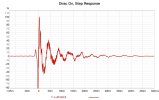
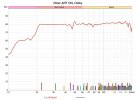
I have remeasured today, with Dirac ON, but higher signal to noise (db level) as Keith and at least one other recommended. The step response looks better.

Any comments appreciated.
 

Attachments

  • Oct 9 Dirac ON Dolby.mdat.zip
    Oct 9 Dirac ON Dolby.mdat.zip
    1.2 MB · Views: 56
  • Dirac On Dolby Frequency Response.jpg
    Dirac On Dolby Frequency Response.jpg
    108.9 KB · Views: 76
  • DIrac On, Step Response.jpg
    DIrac On, Step Response.jpg
    89.6 KB · Views: 74
That is much better. Here is a comparison of the waterfall of your previous measurement (left) and your current (right):

1791587286163.png
1791587549459.png


I have left them both at the same scale. This time you have increased the SPL of your measurement by 10dB, and you have done a 1M sweep (old measurement was a 256k sweep). You can see what effect this has had on the noise floor - it has pushed it down considerably.

However, your new measurement does have an issue. Look at that decay at 47Hz (circled) in your new measurement, and how it is about -3dB to the signal. Also notice how it's not as loud in your previous measurement. If you look at your spectrogram, you will see:

1791587679934.png


... this ugly area of decay.

I am pretty convinced that it is extraneous noise, despite you being able to successfully suppress the noise floor. Noise that loud (-3dB!) at 50Hz should be VERY audible. Given that it has occurred at the same frequency, and it has become louder with increasing SPL, I have to ask you whether you think there is some kind of furniture / floor / window rattling at that frequency.

If you want to confirm this, take 3 measurements at the same SPL and at 1M length back to back and compare the waterfall. Listen carefully for some kind of resonance. If you don't hear one, ask yourself if your microphone stand is resonating and transmitting noise to the microphone. You could also use REW's generator to play a 50Hz tone, and then walk around your room listening for where it came from. If you touch it, it should stop.

Sometimes, 50Hz noise can be a ground loop. But this looks a bit too broad to be a ground loop, those tend to look very narrow. And ground loops do not decay, they form straight lines like a flat sheet on the waterfall, or straight lines on the spectrogram. Which is why I think it's some kind of furniture resonance.

If we ignore that area of decay, the decay on both spectro and waterfall look quite good. It looks like any other ART measurement I have seen, very impressive.

1791587895005.png


And no, your step response has not changed. This is a comparison of your current and old step response. It's exactly the same.

 
@Keith_W really appreciate the time you take breaking down REW measurements. Learn a lot from your ebooks and your posts!
 
That is much better. Here is a comparison of the waterfall of your previous measurement (left) and your current (right):

View attachment 563502View attachment 563504

I have left them both at the same scale. This time you have increased the SPL of your measurement by 10dB, and you have done a 1M sweep (old measurement was a 256k sweep). You can see what effect this has had on the noise floor - it has pushed it down considerably.

However, your new measurement does have an issue. Look at that decay at 47Hz (circled) in your new measurement, and how it is about -3dB to the signal. Also notice how it's not as loud in your previous measurement. If you look at your spectrogram, you will see:

View attachment 563505

... this ugly area of decay.

I am pretty convinced that it is extraneous noise, despite you being able to successfully suppress the noise floor. Noise that loud (-3dB!) at 50Hz should be VERY audible. Given that it has occurred at the same frequency, and it has become louder with increasing SPL, I have to ask you whether you think there is some kind of furniture / floor / window rattling at that frequency.

If you want to confirm this, take 3 measurements at the same SPL and at 1M length back to back and compare the waterfall. Listen carefully for some kind of resonance. If you don't hear one, ask yourself if your microphone stand is resonating and transmitting noise to the microphone. You could also use REW's generator to play a 50Hz tone, and then walk around your room listening for where it came from. If you touch it, it should stop.

Sometimes, 50Hz noise can be a ground loop. But this looks a bit too broad to be a ground loop, those tend to look very narrow. And ground loops do not decay, they form straight lines like a flat sheet on the waterfall, or straight lines on the spectrogram. Which is why I think it's some kind of furniture resonance.

If we ignore that area of decay, the decay on both spectro and waterfall look quite good. It looks like any other ART measurement I have seen, very impressive.

View attachment 563506

And no, your step response has not changed. This is a comparison of your current and old step response. It's exactly the same.
I have seen this effect from doors and cabinets vibrating and as you say it gets worse at higher volume

@Paul McNeil
One thing to try in REW
Sweep the LFE ch but have only 1 sub on at the time, 15-200hz is enough

Then it is easy to see each subs behavior and if it is a sum of the subs or one in particular
ART does not use PEQ in the way DL/DLBC does so simply looking on response does not say much

@Keith_W
I have attached a zip where i measure support lvl, might give you some insight
1 - Left ch with support from R/C and sub 1, 2, 3
2 - Left ch without any support
3 - Right ch support for Left
4 - Center ch support for Left
5 - Sub1 support for Left
6 - Sub2 support for Left
7 - Sub 3 support for Left
 

Attachments

Last edited:
I have seen this effect from doors and cabinets vibrating and as you say it gets worse at higher volume

@Paul McNeil
One thing to try in REW
Sweep the LFE ch but have only 1 sub on at the time, 15-200hz is enough

Then it is easy to see each subs behavior and if it is a sum of the subs or one in particular
ART does not use PEQ in the way DL/DLBC does so simply looking on response does not say much

@Keith_W
I have attached a zip where i measure support lvl, might give you some insight
1 - Left ch with support from R/C and sub 1, 2, 3
2 - Left ch without any support
3 - Right ch support for Left
4 - Center ch support for Left
5 - Sub1 support for Left
6 - Sub2 support for Left
7 - Sub 3 support for Left

Thanks. None of those measurements have a timing reference. This is why:

1791629217030.png


... none of step/impulse responses make sense since REW is unable to align them properly. You can see the blue impulse (center support) appearing before the red impulse (all speakers). That's impossible and it is 100% due to REW not knowing where t=0 is. It also explains why:

1791629288289.png


The vector sum of all the measurements is not the same as the actual measurement. If the impulses were properly aligned as per what Dirac did, the two curves would look exactly the same. This is why I ask for an actual measurement of all speakers/subs playing together, so that I can check if the individual measurements have been properly aligned or not.

Think of the acoustic timing reference as a starter's gun at a race. If you don't have a starter's gun and you let all the runners go whenever they feel like, the results are meaningless. The results only mean something if all the runners have a common time reference.
 
Thanks. None of those measurements have a timing reference. This is why:

View attachment 563563

... none of step/impulse responses make sense since REW is unable to align them properly. You can see the blue impulse (center support) appearing before the red impulse (all speakers). That's impossible and it is 100% due to REW not knowing where t=0 is. It also explains why:

View attachment 563564

The vector sum of all the measurements is not the same as the actual measurement. If the impulses were properly aligned as per what Dirac did, the two curves would look exactly the same. This is why I ask for an actual measurement of all speakers/subs playing together, so that I can check if the individual measurements have been properly aligned or not.

Think of the acoustic timing reference as a starter's gun at a race. If you don't have a starter's gun and you let all the runners go whenever they feel like, the results are meaningless. The results only mean something if all the runners have a common time reference.
Check !
I thought REW sorted it out without
If measuring Left it shall also be the timing ref for all rhe speakers ?
 
I do not have time to measure everything today
But i did a quick test, Left inc everything - and Center support on left
Left speaker as timing on both
1791632536692.png
 
That is much better. Here is a comparison of the waterfall of your previous measurement (left) and your current (right):

View attachment 563502View attachment 563504

I have left them both at the same scale. This time you have increased the SPL of your measurement by 10dB, and you have done a 1M sweep (old measurement was a 256k sweep). You can see what effect this has had on the noise floor - it has pushed it down considerably.

However, your new measurement does have an issue. Look at that decay at 47Hz (circled) in your new measurement, and how it is about -3dB to the signal. Also notice how it's not as loud in your previous measurement. If you look at your spectrogram, you will see:

View attachment 563505

... this ugly area of decay.

I am pretty convinced that it is extraneous noise, despite you being able to successfully suppress the noise floor. Noise that loud (-3dB!) at 50Hz should be VERY audible. Given that it has occurred at the same frequency, and it has become louder with increasing SPL, I have to ask you whether you think there is some kind of furniture / floor / window rattling at that frequency.

If you want to confirm this, take 3 measurements at the same SPL and at 1M length back to back and compare the waterfall. Listen carefully for some kind of resonance. If you don't hear one, ask yourself if your microphone stand is resonating and transmitting noise to the microphone. You could also use REW's generator to play a 50Hz tone, and then walk around your room listening for where it came from. If you touch it, it should stop.

Sometimes, 50Hz noise can be a ground loop. But this looks a bit too broad to be a ground loop, those tend to look very narrow. And ground loops do not decay, they form straight lines like a flat sheet on the waterfall, or straight lines on the spectrogram. Which is why I think it's some kind of furniture resonance.

If we ignore that area of decay, the decay on both spectro and waterfall look quite good. It looks like any other ART measurement I have seen, very impressive.

View attachment 563506

And no, your step response has not changed. This is a comparison of your current and old step response. It's exactly the same.
Yes it is a noise, vibration from something which I haven't located but can sure hear. The floors are of 120 year old pine, very noisy stuff. But there are other culprits. Thanks again for the analysis.
 
Yes
I have seen this effect from doors and cabinets vibrating and as you say it gets worse at higher volume

@Paul McNeil
One thing to try in REW
Sweep the LFE ch but have only 1 sub on at the time, 15-200hz is enough

Then it is easy to see each subs behavior and if it is a sum of the subs or one in particular
ART does not use PEQ in the way DL/DLBC does so simply looking on response does not say much

@Keith_W
I have attached a zip where i measure support lvl, might give you some insight
1 - Left ch with support from R/C and sub 1, 2, 3
2 - Left ch without any support
3 - Right ch support for Left
4 - Center ch support for Left
5 - Sub1 support for Left
6 - Sub2 support for Left
7 - Sub 3 support for Left
Yes, it's a rattle/buzz from something in the room, possibly the pine plank flooring...
 
Check !
I thought REW sorted it out without
If measuring Left it shall also be the timing ref for all rhe speakers ?

Ideally, yes. However this might sometimes be a problem. Some people have (for example) left subwoofer and left speaker on the same channel, and right subwoofer and right speaker on the same channel. How do you obtain a timing measurement of the subwoofers? Your AVR probably works this way. Two input channels get sent to multiple output channels at once using the AVR's internal routing matrix. But ... as far as REW is concerned, there are only two channels.

You can not tell REW to use the left speaker as a timing reference, and tell REW to only sweep the subwoofer frequency. This is because part of the main speaker will also be swept, and this will mess up your measurement.

OK, so let's disconnect the left speaker so that we can sweep the left subwoofer alone. Let's use the right speaker as timing reference. But if you do that, your right subwoofer will now have the left speaker as the timing reference. Since the timing refs are not the same, the result is not comparable.

The solution (which I haven't put in my book yet) is to centre the microphone between the speakers. Sweep the left speaker using the right speaker as timing ref. Adjust the microphone so that the delay is 0ms. Then you confirm by sweeping the right speaker using the left as timing reference. Both should be 0ms or close to it. Or you can sweep both together and examine the impulse response. You should see only one impulse peak.

Sometimes you have to get a bit creative if you want to take your measurement. Really think about how your system has been laid out and how audio has been routed, and what you can do to obtain a pure measurement of that speaker. Sometimes the only way to prevent that speaker from being played is to physically disconnect it.
In REW you can sweep every ch by it self using Asio
And to keep using left as a timing ref is simple in my case, i have a fully active system
 
Back
Top Bottom