You call minus 2db from hundred to fifty Hz drop like a rock?Once you're below 100Hz this thing's output drops like a rock.

-
Welcome to ASR. There are many reviews of audio hardware and expert members to help answer your questions. Click here to have your audio equipment measured for free!
You are using an out of date browser. It may not display this or other websites correctly.
You should upgrade or use an alternative browser.
You should upgrade or use an alternative browser.
Dayton Audio MKSX4 Passive Subwoofer Review
- Thread starter amirm
- Start date
dtaylo1066
Major Contributor
- Joined
- Jan 12, 2019
- Messages
- 1,045
- Likes
- 1,391
Interesting. I am not sure what one can expect from a subwoofer with 4" drivers.
I have Edifier M60 speakers next to my computer monitor. Erin gave them a favorable review. They sound damn good in the nearfield for what they are. Their 3" drivers surprise me in the bass.
But I am not sure what a passive group of 4" drivers is going to buy you, but if you have a desktop amp that can drive them, they may add to your nearfield monitors.

- Joined
- Jun 24, 2024
- Messages
- 3,218
- Likes
- 5,984
I'm looking at the in-room response:You call minus 2db from hundred to fifty Hz drop like a rock?
Considering that the bass response is always extremely room dependent, there's not much one can conclude from the anechoic response about what it will do in your room. Granted, most people's rooms will probably do better than this, since there's basically zero boundary reinforcement with the sub's positioning on Amir's Klippel. Still, I wouldn't want to depend on boundary reinforcement just to get something close to a flat response from 50-100Hz considering equal loudness contours mean we really need that reinforcement to get additional headroom.
Thank you for bringing some sanity to this thread. It's not a SUB subwoofer but perfectly fine for adding some meat to small speakers if set up right and not chasing cinema rumble.Not said as a joke: Can folks help me understand why I should dislike this?
All I see is 85 dB SPL from 100hz to 50hz with low-ish distortion. The stuff above 100hz I usually ignore in a subwoofer graph. So for a tiny thing that cost 145$, you could do much worse. Toss in a < 100$ mono/bridgeable chip amp and you have something that fits under any desk and fills out your monitors nicely.
Amen!What this thread has shown is how almost everyone here has misinterpreted the measurements.
That's the idea with this type of passive "sub" It's supposed to be crossed actively before amplification as most professional subs/basscabs. Would be nice if Dayton and @amirm states this clearly I hope Dayton does cause. I would have hated to have bought this not knowing I needed a crossover to make it function properly. Before you could often buy passive subs with build in crossovers, but they would only fit the specific satellites they were bought with.Unless an additional low pass filter is applied, the positioning of the sub in a stereo setup is critcal - with a peak at 400 hz it's surely acoustically locatable.
Last edited:
But these things that don't give really low bass, were always called and known as subwoofers ever since they were introduced in home stereo.And in PC satellite systems for that matter. Is bass box a term in English? We say that in Danish about stereo subs in PA soundMaybe if they just called this thing a woofer
OP

- Thread Starter
- #48
There is no confusion on my part. I don't test subwoofers. I accepted this unit because it is basically the "woofer" for the typical small drivers in a car that act more like midranges than woofers. For this reason, I scanned it like the bottom end of a normal speaker. I put 'subwoofer' in quotes for that reason.What this thread has shown is how almost everyone here has misinterpreted the measurements.
I acknowledge your point. I guess it's one of semantics. I just noticed Amir's post above. This is basically a woofer and not a subwoofer.But these things that don't give really low bass, were always called and known as subwoofers ever since they were introduced in home stereo.And in PC satellite systems for that matter. Is bass box a term in English? We say that in Danish about stereo subs in PA sound
There are units on the market and have been for a long time with a diminutive set of satellites and a "subwoofer" that in reality is really just a separate woofer.
I think the term subwoofer is used pretty loosely for a lot of products that don't really reach into what would traditionally be considered subwoofer frequencies. This unit will distort if fed a full range signal with 20-50Hz information. So will a lot of 6" 2 ways. Which is why we match a typical 6" two way with a mid woofer to a "true" subwoofer. One that has the Sd to provide 30Hz bass at reasonable listening levels in a typical living space.
If someone accepts this unit's limitations--that is--it's more of a woofer--assuming you use it with modest SPL's and below, with DSP filtering corners around 50 and 200 then I guess it's OK. (Still probably can localize at 200 though...)
But it seems to be called a "subwoofer." You know you're in trouble when someone has to put quotes around your use of a term. If you buy it thinking you're getting a woofer then that's fine. It's useable as a woofer.
the +6dB per boundary only applies on infinite spaces and not in a closed room. Here the sound cannot escape and forms discrete resonant modes (standing waves) resulting in huge dips and peaks.This is almost surely for use with computer speakers or small satellite surround systems that may not go much below 100Hz. Its thin profile allows it to be under a desk, behind an entertainment center, or laid flat under an end table.
So, ignore the output above 100-150Hz and increase the ouput below 100Hz 12-18dB. It is still not a 20Hz subwoofer, but it can probably produce okay output down to 40Hz and a little below in the living room of a small house or apartment. It uses four Dayton Audio TCP115's which sell for $16 each and are known to go pretty low for a 4-inch woofer, but they are a cheap, high distortion driver so it is correct that it is going to be one note bass. But for a PC setup or cheap surround sound system in a small room it does what is needed.
- It is not meant to be listened to in an anechoic chamber, so take the boundary loading into account. While it drops nearly 20dB below 400Hz in 4-pi space, it likely gains 12-18dB. (See image below.)
- Although it is passive, it is assumed to be used with a low-pass filter which is available on a lot of cheap 2.1 amps which may not include a high-pass for the satellites. Thus, most of that output above 100-150Hz is irrelevant.
(EDIT: The TCP115's are used in the Dayton Audio MK402's, so you can see what a single woofer is capable of in Amir's review HERE.)
View attachment 564421

yo!
Active Member
- Joined
- Oct 2, 2024
- Messages
- 155
- Likes
- 162
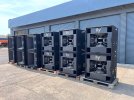
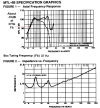
When I think about subs with 4 drivers facing each other. The 80s EV 4x18 MTL4.
Well, they didn’t exactly reach deep down into the basement of the frequency range, either.
But there was certainly plenty of punch and a nice view. Some say they where loud at any volume
Well, they didn’t exactly reach deep down into the basement of the frequency range, either.
But there was certainly plenty of punch and a nice view. Some say they where loud at any volume
Attachments
Last edited:

Good to see you @markk don't be a stranger.I do agree that the low profile aspect is unique. So maybe this is a major push/selling point.
Hey, good to hear from you. I remember you from those days. In fact, not sure you remember, but we had some messaging back then and I thought highly of you. Glad to see you've gone on to fame and fortune, so to speak, along with Amir. ("fortune" being used liberally here!).
I do still recall the old days, the Madisound Board and John K and Sigfried LInkwitz getting into the mathematical acoustic esoterica. One of their interactions actually made me interested enough to buy a copy of Beranek's Acoustics and try to re-derive the acoustic wave equation. Even then I was a long way from my engineering calculus classes...
Life got in the way. Didn't seem profitable for me to give up a career in medicine to keep testing loudspeaker drivers. But I've recently retired and think I have a few speaker building projects left in me. So will lurk a bit and probably have a project online in the next year.
But the cost of high end design has gone up in the last decade or two. Man, I wish I had a Klippel... This is indeed the gold standard. But the price of admission is high.
Glad that you and Amir are testing with cutting edge equipment and unbiased reviews. It's I who should thank you and Amir for the work you've done in the last decade!
Sorry for the OT thread highjack/walk down memory lane...
While I'm not sure I agree that some 4" woofers can't plummet the depths, it's good to see you around.


First off: four 4-inch drivers have a diaphragm area SD just under of that of an 8-inch driver. I don't necessarily expect earth-shattering sound storms right from the start.
You wouldn’t use a passive subwoofer like this without electronics capable of filtering and equalization.

Looking at this graph, I would low-pass filter this subwoofer at 100 Hz at most and process the remaining boost with a shelving filter.
So what have here is a subwoofer with a lower cutoff frequency of just under 50 Hz and a sensitivity of just under 85 dB/2.83 V/1 m. That’s not really bad for a subwoofer of this size. In any case, you'd probably use it with fairly small satellite speakers.
To improve signal stability, I’d probably add a high-pass filter below the tuning frequency fb—which, based on the impedance diagram, is likely around 50 Hz—so that the driver excursion below fb doesn’t exceed that above it.
For the price, I don’t think it’s bad at all. That’s why I’m giving it the Postman Panther.
You wouldn’t use a passive subwoofer like this without electronics capable of filtering and equalization.
Looking at this graph, I would low-pass filter this subwoofer at 100 Hz at most and process the remaining boost with a shelving filter.
So what have here is a subwoofer with a lower cutoff frequency of just under 50 Hz and a sensitivity of just under 85 dB/2.83 V/1 m. That’s not really bad for a subwoofer of this size. In any case, you'd probably use it with fairly small satellite speakers.
To improve signal stability, I’d probably add a high-pass filter below the tuning frequency fb—which, based on the impedance diagram, is likely around 50 Hz—so that the driver excursion below fb doesn’t exceed that above it.
For the price, I don’t think it’s bad at all. That’s why I’m giving it the Postman Panther.
Last edited:
yo!
Active Member
- Joined
- Oct 2, 2024
- Messages
- 155
- Likes
- 162
Seriously? This looks like some amateurish, cobbled-together project—on top of which, it suffers from massive cabinet resonance at 400 Hz—yet they still went ahead and brought it to market.First off: four 4-inch drivers have a diaphragm area SD just under of that of an 8-inch driver. I don't necessarily expect earth-shattering sound storms right from the start.
You wouldn’t use a passive subwoofer like this without electronics capable of filtering and equalization.
View attachment 564660
Looking at this graph,
For the price, I don’t think it’s bad at all.
If this speaker excels at anything, it’s serving as a prime example of exactly how *not* to do things.
There’s no sugarcoating it: the amount of material invested is significant, while the actual result is anything but.
yo!
Active Member
- Joined
- Oct 2, 2024
- Messages
- 155
- Likes
- 162
Then go ahead, xover your super sub with a 18 dB slope and you get only a 6 dB Filter in real life.Who cares about a resonance at 400 Hz if it's at least two octaves above the frequency at which I, for one, would apply the maximum high-pass filtering to such a device?

a4eaudio
Addicted to Fun and Learning
According to online reviews, yes....Do people like this?
People seem to be missing the important points...
- It's a passive sub that needs to be low-pass filtered
- it's cheap
- it is small and only 6" deep (which is why just getting an 8" or 10" sub doesn't lwork)
yo!
Active Member
- Joined
- Oct 2, 2024
- Messages
- 155
- Likes
- 162
There are plenty of shallow enclosures that feature a 6.5" or 8" woofer mounted on the side, delivering excellent results despite their compact dimensions.
I no longer understand the world of online forums: on one hand, devices are trashed here for having 0.05% total harmonic distortion instead of 0.01%—as if that somehow rendered them unusable.
Yet, when someone presents a completely botched design—one with a flaw that is vastly more severe and truly unacceptable—that is suddenly considered perfectly fine.
Similar threads

- Poll
- Replies
- 69
- Views
- 15K
- Replies
- 28
- Views
- 11K
- Replies
- 104
- Views
- 14K
- Replies
- 186
- Views
- 66K
- Replies
- 123
- Views
- 19K