• Welcome to ASR. There are many reviews of audio hardware and expert members to help answer your questions. Click here to have your audio equipment measured for free!

Danny at GR getting bad Talk Back from many of his viewers

I never was and never will be a GR customer. Not my cup of tea, I either use or not use a speaker model as intended by the manufacturer.
Still I understand the appeal for some that some guy, some where, with golden ears can make what they have “better”. Make what they have “special” as something only a connoisseur can appreciate.
In an industry selling speaker cable at 10k $
Surely there is room for an artisan tweaking existing speakers. At list in its case the really sound different (for better or for worst).
After all it is not like measuring speakers was as measuring amplifier, even though we have made huge progress, we cannot just say this speaker is transparent and this one is not, like we can for amplifier.
So, if preference is still a factor, we should maybe keep that in mind before going nuts on Danny for a crime that is after all pretty benign.
 
Last edited:
Well for example this,
Keith
To be fair, it's not too awful. Seems pretty typical for a middling coaxial design.
 
Oh boy! I am getting the itch to swap out my Fyne F500 for the KEF LS50 Meta. Even Danny admits it is well designed.
 
I am no fan of Danny. Quite the contrary. But if he is right about the F500, it only confirms we cannot trust our ears. It actually reinforces the objectivist position.
 
the LS50 Meta is a proven exceptional speaker, the fyne 500 might be good, might not be, we can't know unless someone with high precision equipment measures it
 
the LS50 Meta is a proven exceptional speaker, the fyne 500 might be good, might not be, we can't know unless someone with high precision equipment measures it
If I buy the LS50 Meta, I might be tempted to ship the F500s to Amir for testing.

Danny pretty much destroyed the used market for them anyway, so I will be taking a loss on this one...
 
Danny pretty much destroyed the used market for them anyway, so I will be taking a loss on this one...
I think you're overestimating the influence of this guy who's fiddling with speakers that are already fully designed.
Nobody here knows him.
If he didn't nitpick about the speakers—which he then "improves"—he wouldn't have a business model.
 
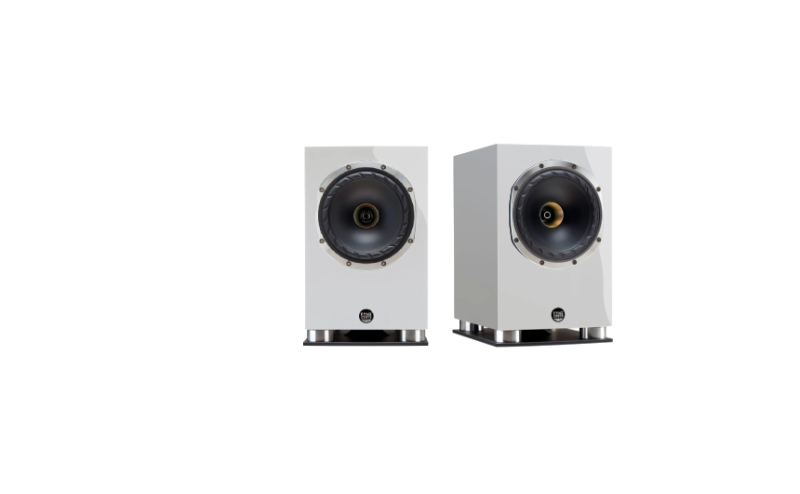
Oh boy! Danny just tore apart the Fyne F500 on his Youtube channel. I admit, I have skin in the game, having bought these speakers a week ago!
Funny though, I am not hearing the many problems he describes. Nor have the many reviewers who have reviewed them.
The Fynes use a coaxial driver. I wonder if Danny somehow screwed up his measurements.
While the charts WERE a bit rough, I am not "Certain" that all the roughness in the upper parts are easily heard. Not saying it does not matter at all, but I tend to perceive huge imbalances in magnitude far easier than roughness in response, if that makes sense.

I think our brains tend to "Smooth" out up and down resonances to SOME degree.
 
F500SP looks much better than F500:


We can estimate farfield off-axis over top, or other better angle.
As always big thanks to Daniel from hifi-voice.com
 
F500SP looks much better than F500:


We can estimate farfield off-axis over top, or other better angle.
As always big thanks to Daniel from hifi-voice.com
His measurements of the F500 seem better than Danny's.
Also, in his subjective review, he is very positive about the speaker.
 
His measurements of the F500 seem better than Danny's.
Also, in his subjective review, he is very positive about the speaker.
I did not find a right angle estimated from measurements of F500.
Daniel from hifi-voice.com is very nice person, so I mostly do not read that text.
I read his review by looking at measurements.
 
Oh boy! Danny just tore apart the Fyne F500 on his Youtube channel. I admit, I have skin in the game, having bought these speakers a week ago!
Funny though, I am not hearing the many problems he describes. Nor have the many reviewers who have reviewed them.
The Fynes use a coaxial driver. I wonder if Danny somehow screwed up his measurements.

Danny’s FR measurements are always on a zoomed scale and so response issues are exaggerated. To be fairly compared to standard speaker measurements they need to be rescaled. As veteran observers expect, the video title is click bait as well. He does go on to apply an upgrade to the speaker, but as usual, his only remediation tool is to redesign the passive crossover.

Since Danny does not understand applying PEQ would address most of the speaker’s issues, he applies the wrong solution. Danny may be walking away, but smart consumers should run away from his claims.
 
Last edited:
Danny’s FR measurements are always on a zoomed scale and so response issues are exaggerated. To be fairly compared to standard speaker measurements they need to be rescaled. As veteran observers expect, the video title is click bait as well. He does go on to apply an upgrade to the speaker, but as usual, his only remediation tool is to redesign the passive crossover.

Since Danny does not understand applying PEQ would address most of the speaker’s issues, he applies the wrong solution. Danny may be walking away, but smart consumers should run away from his claims.
I am using the FYne F500 with a Wiim Amp Ultra. I have used the Wiim's room correction feature. Could this room correction be hiding or correcting the speaker's flaws?
I shall try them without.
Either way, I feel Danny is exagerating the Fyne's problems... They should sound horrible by his description. Far from it.
 
Danny’s FR measurements are always on a zoomed scale and so response issues are exaggerated. To be fairly compared to standard speaker measurements they need to be rescaled. As veteran observers expect, the video title is click bait as well. He does go on to apply an upgrade to the speaker, but as usual, his only remediation tool is to redesign the passive crossover.

Since Danny does not understand applying PEQ would address most of the speaker’s issues, he applies the wrong solution. Danny may be walking away, but smart consumers should run away from his claims.
Not saying the Fyne is great, but Danny takes measurements that are a bit subpar, exaggerates the deviation from perfection and ridicules the box, drivers and crossover, and then devises a "Fix" for all the poorly thought out and made parts.....Do I have it...?
 
I am using the FYne F500 with a Wiim Amp Ultra. I have used the Wiim's room correction feature. Could this room correction be hiding or correcting the speaker's flaws?
I shall try them without.
Either way, I feel Danny is exagerating the Fyne's problems... They should sound horrible by his description. Far from it.
It will correct for the speakers too, as it listens to the end result. Hence, whatever the cause of peaks and troughs it’ll attempt to compensate.
 
Not saying the Fyne is great, but Danny takes measurements that are a bit subpar, exaggerates the deviation from perfection and ridicules the box, drivers and crossover, and then devises a "Fix" for all the poorly thought out and made parts.....Do I have it...?

Pretty much, but not sure about the claims of bad parts. Danny also whines about hearing ringing but, without distortion measurements, cannot be sure he might not be hearing distortion.*

Would hope no issues in a new speaker but coaxials are more complex and defects can occur. The bottom line is that Danny does not apply a full suite of diagnostic measurements and often too quickly redesigns the crossover as it is his predetermined solution.

As mentioned, the headline implies that he could not fix, but his website is selling an upgrade kit. See here: https://gr-research.com/product/fyne-audio-s500/


* oops, forgot this is imaginary ringing as he does not actually listen to the speakers!
 
Last edited:
Danny has a video on ills of using EQ. It has some elements of truth in it, like EQ being listener dependent, but a bunch of other stuff that is just wrong, including measurements with an artificial wall.


I should do a video on it but for now, post this response under it. Let's hope it doesn't get deleted:
Hi Danny. This is a great topic and nice to see you run some experiments. Alas, there are two major problems in your analysis:

1. Above transition frequencies of 200 to 300 Hz, you can NOT trust your single microphone measurements. ***That is NOT how we hear.*** We have two ears and each perceives a different frequency response. You said it yourself: movie a bit to the right or left and the response changes. Therefore, each ear picks up a different response as not only determined by the differing response, but also reflections and masking by your head and body (HRTF). You have to apply full knowledge of psychoacoustics to single microphone measurements to have any hope of understanding what we hear.

If you don't believe me, do your loved ones in home sound radically different when they walk or stand closer to the wall? How about you moving left and right relative to them? They sound the same, right? Same here. Our brain has strong adaptation and learning in how it interprets the two signals coming from each ear.

2. In bass frequencies, in sharp contrast, measurements do show the reality because wavelengths are long so each ear hears the same thing. As such, frequency response errors are clearly bad and must be fixed.You scoff at using DSP to fix these yet you miss that is the most powerful tool you have. Go ahead and show me what those toy tube "traps" you have in the back wall do in correcting bass frequency response. It will be bad without them, and almost as bad with them! You wasting money on them and they are ugly to boot. DSP on the other hand, can trivially fix the peaks which cause boomy bass that lingers in the room.

Further, pulling down the bass with EQ allows your room resonance to work in your favor: speaker is working less hard so creates less distortion. In contrast, any kind of absorber eats power and energy from the speaker. That is how they work. They convert sound energy into heat, wasting amplification power.It is true that you can't fix the dips easily with DSP as they are mostly non minimum phase phenomenon. Fortunately, they are most benign as they can only change the sound if a note perfectly lands on them. But let's say you want to fix them. Good luck using your acoustic products to impact them. Wavelengths are very large making those products almost invisible to it. You need tuned absorbers which are expensive and difficult to deploy due to sharp dependency on actual frequency response measurements.

As to multiple seats, most people listening in stereo don't care about more than one seat. For home theater, you do want wider seating position and there, you can deploy multiple subs and/or technologies that use all of your speakers to produce smoother response across the whole seating area. Again, trying to do that with acoustic products is futile as you need so much of it to make a dent. And if you did, you would have a dead room no one would want to listen in it.

All of this has been extensively researched and written about. Controlled published testing shows that EQ absolutely increases preference rating of listeners.

 
Last edited by a moderator:
^^^ Great work. The public record must be corrected. I don't know what Danny gains from spreading DSP FUD, I don't know if he sells those tube traps.
 
Danny has a video on ills of using EQ. It has some elements of truth in it, like EQ being listener dependent, but a bunch of other stuff that is just wrong, including measurements with an artificial wall.


I should do a video on it but for now, post this response under it. Let's hope it doesn't get deleted:
Hi Danny. This is a great topic and nice to see you run some experiments. Alas, there are two major problems in your analysis:

1. Above transition frequencies of 200 to 300 Hz, you can NOT trust your single microphone measurements. ***That is NOT how we hear.*** We have two ears and each perceives a different frequency response. You said it yourself: movie a bit to the right or left and the response changes. Therefore, each ear picks up a different response as not only determined by the differing response, but also reflections and masking by your head and body (HRTF). You have to apply full knowledge of psychoacoustics to single microphone measurements to have any hope of understanding what we hear.

If you don't believe me, do your loved ones in home sound radically different when they walk or stand closer to the wall? How about you moving left and right relative to them? They sound the same, right? Same here. Our brain has strong adaptation and learning in how it interprets the two signals coming from each ear.

2. In bass frequencies, in sharp contrast, measurements do show the reality because wavelengths are long so each ear hears the same thing. As such, frequency response errors are clearly bad and must be fixed.You scuff at using DSP to fix these yet you that is the most powerful tool you have. Go ahead and show me what those toy tube "traps" you have in the back wall do in correcting bass frequency response. It will be bad without them, and almost as bad with them! You wasting money on them and they are ugly to boot. DSP on the other hand, can trivially fix the peaks which cause boomy bass that lingers in the room.

Further, pulling down the bass with EQ allows your room resonance to work in your favor: speaker is working less hard so creates less distortion. In contrast, any kind of absorber eats power and energy from the speaker. That is how they work. They convert sound energy into heat, wasting amplification power.It is true that you can't fix the dips easily with DSP as they are mostly non minimum phase phenomenon. Fortunately, they are most benign as they can only change the sound if a note perfectly lands on them. But let's say you want to fix them. Good luck using your acoustic products to impact them. Wavelengths are very large making those products almost invisible to it. You need tuned absorbers which are expensive and difficult to deploy due to sharp dependency on actual frequency response measurements.

As to multiple seats, most people listening in stereo don't care about more than one seat. For home theater, you do want wider seating position and there, you can deploy multiple subs and/or technologies that use all of your speakers to produce smoother response across the whole seating area. Again, trying to do that with acoustic products is futile as you need so much of it to make a dent. And if you did, you would have a dead room no one would want to listen in it.

All of this has been extensively researched and written about. Controlled published testing shows that EQ absolutely increases preference rating of listeners.
I can't find your comment. Probably got deleted.
 
Back
Top Bottom