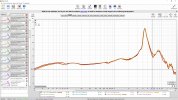
It is said the 5128 is more 'correct' up to 10kHz and maybe even higher.
As Resolve already mentioned the plots vary a lot from the squiggly you see on the screen due to positioning there anyway.
It can show the general 'trend' of tonal balance which is an important aspect. One should just realize that above 6kHz or so one should not look at high Q 'wiggles' in headphone measurements and assume those are really there. They were on that particular fixture, with that particular headphone, on that (or averaged of a few) seatings but the 'general' tonal balance below 5kHz or so is much more determining of 'good sound'.
Just look at various measurements on various rigs. Then see if you can spot some commonalities in that region and EQ the treble part to that (or experiment to see what you like).
You can use shelves or peak filters with a Q up to 3 max in that region.
You can safely forget that headphone measurements are accurate in anyway above a few kHz.
In the 4-7kHz range there is 'sibilance' when the peak is too high.
You can EQ there if you hear sibilance.
In the 7-12kHz range there is 'sharpness' to sounds. When bothered by this simply experiment with filters in that range.
In the 12kHz + range there is 'air'. One can shelf there (but steeply otherwise you get sharpness.
As the range above 5kHz is highly 'personal' anyway, just like bass below 150Hz, you should EQ to taste. One has to use various recordings and see if you can get an 'average' setting that works for you with most music.
The potential 'danger' is that you may deviate from EQ designed by computers and experts in the field. In the end nothing as personal as headphones and taste.
So if you enjoy EQ that differs from what experts claim is the 'only correct one because... bla bla reason' consider that YOU have to enjoy music on that headphone and not the HATS and software that determines what a specific copy of that headphone measures 'correct' on that fixture under the given circumstances.
Headphone measurements are nowhere near the accuracy that speakers can be measured with and far, far, far removed from the accuracy with which electronics can be measured.
Simply too much individual and test fixture as well as acoustical properties of headphones and conditions it is measured in for headphone measurements to be considered accurate. Alas... the 5128 may be 'more accurate' and maybe even reproduce measurements better but is still flawed because of all the variables that are present.