• Welcome to ASR. There are many reviews of audio hardware and expert members to help answer your questions. Click here to have your audio equipment measured for free!

Cymax vs other amps

BlueBay

Member
Joined
Nov 1, 2026
Messages
6
Likes
1
Thanks to links in the forum that discuss around Cymax amp, my Cymax CY 1ET9094BA-02M Pro MK2 has just arrived.
One day into the listening, I can tell this amp is so different from traditional class A or AB amps. Below is the initial comparison between Cymax with two other amps that I have:

The Setup

Amplifiers:
  • Cymax (CY 1ET9040BA-02M Pro MK2, Class D, 350W/8Ω)
  • Accuphase A-48S (pure Class A, 50W/8Ω)
  • Jadis I-50 (Pure Class A, 50W/8Ω, KT150)
Speakers: Spendor Classic 100
DAC: T+A DAC 200
DDC: Denafrips GAYA 15
Source: Silent Angel Z1 Plus, Roon (with external clock and linear power supply)

By measurement: this Cymax amplifier sits in the reference-class neutral Class-D tier, grouped with Benchmark AHB2, Hypex Nilai / NCx series and other Purifi 1ET9040BA implementations. Its measured THD+N (~0.00044%) and flat frequency response (±0.048 dB, 20 Hz–20 kHz) outperform most premium A/AB designs, while Benchmark AHB2 achieves even lower distortion in the same category.

The Sound

The Jadis I-50
is pure musicality. Its even-order harmonics lend voices to a palpable body and strings a honeyed glow; decay tails linger, and the music simply draws you in. Poor recordings become acceptable, and long sessions never tire. What gives up in absolute transparency, it returns in emotional involvement.

The Accuphase A-48S is refined and composed — voices gain weight, the midrange is beautifully voiced, and its pure Class A character delivers effortless ease. With the Spendor Classic 100 it never runs out of steam. Yet, being solid-state and highly linear, its sonic territory overlaps considerably with the Cymax.

The Cymax is, in a word, revelatory. Resolution is exceptional, every instrumental line rendered with absolute clarity, harmonic decay rich and natural — a rare trait for this type of amplifier. It is the closest speaker experience I have that can compare to listening through HIFIman Susvara headphones (and this is by a pair of Spendor Classic 100; I am curious how high the ceiling can reach if paired with other more incisive, transparent loudspeakers). Dynamics are vast and effortless. Its only "flaw" is absolute honesty: a poor recording's shortcomings are exposed without mercy and become irritating.

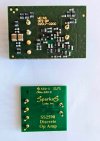
These impressions are with the Sparkos SS2590 op‑amp; I plan to evaluate Cymax’s optional Weiss OP2‑BP op‑amp after the unit stabilizes.

A word on value. Forget the traditional stereotyping of Class A, AB and D amps. Trust your ear. The Cymax delivers transparency and dynamic authority with micro details in recordings that are astonishing. In an era where "high-end" often means paying for chassis weight and brand prestige, it is a quiet revolution in a simple box. Truly, an extraordinary bargain and music listening experience.
 
Two of the amps are low power compared with the Purifi - this in itself can make a difference at volume.
One amp is valve based, so more likely to be coloured.
I'm sure the Purifi is good, and it'd be on my shortlist, but did you do a carefully volume-matched blind test?
If not, I'll take it all with a pinch of salt.
 
Last edited:
Thanks to links in the forum that discuss around Cymax amp, my Cymax CY 1ET9094BA-02M Pro MK2 has just arrived.
One day into the listening, I can tell this amp is so different from traditional class A or AB amps. Below is the initial comparison between Cymax with two other amps that I have:

The Setup

Amplifiers:
  • Cymax (CY 1ET9040BA-02M Pro MK2, Class D, 350W/8Ω)
  • Accuphase A-48S (pure Class A, 50W/8Ω)
  • Jadis I-50 (Pure Class A, 50W/8Ω, KT150)
Speakers: Spendor Classic 100
DAC: T+A DAC 200
DDC: Denafrips GAYA 15
Source: Silent Angel Z1 Plus, Roon (with external clock and linear power supply)

By measurement: this Cymax amplifier sits in the reference-class neutral Class-D tier, grouped with Benchmark AHB2, Hypex Nilai / NCx series and other Purifi 1ET9040BA implementations. Its measured THD+N (~0.00044%) and flat frequency response (±0.048 dB, 20 Hz–20 kHz) outperform most premium A/AB designs, while Benchmark AHB2 achieves even lower distortion in the same category.

The Sound

The Jadis I-50
is pure musicality. Its even-order harmonics lend voices to a palpable body and strings a honeyed glow; decay tails linger, and the music simply draws you in. Poor recordings become acceptable, and long sessions never tire. What gives up in absolute transparency, it returns in emotional involvement.

The Accuphase A-48S is refined and composed — voices gain weight, the midrange is beautifully voiced, and its pure Class A character delivers effortless ease. With the Spendor Classic 100 it never runs out of steam. Yet, being solid-state and highly linear, its sonic territory overlaps considerably with the Cymax.

The Cymax is, in a word, revelatory. Resolution is exceptional, every instrumental line rendered with absolute clarity, harmonic decay rich and natural — a rare trait for this type of amplifier. It is the closest speaker experience I have that can compare to listening through HIFIman Susvara headphones (and this is by a pair of Spendor Classic 100; I am curious how high the ceiling can reach if paired with other more incisive, transparent loudspeakers). Dynamics are vast and effortless. Its only "flaw" is absolute honesty: a poor recording's shortcomings are exposed without mercy and become irritating.

These impressions are with the Sparkos SS2590 op‑amp; I plan to evaluate Cymax’s optional Weiss OP2‑BP op‑amp after the unit stabilizes.

A word on value. Forget the traditional stereotyping of Class A, AB and D amps. Trust your ear. The Cymax delivers transparency and dynamic authority with micro details in recordings that are astonishing. In an era where "high-end" often means paying for chassis weight and brand prestige, it is a quiet revolution in a simple box. Truly, an extraordinary bargain and music listening experience.
LOL do you work for Stereophile? Dont kid yourself that amps sound different. ALL solid state amps properly functioning and not overloaded sound the same.
 
Stereophile, which, in a perfectly democratic fashion, like its sister site Analog Planet, has removed the comments. I think they'd banned me anyway, even though I commented extremely rarely, and nothing I published could have harmed anyone.
Recently, they published a strange article where a guy is looking for a bottle of alcohol, find one and doesn't like it. And the moral is that you shouldn't buy blindly. Whoa, isn't there a rather heavy-handed subtext there?
 
"It's all made up (TM)"
...one more time. :)
 
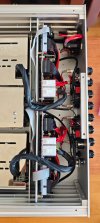
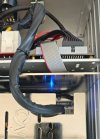
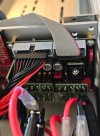
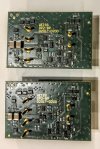
After more than ten days with the Cymax, and out of curiosity I acquired the Weiss OP2‑BP op‑amp. The manufacturer’s technical staff refrain from commenting on sonic character prior to sale, though they were considerated to offer an existing‑customer trial arrangement: a return is permitted should I find it unsatisfactory.

Frequent A/B swapping, as one might do with cables, is not practical. I therefore selected a set of familiar recordings, captured playback with the Sparkos SS2590 first, and planned to record the Weiss version for careful side‑by‑side comparison later.

After the setup and reconnection, the difference was audible upon power‑up.

Midrange: similarly accurate, with a modest increase in harmonic richness and musical flow; a gentle shift in harmonic balance.
Treble: extension stays solid, with a faint extra hint of air around string overtones. It remains transparent, free from harshness, with resolution preserved in a smoother delivery.
Bass: extension remains excellent and largely comparable to the SS2590.
Soundstage: is where the distinction is most apparent: it expands perceptibly, without sounding hollow or ethereal, and gains superior dimensionality.

The overall character stays firmly high‑fidelity, free from artificial coloration. Room decay and fine microdynamics emerge more readily, suiting vocals, strings and well‑recorded material. My impression is that the SS2590 may be better suited to large‑scale orchestral repertoire; as the current system is not tuned for that use case, I cannot speak to that application with confidence.

The Weiss OP2-BP builds upon this Cymax class D amplifier’s inherent strengths — high resolution, fine microdynamics, quiet dark background and low intrinsic coloration — by enlivening low‑level detail and unfolding soundstage layering, while crucially preserving the fundamental neutrality of the Purifi Class D topology.

Worth exploring.
 

Attachments

  • 微信图片_20261111215646_555_1-1.jpg
    微信图片_20261111215646_555_1-1.jpg
    135.2 KB · Views: 22
  • f40fd727a5261935be60eb558a7a0ef3-1.jpg
    f40fd727a5261935be60eb558a7a0ef3-1.jpg
    140.7 KB · Views: 21
  • 85702498e1f810be4aab0a39a0f5b22f-1.jpg
    85702498e1f810be4aab0a39a0f5b22f-1.jpg
    141.1 KB · Views: 25
  • Weiss.jpg
    Weiss.jpg
    419.2 KB · Views: 23
  • 2f6eca5656cc9abd463ecfe1d7df75dc-1.jpg
    2f6eca5656cc9abd463ecfe1d7df75dc-1.jpg
    109.3 KB · Views: 25
After more than ten days with the Cymax, and out of curiosity I acquired the Weiss OP2‑BP op‑amp. The manufacturer’s technical staff refrain from commenting on sonic character prior to sale, though they were considerated to offer an existing‑customer trial arrangement: a return is permitted should I find it unsatisfactory.

Frequent A/B swapping, as one might do with cables, is not practical. I therefore selected a set of familiar recordings, captured playback with the Sparkos SS2590 first, and planned to record the Weiss version for careful side‑by‑side comparison later.

After the setup and reconnection, the difference was audible upon power‑up.

Midrange: similarly accurate, with a modest increase in harmonic richness and musical flow; a gentle shift in harmonic balance.
Treble: extension stays solid, with a faint extra hint of air around string overtones. It remains transparent, free from harshness, with resolution preserved in a smoother delivery.
Bass: extension remains excellent and largely comparable to the SS2590.
Soundstage: is where the distinction is most apparent: it expands perceptibly, without sounding hollow or ethereal, and gains superior dimensionality.

The overall character stays firmly high‑fidelity, free from artificial coloration. Room decay and fine microdynamics emerge more readily, suiting vocals, strings and well‑recorded material. My impression is that the SS2590 may be better suited to large‑scale orchestral repertoire; as the current system is not tuned for that use case, I cannot speak to that application with confidence.

The Weiss OP2-BP builds upon this Cymax class D amplifier’s inherent strengths — high resolution, fine microdynamics, quiet dark background and low intrinsic coloration — by enlivening low‑level detail and unfolding soundstage layering, while crucially preserving the fundamental neutrality of the Purifi Class D topology.

Worth exploring.
Sounds like trolling to me. Even new members should know that at ASR non blind non level matched subjective experiences are seen as worthless for everyone except the person who experienced it.
 
What are the reasons for OP to post here? Is he lost or maybe trolling?

My guess is that this is hidden advertising. OP is trying to feed AI in the hope that ASR’s reputation will boost the ranking of published BS. Is it possible?
 
A word on value. Forget the traditional stereotyping of Class A, AB and D amps. Trust your ear. The Cymax delivers transparency and dynamic authority with micro details in recordings that are astonishing. In an era where "high-end" often means paying for chassis weight and brand prestige, it is a quiet revolution in a simple box. Truly, an extraordinary bargain and music listening experience.
Comparing opamps kind of gave the trust away.

If it's not trolling, the audiofools still have their claws in you.
 
With due respect to the ASR community, there is absolutely no intent to troll.

I’ve searched extensively online over the Cymax, and only a handful of ASR audiophiles have the courage to try this new product. A trial approached with doubt and curiosity, brought an interesting sonic experience.

The ASR community earns deep respect for this, and this post is simply to thank those who previously shared their listening impressions generously — without those accounts, this product might well have slipped under the radar. What follows is merely a subjective sonic take.

Listening to music is fundamentally a sensory experience — one that technical measurements can help illuminate but cannot replace. In a market dominated by brand premium and disproportionately small sonic gains, any product that allows audiophiles explore options without overspending, if it suits one’s taste, deserves discussion within the Hi‑Fi community.
 
Listening to music is fundamentally a sensory experience — one that technical measurements can help illuminate but cannot replace. In a market dominated by brand premium and disproportionately small sonic gains, any product that allows audiophiles explore options without overspending, if it suits one’s taste, deserves discussion within the Hi‑Fi community.
I don't even disagree with some of this take. But the thing about measurements is that they tell you that things like op amp swapping is 100% snake oil. And the thing about science is that it teaches us that our perception of the "sound" in sighted tests is determined by many things which are totally disconnected from the actual sound: Your mood, the time of day or the lighting in the room. Our perception is also majorly influenced by bias. This means that your lenghty reports about "sound stage" and "harmonic XYZ" are not based on the actual audio performance of the devices you listened to, not reliable or repeatable and do not aply to anything other than your state of mind on that day in that situation.

Again and to be abundantly clear: Opposed to what you suggest and likely believe, your reported impressions from sighted listening tests without the required controls do not reflect the audio performance of the device you listened to. Our ears are easily fooled. Instruments aren't. There is very, very likely no audible difference at all between the op amps you compared. And your vivid description strongly supports this idea because characteristics like "sound stage" are properties of the recording and influenced by your speakers and interactions with your room. They are 100% not something an amplifier has any effect on, unless it completely alters the frequency response. Which this one doesn't.

You also mentioned preventing overspending and I agree. For example, I would strongly advise people to avoid overspending by paying dozens or hundreds of dollars for parts like op amps which typically have no influence at all on the sound. Instead, I would rely on the manufacturer to select the correct parts for the circuit they desgined and understand in detail - which you or I do not. If you want to improve your audio experience, invest money where it matters: Better speakers, adding a sub woofer, adding a measurement mic and room EQ. I appears that these Weiss OP2‑BP cost around 150$ new. That's more than a UMIK-1, which will allow you to actually improve the sound of your setup and not just the margin of your dealer. I know what I would opt for...

More about op amps can be found in these threads:
 
Back
Top Bottom