
-
Welcome to ASR. There are many reviews of audio hardware and expert members to help answer your questions. Click here to have your audio equipment measured for free!
You are using an out of date browser. It may not display this or other websites correctly.
You should upgrade or use an alternative browser.
You should upgrade or use an alternative browser.
Component(s) you would induct into a "Hi-Fi Hall of Fame"?
- Thread starter beeface
- Start date

Sennheiser HD600
Dutch & Dutch 8C
DPA 4006
Dutch & Dutch 8C
DPA 4006
EJ3
Master Contributor
If it's on the list because it's success caused more people to be interested in playing audio at home, then I'm good with that.The wretched little NAD-3020 gets in because it is the most successful amplifier ever.
I'm not good with "it was a most wonderful component devised up to that time".
EJ3
Master Contributor
I had to add the back side, as the available connections were/are important (2 main outs, a processor loop, load capacitance and resistance selections for MM cartridges, a MC circuit customized to your specific MC cart, infrasonic filterThis (incorporating much foundational thinking quickly cribbed by others):
View attachment 430313

I own a pair of these (and the one Amirm tested is one of mine).
EJ3
Master Contributor
I'LL second throwing that one on the list.Has anyone listed the Crown DC300 amp, a monster of an amp in the early 70s with excellent performance at the time.

A measuring mic.
The Ohm model F was also an omnidirectional radiator.I was going to say that at only 61 years old I’m too young for this conversation and I’d let you more knowledgable old fogies hash this out
But actually, I’m going to throw in a nomination:
MBL 101 Radialstrahler:
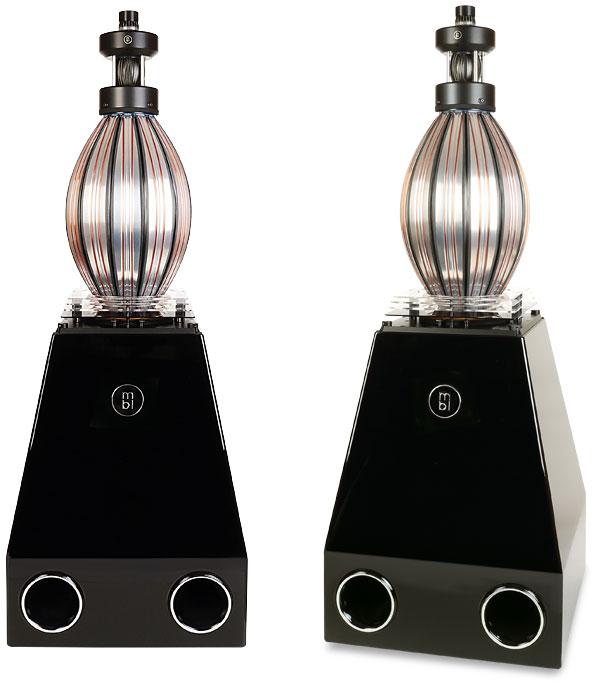
Maybe not the first or only attempt at an Omni directional speaker, but one of the most original and successful attempts which I think others at this point would have to be judged against. They’ve become iconic, and for decades have been one of the “ must hear” rooms at audio shows.
EJ3
Master Contributor
Compared to the MBL 101 Radialstrahler, the OHM F was a sort of omnidirectional radiator (they were closer when a second pair mounted inverted on top of the first pair, however).The Ohm model F was also an omnidirectional radiator.
The NAD 3020 really sounds nice though. Good mention.If it's on the list because it's success caused more people to be interested in playing audio at home, then I'm good with that.
I'm not good with "it was a most wonderful component devised up to that time".


fpitas
Grand Contributor
And the beam power tube, which was in the beginning just a way around the pentode patentAltec Duplex
Quad ESL-57
Klipschorn
Acoustic Research AR-3
harman/kardon first integrated receiver (cannot remember model number ATM)
The pentode
Columbia LP records
Mono-compatible stereo (all formats, including FM MPX)
Ultralinear output stage

fpitas
Grand Contributor
As a horn guy I'm obliged to mention the Altec 288 driver in its various guises. It still makes "Best sounding compression driver" lists to this day. And the various TAD compression drivers, which were the offspring of Altec and JBL driver tech taken to extremes by Bart Locanthi.

- Joined
- Jul 12, 2024
- Messages
- 3,640
- Likes
- 5,790
I had AI scan this thread and count the recommended components:
Recommended 7
- Technics SL-1200/SL-1210 family: 7
Recommended 5
- AR turntable, including the AR-XA: 5
- JBL Paragon: 5
- Linn Sondek LP12: 5
- NAD 3020: 5
- Quad ESL-57/original Quad electrostatic: 5
Recommended 4
- Altec Voice of the Theatre/A7: 4
- B&W 801/Nautilus 801: 4
- Klipschorn: 4
- Nakamichi Dragon: 4
- Room EQ Wizard, REW: 4
- Sony CDP-101: 4
- Williamson amplifier: 4
Recommended 3
- Altec Duplex/604: 3
- Crown DC-300: 3
- Genelec 8030 family: 3
- JBL L100 Century: 3
- McIntosh MC275: 3
- Nagra portable tape recorder: 3
Recommended 2
- Apple iPod: 2
- BBC LS3/5a: 2
- Compact disc/CD format: 2
- Denon DL-103: 2
- Dolby noise reduction: 2
- Dynaco/Dynakit products generally: 2
- Dynaco ST-70: 2
- Infinity IRS-V: 2
- IMF Compact/SuperCompact II: 2
- Koss Pro4AA: 2
- Large Advent loudspeaker: 2
- Magnetic tape/tape recorder: 2
- MBL 101 Radialstrahler: 2
- NE5532 operational amplifier: 2
- Philips CD100: 2
- Philips CD303: 2
- Purifi Eigentakt amplifier modules: 2
- Quad II amplifier: 2
- Quad 303 amplifier: 2
- Quad 606 amplifier: 2
- Sennheiser HD414: 2
- Sennheiser HD580/600/650 family: 2
- Shure V15 cartridge family: 2
- SME 3009 tonearm: 2
- Sony PCM-F1: 2
- Sony TA-E1000ESD: 2
- Sony TA-N88: 2
- Technics EPA tonearms: 2
- Technics SL-M3: 2
- Technics SP-10 family: 2
- Wharfedale Diamond, original: 2
- Yamaha DSP-1: 2
Recommended 1
Loudspeakers
- Acoustic Research AR-1: 1
- Acoustic Research AR-3/AR-3a: 1
- Allison One: 1
- Altec 620A: 1
- Altec Model 19: 1
- Aurasound 1808 driver: 1
- B&W DM70: 1
- B&W original 800: 1
- BMR Monitor: 1
- Bose 901: 1
- Bose Acoustimass: 1
- Dutch & Dutch 8C: 1
- Dynaco A25: 1
- Genelec 1031: 1
- Genelec 8050/first 80x0 model: 1
- Gradient Revolution: 1
- Infinity Kappa 9: 1
- JBL 250Ti: 1
- JBL L300: 1
- JBL Olympus S8R: 1
- KEF Blade series: 1
- KEF Q15: 1
- KEF Reference 105: 1
- Klein + Hummel O98: 1
- Klipsch Heresy I: 1
- Klipsch La Scala: 1
- MartinLogan CLS: 1
- NHT 3.3: 1
- Ohm Model F: 1
- Peerless XLS/XXLS subwoofer drivers: 1
- Philips Motional Feedback loudspeakers: 1
- Polk SDA: 1
- Quadral Titan: 1
- Revel F52: 1
- Revel Ultima Salon2: 1
- Sony SS-G7: 1
- Sony SS-G9: 1
- Sony SS-G333ES: 1
- Sony SS-G777ES: 1
- Tannoy Dual Concentric: 1
- Tannoy Westminster: 1
- Velodyne ULD-18: 1
- Wharfedale Linton: 1
- Well-designed bass-reflex or transmission-line loading: 1
Amplifiers,
- Adcom GFA-5x5 amplifier family: 1
- Advent 300 receiver: 1
- Ampzilla: 1
- Bryston 4B: 1
- Carver Cube: 1
- Carver transfer-function amplifiers: 1
- Dyna Mark III: 1
- Early Mark Levinson products generally: 1
- Futterman H-3: 1
- Hafler DH-200: 1
- Harman Kardon Citation amplifiers: 1
- Harman Kardon’s first integrated receiver: 1
- HeadRoom AirHead/BitHead: 1
- Hypex UcD: 1
- Krell KSA family: 1
- Marantz 8B: 1
- McIntosh MC240: 1
- miniDSP 2x4 Balanced: 1
- Mullard 5-20: 1
- NwAvGuy Objective2/O2 headphone amplifier: 1
- Phase Linear 700: 1
- Pioneer A-400: 1
- Pioneer Elite C-91/Reference C-90a: 1
- Quad 66 preamplifier: 1
- RME ADI-2: 1
- TAG McLaren AV32R/TMREQ: 1
- The Tiger amplifier: 1
- Threshold Stasis: 1
- Yamaha integrated amplifier used in the Maki/Nousaine comparison: 1
- Yamaha MX-10000: 1
Turntables,
- Audio-Technica AT91/AT3600 family: 1
- Bang & Olufsen Beogram 4000: 1
- ELP laser turntable: 1
- Garrard 301: 1
- Garrard Zero 100: 1
- Lenco L75: 1
- Melco 3560: 1
- Ortofon SPU: 1
- Rega Planar 3: 1
- Sony PS-X800: 1
- Stanton 681EEE: 1
- Technics direct-drive technology generally: 1
- Technics EPC-100C Mk4: 1
- Technics EPC-205C Mk3: 1
- Technics EPC-300MC: 1
- Technics EPC-305MC: 1
- Thorens TD-150: 1
Digital
- 8-track cartridge: 1
- Apple AirPlay: 1
- Compact cassette: 1
- DAT format generally: 1
- Edison cylinder: 1
- Ghetto blaster/boombox: 1
- LP record: 1
- Marantz CD-63 MkII KI Signature: 1
- Mono-compatible stereo: 1
- MP3 codec: 1
- Oppo DV-980H: 1
- Panasonic SV-3700 DAT recorder: 1
- Philips TDA1540 DAC: 1
- Radio broadcasting: 1
- Revox B77: 1
- Sequerra Model One FM tuner: 1
- Sony Walkman concept: 1
- Sony WM-D6C: 1
- Sony WMD-DT1: 1
- Streaming: 1
- Tandberg TCD-300: 1
- Tandberg TCD-440A: 1
- Tandberg TCD-3014A: 1
- Tandberg TCD-910: 1
- THX cinema-sound system: 1
Headphones
- AKG K240: 1
- DPA 4006: 1
- Measuring microphone, generic: 1
- Neumann U47: 1
- Panasonic electret omnidirectional microphone capsule: 1
- Sony MDR-7506/MDR-V6: 1
Measurement,
- 2A3 power triode: 1
- Bwaslo IMP measurement system: 1
- Canadian NRC loudspeaker research: 1
- Class-D amplification generally: 1
- FuzzMeasure: 1
- KT66 tube: 1
- KT88 tube: 1
- MathAudio Room EQ: 1
- Pentode tube: 1
- RoomPerfect: 1
- Transistor: 1
- Ultralinear output stage: 1

- Joined
- May 31, 2020
- Messages
- 1,078
- Likes
- 1,984
My first introduction to “high end” in a hotel in the late 80s.
The Synthese 1 is a passive 4-way floor-standing loudspeaker manufactured in Belgium by the brand Floating Systems (often referred to simply as Floating).
Design & ConstructionDecoupled Housing: The speakers feature a striking, iconic design where the mid-range and tweeter sections are physically separated or "floating" from the main cabinet.
Vibration Control: This unique decoupled construction prevents acoustic interference and mechanical vibrations caused by the large, powerful woofers.
Woofer Placement: Unlike traditional designs, the large 10-inch woofers are mounted near the top of the cabinet structures.Sound
Customization Filter Cards: The speakers utilize a modular crossover system featuring four distinct audio plug-in cards.Acoustic Tuning: These interchangeable cards allow listeners to tune the sound signature, offering options for a neutral response or specific boosts/cuts to the treble and midrange frequencies.

- Joined
- Dec 12, 2019
- Messages
- 18,129
- Likes
- 41,911
No argument from me! I'd use 288s myself, but I can't justify the cost of a nice pair.As a horn guy I'm obliged to mention the Altec 288 driver in its various guises. It still makes "Best sounding compression driver" lists to this day. And the various TAD compression drivers, which were the offspring of Altec and JBL driver tech taken to extremes by Bart Locanthi.
fpitas
Grand Contributor
I'd recommend my TAD TD-2002s, but you might not like the price of those, eitherNo argument from me! I'd use 288s myself, but I can't justify the cost of a nice pair.

- Joined
- Dec 12, 2019
- Messages
- 18,129
- Likes
- 41,911
You are correct, sir!I'd recommend my TAD TD-2002s, but you might not like the price of those, either
I got a very good deal on my 802Ds and the JBL 2441s I have were essentially given to me.

fpitas
Grand Contributor
The price is right! I determined to never need another horn driver again.You are correct, sir!
I got a very good deal on my 802Ds and the JBL 2441s I have were essentially given to me.
The thing had no right to sound as good as it did, though.If it's on the list because it's success caused more people to be interested in playing audio at home, then I'm good with that.
I'm not good with "it was a most wonderful component devised up to that time".
Similar threads

- Replies
- 0
- Views
- 304
- Replies
- 18
- Views
- 1K

- Replies
- 105
- Views
- 7K


