• Welcome to ASR. There are many reviews of audio hardware and expert members to help answer your questions. Click here to have your audio equipment measured for free!

Beyerdynamic DT 880 600 Ohm Review (Headphone)

Practically speaking, impossible to reproduce at home....but I suppose if money were no object, etc, etc. If that were the case, you would be better served traveling around the world listening to the finest orchestras, in the finest halls.
Or fund a concert hall building close to your home and book the finest orchestras there
 
Beyerdynamic's own very expensive A20 headphone amp has very high output impedance (100 ohm) so I think it kinda make sense if one presumes Beyer knows how to match their products.

Actually, the A20 is not very expensive :) I have been using the DT880 600 with the A20 for a long time and liked it. I think the midrange sounded very realistic, I preferred the DT880 midrange over the HD650 :) Treble was sharp on some tracks which never happens with the HD650.
 
It's nice to have 114db distortion data but who in their right mind listens at these volumes anyway? 94db is the more realistic range for a healthy human being... While perhaps not the last word in resolution these have a really pleasant and sturdy feel to them and considering the r&d was done somewhere in the late 1970's deserve mad respect.
 
114dB SPL @ 30Hz is not the same as 114dBA (average)
Can easily be reached using a Schiit IEMagni or Heresy for instance.

it's also the continuous power rating of the driver.
Nom. power rating: 0.1W (100mW)
Max. voltage: 7.8V
Max. current: 13mA
Max. S.P.L.: 114dB
 
Last edited:
No, I reviewed it and it became one of the most controversial reviews ever: https://www.audiosciencereview.com/...eyerdynamic-dt990-pro-review-headphone.19975/
Ah yes. Nostalgia.
Quote, the mighty Amir:- "It took all of a few seconds to want to rip the DT 990 off my head".
Lucky you. Instant relief achieved in a moment.
Pity please for the son-in-law at a B&O dealership forced to endure excruciating demo evenings.
The more I tried to tell folk that they really ought to listen to what other dealers had to offer, the more they wanted to buy Danish style (not sound) on the spot :rolleyes: - One very successful sales angle.
We all know the conclusion. It involves the phrase "... if it fell on them."
Apologies, this aging sceptic may have drifted slightly off-topic:facepalm:
 
It's nice to have 114db distortion data but who in their right mind listens at these volumes anyway? 94db is the more realistic range for a healthy human being...

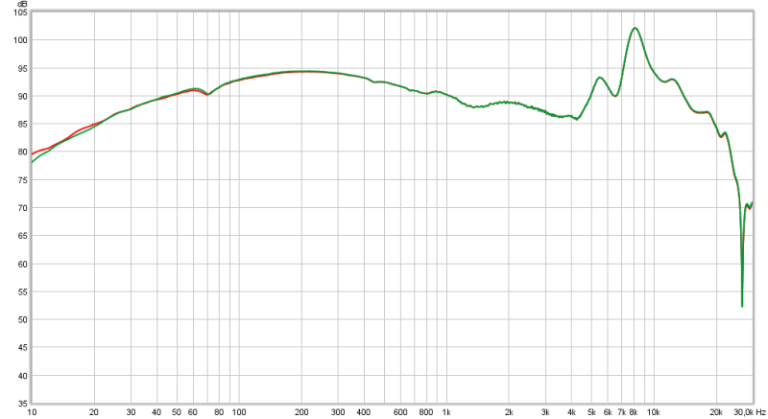
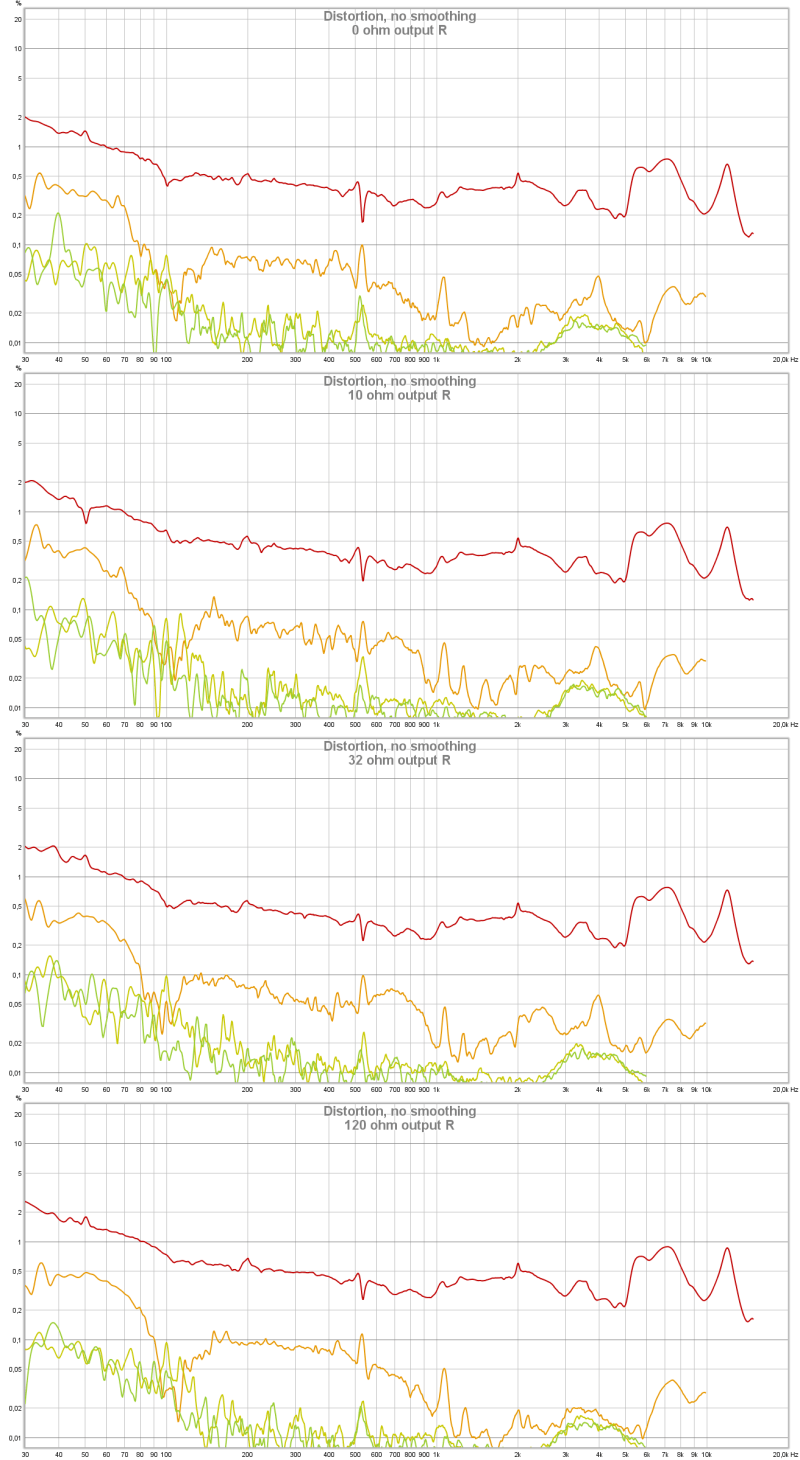
The point of the distortion data at very high levels is to see how well it will take EQ. For example, if you want the full Harman bass boost this headphone will need approximately +12dB at 20Hz. Higher DR music can easily have +10dB peaks over average level, so 94dB average + 10dB peaks + 12dB EQ already gets you to 116dB.

While perhaps not the last word in resolution these have a really pleasant and sturdy feel to them and considering the r&d was done somewhere in the late 1970's deserve mad respect.

Honestly I think these are actually the best sounding Beyers anyway. At least without EQ. Most of the others are flat out unlistenable to me. The 880s just are kinda bright.
 
Last edited:
I had those headphones for a few years, 600ohm version. I'm able to listen to them on my small FiiO Q1 (first gen), with Oratory1990's EQ, at high gain and around 4 on the volume knob. More than that is pretty loud to me. I know I have pretty sensitive ears and that I am listening at a lower volume than most people, but everyone is always saying they are 100% unusable on small amps. I'm I missing something by using them on a « underpowered » amp if the volume is more than enough for me? Are the frequency response and distortion level influenced in any way?
 
Not unusuable but you certainly won't be able to reach impressive levels with some bass boost added.

FiiO specs:
16-100Ω (single ended) 112mW @16 ohm = 1.3V = 3mW in 600 ohm = 98dB SPL peak so about 80dBA
 
First, thanks @amirm for the review, I have these headphones and I so much wanted for you to review them, I am no expert so my opinion does not have much weight but from where I stand I agree with your findings, I don't like these without EQ, I almost returned them. In fact I was really bothered by the high freq response to no end when I bought them the sibilance became too much for me.

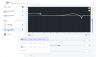
Second, I came up with an eq "somewhat similar" to what amirm shares, which make them somewhat enjoyable if anyone wants to try I am attaching it here (headroom set to -4db). Respecting band 1 I tried higher values and IIRC there was no difference so I gave up trying to push them harder in sub-bass.

In any case I am going to try and load amirm setup to see If I can like them even more now.

Thanks thanks thanks!

PS: Trying to fight and hide how anemic these are to sub-bass I ended up trying bass boost at 125hz, 4db, Q3 mimicing something similar to the bass boost my xduoo xd05 offer, so far quite liking the results.
 

Attachments

  • ezra-s-setup-beyedynamic-dt800-600ohm.png
    ezra-s-setup-beyedynamic-dt800-600ohm.png
    91.8 KB · Views: 279
Last edited:
Not unusuable but you certainly won't be able to reach impressive levels with some bass boost added.

FiiO specs:
16-100Ω (single ended) 112mW @16 ohm = 1.3V = 3mW in 600 ohm = 98dB SPL peak so about 80dBA

Thanks for the explanation :).

I don't think I ever went farther than 6 or 7 with the knob position on this amp and those headphones, with quiet recordings. More than that is not impressive to me, it's uncomfortable and annoying really fast. So I suppose I don't have to worry about high distortion and low sensitivity, which is great because Beyer is one of the few manufacturers making headphones that fit on my head. But I can understand that a lot of people want more than 80dBA...

I find it really fascinating how earing can be that different from people to people.
 
Second, I came up with an eq "somewhat similar" to what amirm shares, which make them somewhat enjoyable if anyone wants to try I am attaching it here (headroom set to -4db). Respecting band 1 I tried higher values and IIRC there was no difference so I gave up trying to push them harder in sub-bass.!
What EQ software is that?
 
The point of the distortion data at very high levels is to see how well it will take EQ. For example, if you want the full Harman bass boost this headphone will need approximately +12dB at 20Hz. Higher DR music can easily have +10dB peaks over average level, so 94dB average + 10dB peaks + 12dB EQ already gets you to 116dB.

That's why I think it would be very helpful if @amirm included post-EQ distortion data, to have a common ground between headphones without having to interpret the data for ourselves.
It helps, that the relative distortion plots are normalized, but that assumes THD would be the same at all volumes, which is of course not the case.
 
I have contacted Amir about sending my Beyer Amiron Home model in for review. They sound (to me) smoother in the mids and highs than most of the Beyer 'Pro' series I have heard. It's a much more recent design claimed to control high frequency resonances better than earlier models so I'm curious to see how they fare here. Those will be on their way soon.
 
Honestly I think these are actually the best sounding Beyers anyway. At least without EQ. Most of the others are flat out unlistenable to me. The 880s just are kinda bright.
I've discovered through the years that Beyerdynamics aren't universally bright like they are reported to be on forums. DT880-250, DT770-80, DT250-250 and DT250-80 all gave me an impression of warm mids and trebles. I could maybe see the DT770 sounding bright to some poeple due to the mid-bass recession.
 
Without EQ at normal listening volumes, I've never encountered bass distortion. I recommend trying them from a speaker amplifier if you want more power. My NAD C316BEE V2 drives them fantastically from the speaker terminals.
 
Last edited:
More than that is not impressive to me, it's uncomfortable and annoying really fast

So I suppose I don't have to worry about high distortion and low sensitivity

Chances are at that point you are clipping the amp already. With an amp with plenty of headroom (there aren't many) you can go quite loud without discomfort.
The only way to know this for sure is to try it on a beefier amp.
 
This is a review that I have been waiting for a while to read because these headphones raise an interesting hypothesis discussed by another reviewer, i.e. high impedance headphones work best with amplifiers with high output impedance. The reviewer hypothesizes that this has to do with damping factor and in his listening he found that he achieved far superior bass performance from these headphones (and overall performance as well) with high output impedance amplifiers even if they had rather modest output numbers . Beyerdynamic confirms that this headphone should work best with high output impedance amplifiers like the ones it sells. I would love to see Amir engage with this hyothesis and report his findings. It might offer some insight for the rest of us as to the interaction between headphone performance and headphone amplifier output impedance - if there is one.
 
This is a review that I have been waiting for a while to read because these headphones raise an interesting hypothesis discussed by another reviewer, i.e. high impedance headphones work best with amplifiers with high output impedance. The reviewer hypothesizes that this has to do with damping factor and in his listening he found that he achieved far superior bass performance from these headphones (and overall performance as well) with high output impedance amplifiers even if they had rather modest output numbers . Beyerdynamic confirms that this headphone should work best with high output impedance amplifiers like the ones it sells. I would love to see Amir engage with this hyothesis and report his findings. It might offer some insight for the rest of us as to the interaction between headphone performance and headphone amplifier output impedance - if there is one.
600 Ω beyers are designed to work with an amp of any output impedance. Lower output impedance is still technically superior.
 
Back
Top Bottom