• Welcome to ASR. There are many reviews of audio hardware and expert members to help answer your questions. Click here to have your audio equipment measured for free!

Beyerdynamic DT 880 600 Ohm Review (Headphone)

The DT880BSE has more lows but sounds too muddy for me.
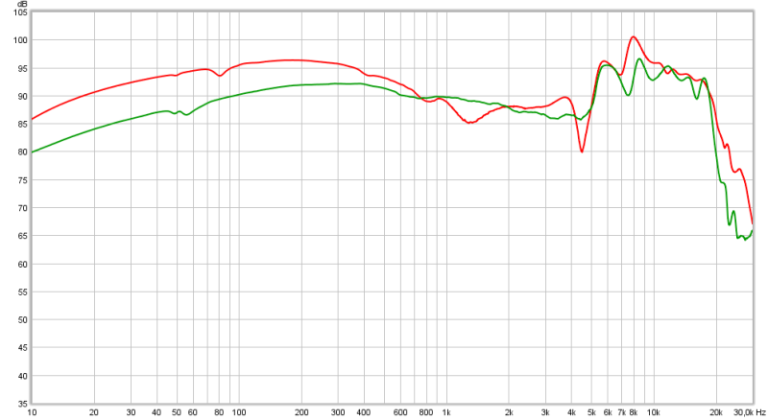
BSE comes close to the DT990 in sound signature.
dt880be-vs-dt990pro.png

That one improves by using the grey pads.
Indeed, there were so many variations that I got somewhat confused (although after hearing an un-EQed 250ohm version I spared myself the trouble of looking any further)
 
If you've ever gone to a live indoor orchestral classical music concert and listened to a concert bass drum you would never say "...lighter music such as classical, orchestral...".
Depends on seating position though
 
For the 1990 I think dekoni elite velour pads reduce the treble peak somewhat
 
If you've ever gone to a live indoor orchestral classical music concert and listened to a concert bass drum you would never say "...lighter music such as classical, orchestral...".
I went to a concert recently which used them. I was floored by the impact and volume, thinking I could never reproduce this closely at home.
 
Depends on seating position though
If the concert hall is poorly designed...

I went to a concert recently which used them. I was floored by the impact and volume, thinking I could never reproduce this closely at home.
Practically speaking, impossible to reproduce at home....but I suppose if money were no object, etc, etc. If that were the case, you would be better served traveling around the world listening to the finest orchestras, in the finest halls.
 
One thing good about Beyerdynamic is that they sell nearly every individual replacement parts for their headphones.

Anyway, of all the DT880s, the 600 ohm has been the more "liked" headphones of the lot (32, 250 and 600 ohm) so I guess the fact that the frequency-response curve hugs the Harman curve for a majority of the range says quite a bit. But no other "reviews", by subjectivist or otherwise, have mentioned the low end distortion yet (perhaps I wasn't paying attention) but most have noted the overall "brightness" of the Beyer's tuning. So thanks Amir for objectively showing that (Also Solderdude's test).

Also, the chap at "Youtube - No themes review" has mentioned that high output impedance amp (100ohm) is the way to go for driving this headphone well from his tests. I do not understand the science behind this but Beyerdynamic's own very expensive A20 headphone amp has very high output impedance (100 ohm) so I think it kinda make sense if one presumes Beyer knows how to match their products. Such high output impedance amps go against the grain of the vast majority of the "top of the class" amps tested by Amir. (The above chap recommended the cheap Samson s-amp which has 100 ohm output impedance as an suitable low cost match amp for this headphone.)

If there is a logical scientific reason for this, would testing the headphone on different output impedance amps yield a different result? Would the distortion result change?

 
Last edited:
One thing good about Beyerdynamic is that they sell nearly every individual replacement parts for their headphones.

Anyway, of all the DT880s, the 600 ohm has been the more "liked" headphones of the lot (32, 250 and 600 ohm) so I guess the fact that the frequency-response curve hugs the Harman curve for a majority of the range says quite a bit. But no other "reviews", by subjectivist or otherwise, have mentioned the low end distortion yet (perhaps I wasn't paying attention) but most have noted the overall "brightness" of the Beyer's tuning. So thanks Amir for objectively showing that (Also Solderdude's test).

Also, the chap at "Youtube - No themes review" has mentioned that high output impedance amp (100ohm) is the way to go for driving this headphone well from his tests. I do not understand the science behind this but Beyerdynamic's own very expensive A20 headphone amp has very high output impedance (100 ohm) so I think it kinda make sense if one presumes Beyer knows how to match their products. Such high output impedance amps go against the grain of the vast majority of the "top of the class" amps tested by Amir. (The above chap recommended the cheap Samson s-amp which has 100 ohm output impedance as an suitable low cost match amp for this headphone.)
Just the impedance different ones do not cover "all" of the DT880. There is at least also the chrome version, pro version and black editions of the pro premium and regular versions
 
Just the impedance different ones do not cover "all" of the DT880. There is at least also the chrome version, pro version and black editions of both the pro and premium version

I thought these were cosmetics variations only with the main guts (driver etc) staying essentially the same (mainly 250 and 600. I don't think the 32 ohm version had specials). Some have been limited runs so are currently unavailable anyway.
 
I was hoping this would give my A90 a workout, but I guess I'm better off daydreaming about an HE-6.
 
For posterity here's Oratory1990s measurements of DT880, DT880BE and DT990.
View attachment 138766
The DT880 Edition = DT880 Pro but with other looks. It differs substantially from the DT880 Black Special Edition.
The Pro and Edition are basically the same headphone but with a different enclosure and cable.

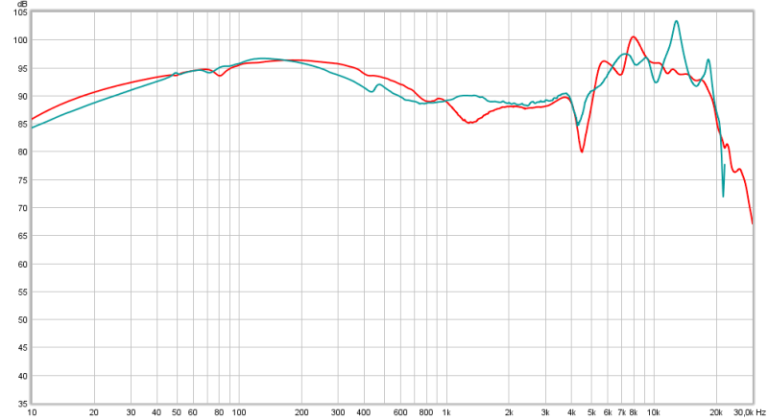
Below the DT880 Edition vs the DT880 BSE.
dt880-vs-dt880be.png
 
If there is a logical scientific reason for this, would testing the headphone on different output impedance amps yield a different result? Would the distortion result change?
Whenever a headphone has a variable impedance, then using a high impedance headphone amp will modify its frequency response. Here the modifications would be rather small so I think there are other factors in play (assuming the audible impressions are real).
 
The DT880 Edition = DT880 Pro but with other looks. It differs substantially from the DT880 Black Special Edition.
The Pro and Edition are basically the same headphone but with a different enclosure and cable.

Below the DT880 Edition vs the DT880 BSE.
dt880-vs-dt880be.png
I think the clamping for is different. Pro having higher clamping force. And this also causes tonal changes. Pro is smoother and thicker sounding, edition/premium edition sounds more open and trebly.
 
yes, the clamping force differs and thus pad compression.
The oratory plot shows the Pro and Edition to vary just slightly.

The BSE differs from the E version where the BSE is very similar to the DT990.
Both the DT880 and DT990 measured by Amir show very similar FR and distortion 'profiles' and is what I meant with the DT880 and DT990 have a clear 'family' relation.
 
One thing good about Beyerdynamic is that they sell nearly every individual replacement parts for their headphones.

Anyway, of all the DT880s, the 600 ohm has been the more "liked" headphones of the lot (32, 250 and 600 ohm) so I guess the fact that the frequency-response curve hugs the Harman curve for a majority of the range says quite a bit. But no other "reviews", by subjectivist or otherwise, have mentioned the low end distortion yet (perhaps I wasn't paying attention) but most have noted the overall "brightness" of the Beyer's tuning. So thanks Amir for objectively showing that (Also Solderdude's test).

How could they? Folks are either too old for treble rape, or actually hear it and dont dare to raise the volume any higher, so the distortion isnt picked up bt most.

At least, that's the only explanation possible. Either that or its the typical deaf audiophiles, or distortion measurements are pointless from an audibility perspective, especially if people can ignore the horrid bass out of these at higher volumes.

Perhaps the impedance being so high, no one can drive these things properly so the bass isnt even being produced much.
 
If there is a logical scientific reason for this, would testing the headphone on different output impedance amps yield a different result? Would the distortion result change?

DT880-600 via 0.2ohm and 120ohm

r120-1.6db.png


distortion will not change when the SPL difference (1.6dB) is compensated for.
The back EMF current (the actual damping current) won't differ much between 600ohm and 720ohm

High impedance headphones were often used directly (well via a resistor) from the outputs of power amps.
This way you can parallel 100 headphones without ever loading the speaker amps too much.
The 1996 IEC 61938 standard recommended an output impedance of 120 Ohm.
Very impractical for today and yesteryear's portable devices.

Below distortion measurements of the 65 ohm K702 at the same SPL but through various output resistances. (Acoustical measurement)
distortion.gif

The 120 ohm source resistance is 2x that of the nominal impedance,
In the DT880-600 120ohm is about 1/3 comparable with the 32ohm plot of the K702... not exactly as the impedance of the K702 doesn't rise as much at resonance.
 
Last edited:
Back
Top Bottom