• Welcome to ASR. There are many reviews of audio hardware and expert members to help answer your questions. Click here to have your audio equipment measured for free!

Aune AR3000 Review by the Headphone Show

lol the guy who yaps about test fixtures doesnt use eq to get the best sound quality

always yapping yet never going for things that actually matter
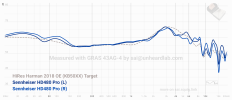
Lol the random hater guy who doesn't know I possess only headphones good enough to not needing EQ according to the right fixture (previously K371, now HD480) because I can't always use EQ.

You're welcome.
Why yapping without knowing ?
 

Attachments

  • graph.png
    graph.png
    311.8 KB · Views: 120
Lol the random hater guy who doesn't know I possess only headphones good enough to not needing EQ according to the right fixture (previously K371, now HD480) because I can't always use EQ.

You're welcome.
Why yapping without knowing ?
you're judging an open back headphone the same way as a closed back one, additionally, no audio product needs 0 eq unless you magically got the perfect product with everything tuned the exact way for you (extremely low chance).

You're biased by the graphs and the reviews. Things that jump out instantly are the 100 hz bump, it's a random bump and it doesnt follow a smooth shelf, it's going to sound odd. Then the 4khz dip. And then the 6khz+ peaks.

Unless music you listen to magically has a 300-3khz band pass.

I understand you dont have the means to eq things all the time, doenst mean eq isnt needed for good sound quality for everyone's ears. Cant eq does not equal dont need eq lol

Biased by the science of the Harman research and graph from trusted reviewers ?

Do you have a magical EQ for open ones and an other magical EQ for closed-back ?

I'm sorry if I previously broke your trust about a non-proven fixture providing measurements that don't match listening tests.
 
I'm tempted to get these but as a treble-sensitive person with tinnitus that 8kHz peak looks kind of scary.
 
ramon mod works great for 8khz peaks
 
Are these Aune better than Hifiman Ananda Stealth?
I like controlled deep bass and analytic sound or dark. Gonna use DAC Topping DX3 Pro to ear them.
Thanks.
Someone?
 
Biased by the science of the Harman research and graph from trusted reviewers ?

Do you have a magical EQ for open ones and an other magical EQ for closed-back ?

I'm sorry if I previously broke your trust about a non-proven fixture providing measurements that don't match listening tests.
what % of people preferred the harman target?

how many eq bands did harman use?

not gonna argue with you further though, i dont want to waste my time
 
What is the magic sauce in open-backs, hm?
the magic sauce is the thing that's missing, low end. Open backs dont have the same low end extension and even if they do, it's not gonna be as clean/as low distortion as closed backs.

That guy is comparing his closed back headphone to this open back one and saying the distortion/bass quantity is something that should just be there, and even then, how much of a difference is there here in the graph, it doesnt seem like the ar3000 is a poorly tuned headphone or anything and considering the price it's as good as it can get passively. And is the distortion amount even audible at normal human listening volume?

It's cheap, open back, has bass, damn near neutral with a warm midbass bloat which dan clark also has just to a narrower band. You can buy 4-5 of these for the price of one Noire XO yet that headphone gets praised just for a few differences that can be easily eq'd in 10 mins. Just cus it looks better on a graph doesnt matter, when something is reasonably close to a target it's good enough and your tastes for treble/bass will matter more.

These arent speakers where off axis sound matters, just eq and be done with it.

1793871591747.png
 
I have one on the way... Will find out for myself if I like it or not.
The treble peak and warmth is worrying me.
 
the magic sauce is the thing that's missing, low end. Open backs dont have the same low end extension and even if they do, it's not gonna be as clean/as low distortion as closed backs.

That guy is comparing his closed back headphone to this open back one and saying the distortion/bass quantity is something that should just be there, and even then, how much of a difference is there here in the graph, it doesnt seem like the ar3000 is a poorly tuned headphone or anything and considering the price it's as good as it can get passively. And is the distortion amount even audible at normal human listening volume?
And why wouldn't it "just be there", since openbacks aren't doing any magic that closed-backs can't. Honestly, it's a terrible excuse if what matters to you is purely the SQ & timbre accuracy.

I am not quite persuaded by the whole "people cannot hear lowend distortion", since I am not sure whether it's "cannot hear" or "cannot discern"; and any THD might be masking actual harmonic content present there.

It's cheap, open back, has bass, damn near neutral with a warm midbass bloat which dan clark also has just to a narrower band. You can buy 4-5 of these for the price of one Noire XO yet that headphone gets praised just for a few differences that can be easily eq'd in 10 mins. Just cus it looks better on a graph doesnt matter, when something is reasonably close to a target it's good enough and your tastes for treble/bass will matter more.

These arent speakers where off axis sound matters, just eq and be done with it.

View attachment 569480
You cannot trust HATS graphs >8kHz, if you didn't know already, therefore the top octave 8kHz+ is hard to EQ correctly without a good point of reference. Actually AR3000 are in the same pricepoint as HD490Pro and also have to compete with FiiOxJade planars; I'd be surprised if (much cheaper) JT7/JT9 are worse than AR3000, at least w/ regards to available graphs.
 
since openbacks aren't doing any magic that closed-backs can't
do you not know the headphone market? How many open backs are there that provide adequate flat bass, let alone a bass shelf like the AR3000?
You cannot trust HATS graphs >8kHz
i know, but it doesnt hurt to have a smoother graph/less peaky treble. Even then, I was primarily talking about the dips and peaks from 1-5khz. Also, i believe it's not just 8khz+ but rather 4khz+.

I am not quite persuaded by the whole "people cannot hear lowend distortion", since I am not sure whether it's "cannot hear" or "cannot discern"; and any THD might be masking actual harmonic content present there.
what's the difference? if you cant discern it, what's the difference between cant hearing and cant discerning? It's all upto you, go ahead and do the klippel test and find out if you're a golden ears or not. The klippel test is a full range track whereas the distortion shows up in these headphones in isolated regions. Good luck genuinely hearing all that.

the same pricepoint as HD490Pro
That's the thing, the AR3000 is priced like the HD480 pro whilst being open back with more bass. The HD490 pro is tuned worse with less bass. The graph i showed was of the closed back 480 pro.

Here's the 490 pro, look at the massive gap in performance compared to the AR3000.

1793873357606.png
 
do you not know the headphone market? How many open backs are there that provide adequate flat bass, let alone a bass shelf like the AR3000?
Flat bass is common in planars, this bass shelf is slightly overshot. I brought up JT7/JT9 which from FR seem to be better IMO.
i know, but it doesnt hurt to have a smoother graph/less peaky treble. Even then, I was primarily talking about the dips and peaks from 1-5khz. Also, i believe it's not just 8khz+ but rather 4khz+.
Agreed that smooth=best, though smoothing choice matters here.
8kHz+ is known to be mostly garbage, 2kHz-5kHz will for sure have personal variance.
what's the difference? if you cant discern it, what's the difference between cant hearing and cant discerning? It's all upto you, go ahead and do the klippel test and find out if you're a golden ears or not. The klippel test is a full range track whereas the distortion shows up in these headphones in isolated regions. Good luck genuinely hearing all that.
If you have some details -20dB (let's say @120Hz) in midbass but your THD at same frequency would sum up to >-20dB then I think it might mask said details, that's my perception of the topic, IMO it's what people allude to when using "muddy/soft bass" term. But good luck telling which 120Hz sounds as distortion vs. actual musical content w/o the context. Yet this detail would be missing from what you hear due to auditory masking.
That's the thing, the AR3000 is priced like the HD480 pro whilst being open back with more bass. The HD490 pro is tuned worse with less bass. The graph i showed was of the closed back 480 pro.

Here's the 490 pro, look at the massive gap in performance compared to the AR3000.

View attachment 569485
Keep in mind that your AR3000 is from B&K5128 without a proper reference plane, whereas Amir is testing on GRAS, which is the ref. plane for Harman. Do you know how B&K5128 relates to GRAS or not? Yes, it might also affect the bass regions, that's what @FTB alluded to, I presume.
HD490Pro have less bass THD@94dBSPL than AR3000@84dBSPL, it seems.

Maybe I'm just being annoying for no reason. Certainly they're not the worst, but...

As for HD480Pro having a "random 100Hz bump" they have rather a flat low-shelf and pad bounce in 70-90Hz range which makes 100Hz look like a peak bump. No case of "one-note bass" though IME. And I know how it would sound if it did.
 
Last edited:
Flat bass is common in planars
yeah but there arent many cheap, well tuned open back planars and even if there are, they have flat bass, not this beautifully thick bass shelf
Agreed that smooth=best
i meant a smooth graph, with or without smoothing, like one without terrible peaks and dips, something which planars seem to suffer from in general.

If you have some details -20dB (let's say @120Hz) in midbass but your THD at same frequency would sum up to >-20dB then I think it might mask said details, that's my perception of the topic
you have to put things into context. HD of 2nd harmonics is hard to hear in sine sweeps, at least for me, then when you consider THD which adds up all the other harmonics and unless there's some real oddity, we're mostly dealing with 2nd harmonics. So at 120 hz, the 2nd harmonic is 240 hz, the distorted frequency you'd hear as the oddity would be 240 hz. I forgot what i got in the klippel test but I personally had to LOCK IN to get -28 or -30 db, or 3% distortion THD in the music that they provided. Hovering around -15 to -20. So 10%+ distortion. I might have bad ears, but oh well. For me it's just a non issue when i cant even tell problems apart in real music, let alone specific frequencies.

Another thing you have to consider is loudness. -20 db distortion at what loudness, and are you listening at that same volume? If you see measurements at 96 db and listen at 86 db it doesnt really matter.
IMO it's what people allude to when using "muddy/soft bass" term
No it's just a boost in the 100-250 hz region, the mid-upper bass region that gives a "warm" feeling but also if pushed hard can give a "muddy" feeling. If you cut it and have a boost in the 20-100 hz region the bass will be called "tight". Just subjective terms by golden ears who think they hear more than they actually are hearing, nothing more.
Do you know how B&K5128 relates to GRAS or not
i showed you measurement done by unheardlab which was done on gras and i dont get why people are so anal about the 5128, it's just another tool whose results, if calibrated correctly, look great on graph and sound great. Noire X for example.
 
i meant a smooth graph, with or without smoothing, like one without terrible peaks and dips, something which planars seem to suffer from in general.
Agreed, most likely membrane resonances.
Another thing you have to consider is loudness. -20 db distortion at what loudness, and are you listening at that same volume? If you see measurements at 96 db and listen at 86 db it doesnt really matter.
Yeah, well, that is theoretical from my side, fair point.
No it's just a boost in the 100-250 hz region, the mid-upper bass region that gives a "warm" feeling but also if pushed hard can give a "muddy" feeling. If you cut it and have a boost in the 20-100 hz region the bass will be called "tight". Just subjective terms by golden ears who think they hear more than they actually are hearing, nothing more.
Yep, just alluded to the fact that you could have distortion products producing the bump, which would be different from having 0%THD there with same FR shape, IMO.
i showed you measurement done by unheardlab which was done on gras and i dont get why people are so anal about the 5128, it's just another tool whose results, if calibrated correctly, look great on graph and sound great. Noire X for example
Alright, fair if it was GRAS.

Well it's just if one stick Harman as target onto B&K then it's garbage science, hence the concern. Couplers don't translate linearly between eachother I believe.
 
Just took delivery of AR3000 about an hour ago. Well done EDEN Audio.

Too early to talk about impressions but so far, not hating these. Couple of things...

  1. Comfort is good, they're lightweight and the clamp force is just about right, not as tight out the box as, say, the HD 650 and not as loose as Kithara or Sony Inzone H6 Air. It's definitely not a con, they actually clamp just about right, which is nice. The weight is low so they are comfortable in this respect. The earpad "cut-out" makes them position themselves on your head, almost. Meaning they sit on my head slightly backwards, compared to pretty much any headphone I own (HD 650, HD 480 PRO, Kithara, H6 Air, Beyer DT 880 PRO). Overall, the comfort is good, with potential to be great once I get used to it. Note on the pads, they can be rotated and make fit "better". Also, the pads are very comfortable. The headphone kind of hugs your head in its own way.
  2. The cable is somewhat microphonic, it pics up noise when rubbing against my clothing.
  3. Timbre is by far the star of the show here, incredible.

Sound quality wise, I have a long way to go but I tried some of my test songs and so far so good. I'll need to tone down the bass a notch, though, that's for sure. The sub bass gets a little mushy, for sure. Oh, one thing I noticed, these are the easiest to drive headphones I've ever tried.

Value for money, these are fantastic.

Any questions, ask.
 
Last edited:
what % of people preferred the harman target?

how many eq bands did harman use?

not gonna argue with you further though, i dont want to waste my time

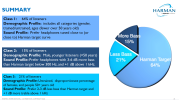
Despite individual differences, the Harman research succeeded in finding a target that was liked by the vast majority of people participating in the research.
That only tuning a bass/treble was enough for this target to be useful for all people in the study.

harman.png

How many people doesn't like the Harman target ?

Do you have a better one ? One made with your beloved unproven 5128 ?

"Audio science review", it's in the title (we are not on headfi).

I don't get your teenage anger.
If you want to tell me the AR3000 measurements are not problematic and the HD480 are, I have nothing to learn here then.

100 to 300 Hz bump for the AR3000, typical too elevated upper-bass that will mask low-mids like male voices.
 
Despite individual differences, the Harman research succeeded in finding a target that was liked by the vast majority of people participating in the research.
That only tuning a bass/treble was enough for this target to be useful for all people in the study.

View attachment 569498

How many people doesn't like the Harman target ?

Do you have a better one ? One made with your beloved unproven 5128 ?

"Audio science review", it's in the title (we are not on headfi).

I don't get your teenage anger.
If you want to tell me the AR3000 measurements are not problematic and the HD480 are, I have nothing to learn here then.

100 to 300 Hz bump for the AR3000, typical too elevated upper-bass that will mask low-mids like male voices.
my main point is it's only 64% that more or less preferred harman and everyone else, 36%, preferred tweaks, that's not an insignificant number even if it is not the majority.

Now consider personal taste changes in the upper bass, mids, and most importantly TREBLE where our anatomy plays a massive role.

I'm not saying the harman target is useless, i'm saying it's a guide, not the rule. You use it as a base and tune things to your taste since your ears are different from others. Even the in room curves for speakers have differing bass amounts, i dont really get how one can follow a simple curve meant to appease the masses and be happy with it.

The purpose of the research isnt to get the best target for you, it's to have a single overall curve that satisfies the vast majority with the least issues. Think of it as the default steering wheel position in a car. I dont know about you but i've always changed things like that and hearing someone say EQ is unnecessary is like hearing a car enthusiast that they're always perfectly happy with the position their car came in and dont need to change anything at all. For someone like me it's odd.

I'm not 100% sure but i remember reading even Dr Toole had tone controls for bass and such
 
I'm not saying the harman target is useless, i'm saying it's a guide, not the rule. You use it as a base and tune things to your taste since your ears are different from others. Even the in room curves for speakers have differing bass amounts, i dont really get how one can follow a simple curve meant to appease the masses and be happy with it.
But the original paper itself considers the shape and smoothness of the curve, recommending bass/treble controls. Also suggesting what their experiments have shown are the bounds (+/- how many dB) that people wanted to control both. E.g. that it is unlikely people will want to do HighQ -12dB 300 Hz from neutral out of a sudden.

So it is exactly a starting point and it always was. And for some, it is the target, since we're just typical humans with typical human anatomy; I know, I know, it's very sad to be of average anatomy.
most people treat it as a rule, that guy included, amir himself for example uses harman as the rule and eqs things to exactly fit harman and then suddenly sounds open up and become dynamic and punchy and there's depth!111

then he's acting like eq is some throwaway trash or sumn and then calling me a "teenager" for getting annoyed at him for making fun of a tool whilst not using the most important tool for sound quality lol
 
Back
Top Bottom