Hi ASR,
I've been frustrated for years that iOS has no native way to properly EQ your headphones or fix uneven podcast production — you're stuck buying dongle hardware like a Qudelix if you want real PEQ on your phone. So I built my own player, Nuotit, to scratch that itch myself.
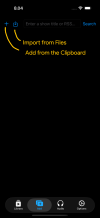
At its core it's a local-first podcast and audio player: RSS subscriptions plus imported local files (music, audiobooks, voice memos, lectures) sitting in one unified library, smart playlists, chapters, on-device transcription — the usual player fundamentals, all free, no accounts or tracking.
The part I think is relevant to this forum is the audio engine built into it:
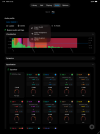
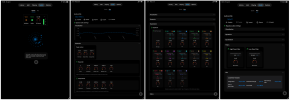
* 12-band parametric EQ, each band independently configurable — center frequency, Q, gain, and filter type (peak, low shelf, high shelf, notch)
* Dedicated pre-gain stage to manage headroom before multiple boosted bands clip
* Compressor, limiter, expander (threshold/ratio/attack-release)
* Real-time spectrum analyzer, LUFS and True Peak metering
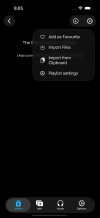
* PEQ import — reads standard ParametricEQ .txt files (AutoEQ, Roon OPRA, squig.link exports) and maps them directly onto the 12 bands, fully editable afterward
* Profiles: save/export/import EQ+dynamics settings, auto-apply per show, playlist, or file
The core EQ, dynamics, profiles, metering, and library are free. PEQ import, voice isolation (needs Neural Engine — iPhone 12+/M1 iPad+), PiP transcript captions, and unwatermarked clip export are behind a Premium IAP — wanted to state that split plainly.
App Store
Site: nuotit.org
Feedback's welcome if anyone has thoughts on the PEQ implementation, but mostly just wanted to put this in front of people who'd actually get why it exists.
PS. this isn't a system-wide EQ. iOS doesn't give sandboxed apps a CoreAudio-level hook the way something like BlackHole gets you on Mac, so it only processes audio played inside the app itself.