I'm looking for ways to transition from beginner-level knowledge and learn how to grasp more complex topics, because I constantly run into these small problems that completely derail my builds.
I currently only know a few concepts superficially, such as:
- Directivity
- Diffraction
- T/S parameters
- Basic room issues such as axial modes, modal behavior, and nulls
- Baffle design
I mainly use WinISD for sealed enclosures and VituixCAD for crossover design.
Here's the process I went through for one of my projects:
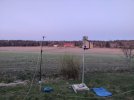
Making a passive crossover would have been a hassle, so I opted for a DSP-based version instead. I followed the infamous gated-measurement guide from ASR and built a 2meter tall rotation system with my dad in the backyard, making sure the speaker rotated around its acoustic center because that was my first mistake.
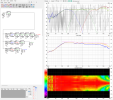
I actually don't know what I'm doing. Since the speakers were sealed and there wouldn't be much acoustic energy past 90 degrees, I only took nine measurements, from 0° on-axis to 90° off-axis, while using a secondary sound source to gather the Z-offset data. I got an 8 ms gate and a fairly decent horizontal radiation pattern up until the tweeter's beaming point. I didn't do any vertical measurements.
I got A LOT of help, and it took me months to understand all of the practical aspects, but I still don't understand the "why" or "how" behind these technical procedures. This is a massive problem for me, since knowing how this stuff actually works, could help me solve potential issues on my own. For example, I still don't really understand how to actually determine the Z-offset from the data I gathered.
Another example: I used a capacitor on my tweeter during measurement to protect it from any short-term amplitude spikes the amplifier might produce. I looked at the measurements and noticed that the response sort of rose around 500 Hz and then suddenly dropped. I thought I had to redo the entire thing because it looked completely wrong. Then someone pointed out that the measurements weren't faulty - it was simply the "protection capacitor interacting with the natural impedance of the tweeter."
If that person hadn't pointed this out to me, I would never have gotten past that point. And I get stuck at these random problems all the time. I always have to get external help to figure out what's going on/how to fix it.
So many times, I've sat there for multiple hours trying to understand these explanations because I can't find any good ways of learning all of this stuff. Luckily, with that person's help, the speaker turned out awesome, but I really can't do much by myself.
At the moment, I basically have a guide and some basic knowledge of baffle-design that I can use to design a speaker, but I don't understand the underlying mechanisms behind the procedures. Because of that, I can't get past the problems that inevitably arise.
I've also noticed that a lot of this seems to have less to do with the actual theory of designing a speaker and more to do with the technical procedures involved in gathering and interpreting the data, which usually ends up frying my brain instead of the tweeter.
Any advice, tips, or shared experiences would be appreciated!