• Welcome to ASR. There are many reviews of audio hardware and expert members to help answer your questions. Click here to have your audio equipment measured for free!

Alsozone /3e Audio GaN Monoblocks | New Comer

Consider the (likely) possibility that Full Digital Amps are inherently flawed from a measurements POV.

Maybe some very expensive ones can come close to the performance of middle of the pack conventional analog models costing 90% less.

Now, I love love love 3e's expertise and attention to detail, so perhaps we will see a breakthrough here, lots more power possible than TPA3255 at a nice low price, and "good enough" fidelity.

I hope @amirm gets to test one before Christmas, might even sponsor it myself if 3e does not step up
You're probably right, but if you only compare analog amplifiers based on measurements, you'll come to the same conclusion: 90% of the competitors are expensive, often MUCH more expensive. We should all buy a Topping PA5 or a 3e Audio A5.
And about the new cute little mono blocks: they're going to have a lot of power, like the YJCO D816, but to me they're questionable because: why go into a full digital amp with an analog Signal? Seriously, it doesn't make sense: the music we listen to is almost always digital. In such a chain, we convert it to analog in a DAC, and then the mono blocks convert it back to digital.
But I know why that is. Before I write it in here, Question: Does anyone know why they have analog inputs?
 
Last edited:
Here is the quote from Bruno about not listening to the amplifiers. Remember, frequency response determines how something sounds. If it is linear, it doesn't have a "sound"

"This time, it took him eight months. He went through four generations of circuit boards without listening to any of them. Instead, he connected each board to an audio analyzer and then rejected it because the results on the analyzer weren’t what he wanted."
...
"Ironically, the one thing he didn’t want to hear, at least initially, was music amplified by the module itself. “The only thing he wanted to see was the output signal on an oscilloscope,” Putzeys recalls. “He looked at it, and in about one minute he said, ‘Okay, I want to buy a license.’ He had seen so many dreadful outputs, full of RF hash. He could tell from the signal whether it was well designed.”

 
You're probably right, but if you only compare analog amplifiers based on measurements, you'll come to the same conclusion: 90% of the competitors are expensive, often MUCH more expensive. We should all buy a Topping PA5 or a 3e Audio A5.
And about the new cute little mono blocks: they're going to have a lot of power, like the YJCO D816, but to me they're questionable because: why go into a full digital amp with an analog Signal? Seriously, it doesn't make sense: the music we listen to is almost always digital. In such a chain, we convert it to analog in a DAC, and then the mono blocks convert it back to digital.
But I know why that is. Before I write it in here, Question: Does anyone know why they have analog inputs?

As previously explained, this is likely a deliberate design choice by AlsoZone. However, at this stage of the discussion, it is impossible to determine whether the Mono Gan's analog stage degrades the amplifier's performance or not; answering that question would require a side-by-side comparison of the AlsoZone Mono Gan and the YJCO D816....
Let us therefore expect tangible measures—and preferably from Amir. )))
 
Thanks, I just read it. Someone really put a lot of effort into that.
I did ask 'torgeirs' in this thread how he comes to the conclusion that 120 dB SINAD is the goal in audio development. After reading this article, I can see why. But I want to point out: it's not the same if someone lives in the countryside, far from noise, and listens to music in the evening or at night, compared to a city person, whose apartment gets never really quiet.
Of course, listening conditions make a difference. But, bear in mind - the strict limits in that document you can take as an absolute limit. For all humans, everywhere, under all circumstances. Including the proverbial young teenager who has never been to a club or concert without ear protection (Etc etc - has never been exposed to loud sound), in a soundproofed test environment, listening with headphones.

For the rest of us - in real world listening conditions: A typical room, with 20 to 50db of envrirmonmental noise, with speakers, then the lenient limits - or even much higher - will apply.

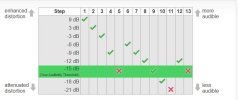
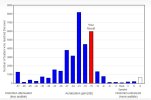
Test your own ability to hear distortion here. You will be surprised at how large it still is when you fail to hear it.
 
As previously explained, this is likely a deliberate design choice by AlsoZone. However, at this stage of the discussion, it is impossible to determine whether the Mono Gan's analog stage degrades the amplifier's performance or not; answering that question would require a side-by-side comparison of the AlsoZone Mono Gan and the YJCO D816....
Let us therefore expect tangible measures—and preferably from Amir. )))
The idea that it could just be a design decision by the manufacturer is a thought, but it's wrong.

The problem is quite simple: digital connections are ALWAYS stereo. Whether it's digital RCA, digital optical, or AES/EBU. If you build two mono units, you need 2 MONO cables: they exist, but only in the analog domain, like analog RCA or analog XLR. And for this simple reason, that's just how it is with the two monos. I know manufacturers who elegantly 'get around' the problem, but that requires effort:

The Neumann KH 120 MK2 active speakers also have a stereo digital input and built-in full digital amps. With these speakers, you have to tell them which one is the right and which one is the left speaker when you plug in the digital cable. Via a digital connection between the speakers, they then split the stereo signal internally into right and left stereo.

But for such a small amount of money, the Chinese manufacturer obviously doesn't feel like offering such a complex solution. So, analog connectors.
 
Is there any evidence for it?
It is an easy (fairly easy) calculation.

Take the measurements of any dac you like. The measurements of an amp.

How the noise and distortion of each combine mathematically is well understood. That gives you what you will see on the combined output.

In most cases since noise and distortion out of a competent DAC is much lower than that from an amp, the result will be almost identical to that of the amp on its own.

In the unrealistic case where noise and distortion of amp and dac are roughly equal - and in the worst case where distortion products are similar per harmonic (correlated distortion) - then you can expect around 3dB to 5dB worse SINAD performance (depending on the degree of distortion correlation) from the combination compared with each individually.
Okay, I got that. I believe it too, really, but it doesn't match up with the explanation in NAD's white paper regarding their M23 Digital Direct Amp.
They give remarkably good numbers there, but right now I have no choice but to think: They're lying. What do you think? Are they lying?

 
Okay, I got that. I believe it too, really, but it doesn't match up with the explanation in NAD's white paper regarding their M23 Digital Direct Amp.
They give remarkably good numbers there, but right now I have no choice but to think: They're lying. What do you think? Are they lying?

What makes you think they are lying?

The only thing I can tell with that paper is that they are being less than transparent about exactly what and where they are measuring, and under what operating conditions. 105dB ref 1W is not that remarkable. Purifi is doing 110dB, and nearly 130dB at full power compared with Nad's claim of 125dB. And Purifi amps have to contend with an analogue input stage.

I also see no claims about THD in that paper. It might be appalling. Same WRT frequency response.
EDIT : As @daniboun's post suggests, they are not that impressive.
 
Last edited:
Okay, I got that. I believe it too, really, but it doesn't match up with the explanation in NAD's white paper regarding their M23 Digital Direct Amp.
They give remarkably good numbers there, but right now I have no choice but to think: They're lying. What do you think? Are they lying?

You should take a closer look at the M32's measurement data.
Critical playback typically occurs at power levels of 1, 5, or 50 watts, not at 200 watts.
Furthermore, the digital signal path of the A30a/VMV A2 contains several (unnecessary) ICs with mediocre measurements that needlessly degrade the device's performance. An AK4118 and a high-quality DSP chip would have been far better and more sensible choices here.

Take a look at the ASR measurements for the VMV A2 at low power levels and the M32 specifications at 1 watt.
Do you still consider the M32 to be quite so outstanding then?
 
What makes you think they are lying?

The only thing I can tell with that paper is that they are being less than transparent about exactly what and where they are measuring, and under what operating conditions. 105dB ref 1W is not that remarkable. Purifi is doing 110dB, and nearly 130dB at full power compared with Nad's claim of 125dB. And Purifi amps have to contend with an analogue input stage.

I also see no claims about THD in that paper. It might be appalling. Same WRT frequency response.
EDIT : As @daniboun's post suggests, they are not that impressive.
"Let’s compare the noise performance of a cost-no-object linear system with the M32.FIGURE 1. State-of-the-Art Analogue SystemDAC – 123dB Noise 1.78uV Preamp 108dB Power 102dB Noise 3.98uV Noise 22.5uV Ref. 200 watts Amplifi ed x 40 107.1dB SNRNoise 178.4uVIn Figure 1, this 107.1dB fi gure is referenced to full power; restating it with a 1W reference (a more typical listening level) gives a fi gure of 84.1dB. Since much of the noise is residual, meaning it is constant regardless of volume level, it can easily be 10dB worse at 74.1dB. Keep in mind, these fi gures represent the best that is possible with this system architecture using the most exceptional analogue components; most systems are likely to be another 10dB worse or about 65dB.In Figure 2, this 125dB fi gure is referenced to full power; restating it with a 1W reference gives a fi gure of 95dB. This is at least 15dB and as much as 25dB better than the old analogue system architecture"
Phew. I just can't get it. So anyway, this is the text part I'm reading and don't understand. It just won't sink in. NAD says they're at least 15 dB better than a high-quality analog system. But they aren't, right?
 
Last edited:
Of course, listening conditions make a difference. But, bear in mind - the strict limits in that document you can take as an absolute limit. For all humans, everywhere, under all circumstances. Including the proverbial young teenager who has never been to a club or concert without ear protection (Etc etc - has never been exposed to loud sound), in a soundproofed test environment, listening with headphones.

For the rest of us - in real world listening conditions: A typical room, with 20 to 50db of envrirmonmental noise, with speakers, then the lenient limits - or even much higher - will apply.

Test your own ability to hear distortion here. You will be surprised at how large it still is when you fail to hear it.
That was fun. I had my headphones on. After I started, I thought I should have turned the volume up a tiny bit. Also, my Hifiman magnetostat is open-back, and outside it's loud as usual during the day.
 

Attachments

  • Bildschirmfoto_16-9-2026_14250_www.klippel.de.jpeg
    Bildschirmfoto_16-9-2026_14250_www.klippel.de.jpeg
    28.1 KB · Views: 40
  • Bildschirmfoto_16-9-2026_14412_www.klippel.de.jpeg
    Bildschirmfoto_16-9-2026_14412_www.klippel.de.jpeg
    38.4 KB · Views: 37
"Let’s compare the noise performance of a cost-no-object linear system with the M32.FIGURE 1. State-of-the-Art Analogue SystemDAC – 123dB Noise 1.78uV Preamp 108dB Power 102dB Noise 3.98uV Noise 22.5uV Ref. 200 watts Amplifi ed x 40 107.1dB SNRNoise 178.4uVIn Figure 1, this 107.1dB fi gure is referenced to full power; restating it with a 1W reference (a more typical listening level) gives a fi gure of 84.1dB. Since much of the noise is residual, meaning it is constant regardless of volume level, it can easily be 10dB worse at 74.1dB. Keep in mind, these fi gures represent the best that is possible with this system architecture using the most exceptional analogue components; most systems are likely to be another 10dB worse or about 65dB.In Figure 2, this 125dB fi gure is referenced to full power; restating it with a 1W reference gives a fi gure of 95dB. This is at least 15dB and as much as 25dB better than the old analogue system architecture"
Phew. I just can't get it. So anyway, this is the text part I'm reading and don't understand. It just won't sink in. NAD says they're at least 15 dB better than a high-quality analog system. But they aren't, right?
You realize that’s just marketing fluff and understand how that sort of thing works, right?

Keep in mind, these figures represent the best that is possible with this system architecture using the most exceptional analogue components.
Most systems are likely to be another 10dB worse or about 65dB.
Restating it with a 1W reference gives a figure of 95dB. This is at least 15dB and
as much as 25dB better than the old analogue system architecture.

The highlighted sections indicate the exceptions—
Most of them, though not all. Better than the old architecture, but they don't specify which one.
And fundamentally, they’re actually right about that: the conventional Hi-Fi products sold over the last 30 years (full-sized units, not specifically Chinese brands)—and still sold in almost every standard Hi-Fi shop today—usually aren't any better.
 
In any case, let's wait for some measurements and internal pictures ... I remain very skeptical about its performance.
Just a heads-up: I just noticed that the ACM8816 evaluation board features an analog input and uses the 14-pin HT91808 as an ADC.
The 3E Audio GaN mono board has a 14-pin IC labeled as "audiophile components."

Perhaps one of the owners would be kind enough to post a few detailed photos of the board.


Bildschirmfoto 2026-09-16 um 14.38.07.png
 
"Let’s compare the noise performance of a cost-no-object linear system with the M32.FIGURE 1. State-of-the-Art Analogue SystemDAC – 123dB Noise 1.78uV Preamp 108dB Power 102dB Noise 3.98uV Noise 22.5uV Ref. 200 watts Amplifi ed x 40 107.1dB SNRNoise 178.4uVIn Figure 1, this 107.1dB fi gure is referenced to full power; restating it with a 1W reference (a more typical listening level) gives a fi gure of 84.1dB. Since much of the noise is residual, meaning it is constant regardless of volume level, it can easily be 10dB worse at 74.1dB. Keep in mind, these fi gures represent the best that is possible with this system architecture using the most exceptional analogue components; most systems are likely to be another 10dB worse or about 65dB.In Figure 2, this 125dB fi gure is referenced to full power; restating it with a 1W reference gives a fi gure of 95dB. This is at least 15dB and as much as 25dB better than the old analogue system architecture"
Phew. I just can't get it. So anyway, this is the text part I'm reading and don't understand. It just won't sink in. NAD says they're at least 15 dB better than a high-quality analog system. But they aren't, right?
They are 15 dB better (by whatever their definition is) than the high-quality analogue system they've decided to compare against. Which has dac, preamp, and linear amp. No surprise they can better that. Linear class A or AB amps are not renowned for their world-beating noise performance. But are favoured (I guess) by much of Nad's customer base. These are the people they are speaking to.

It's not lying; it’s just a careful selection of their comparator, and then focussed on their best performance parameter : Noise.

No different than anyone else does in their marketing.
 
Just a heads-up: I just noticed that the ACM8816 evaluation board features an analog input and uses the 14-pin HT91808 as an ADC.
The 3E Audio GaN mono board has a 14-pin IC labeled as "audiophile components."

Perhaps one of the owners would be kind enough to post a few detailed photos of the board.
according to this "review". it's quite hard to get inside
"the fit and finish between the bottom case itself is so incredibly precise. there appears to be locking tabs in addition to the screws between the bottom plate and the body itself"
 
according to this "review". it's quite hard to get inside
"the fit and finish between the bottom case itself is so incredibly precise. there appears to be locking tabs in addition to the screws between the bottom plate and the body itself"
I’d guess there are screws under the warranty seal—and maybe under the feet—since the circuit board has mounting holes in those same spots.

Of course, everyone has to decide for themselves whether to break the seal.
 
I’d guess there are screws under the warranty seal—and maybe under the feet—since the circuit board has mounting holes in those same spots.

Of course, everyone has to decide for themselves whether to break the seal.
Gladly, in my jurisdiction breaking such a seal and (merely) opening the device cannot void warranty. It's not enough, there needs to be "unqualified tampering" breaking something.
 
I’d guess there are screws under the warranty seal—and maybe under the feet—since the circuit board has mounting holes in those same spots.

Of course, everyone has to decide for themselves whether to break the seal.
watch the video, he clearly says that he took off the warranty seals and the screws behind them
 
Just a heads-up: I just noticed that the ACM8816 evaluation board features an analog input and uses the 14-pin HT91808 as an ADC.
The 3E Audio GaN mono board has a 14-pin IC labeled as "audiophile components."

Perhaps one of the owners would be kind enough to post a few detailed photos of the board.


View attachment 559074

Very good point! I hadn't noticed that detail.
Here, the HT91808 would therefore be used upstream as an ADC to digitize the incoming analog audio signal in order to transmit it in digital form (IIS) to the ACM8816 digital amplifier.
 
Gladly, in my jurisdiction breaking such a seal and (merely) opening the device cannot void warranty. It's not enough, there needs to be "unqualified tampering" breaking something.

I wonder if that's a computer-generated (AI) image at 4:27

1789565942727.png
 
Back
Top Bottom