• Welcome to ASR. There are many reviews of audio hardware and expert members to help answer your questions. Click here to have your audio equipment measured for free!

Alsozone /3e Audio GaN Monoblocks | New Comer

I turned off my PC and room fan now I'm hearing a little speaker hiss/hum :/. I'll try making my psu and interconnect cables less messy to see if it helps

My guess :

The ACM8816 chip is a Class D amplifier chip with exclusively digital inputs at its core.
The Alsozone design induces a double conversion : Analog > Digital >PWM Modulation >Amplification. If the analog input signal contains very high frequencies exceeding half the ADC's sampling frequency, these frequencies can interfere with the audible audio band in the form of distortion and hissing.
Please note that this is a hypothesis, but the double conversion I mentioned earlier could expose the audio signal to signal degradation. I'm curious to see what the ASR test might show!
 
Your test methodology is wrong, which leads you to wrong conclusions. Have someone switch the power supply without you knowing which is which. If you get 18 out of 20 correct, then we can talk.
There is nothing in having a bigger power supply that leads to better sound. It only gives more power, but that only has an effect if you play on the limit of the small supply, meaning you have to play very loud to detect a change.
I know that the measurements agree with you and others here in the forum. I thought the same as you guys until I tried it out. My ears tell me something different than the measurements. I’ve mentioned before, when in doubt I trust my ears.

There’s a saying in Germany that describes this dilemma: Probieren geht über Studieren (Trying beats studying).
That's the thing. You can't trust your ears, they aren't static, impartial sensors but change their properties with mood, health, time of day, ear wax amount, all kinds of things. Hell, if you use your face muscles, you physically hear differently because it changes ear geometry.

Let's not even start about the wetware processor between them that's evidently prone to all kinds of bias, illusion, and hallucination. The whole way we perceive reality is constructed by the brain, it's a simulation and interpretation.

If you really want to be "German" about it, read up and be scientific - thoroughly. ;)
I understand your reasoning. I respect your reasoning.
Let me make a comparison, okay?
For a few years now, there has been the powerful Klippel measuring instrument for speaker measurements. Since then, speakers have actually gotten much better because with such a good measuring instrument, you can measure and understand things in speakers that simply weren’t possible before.
Could it be that the standard measurements for amplifiers and power supplies don’t show everything?
In any case, I’m not making my statements here lightly.
If you don’t believe me, no problem. I also don’t believe everything.
 
My ears tell me something different than the measurements. I’ve mentioned before, when in doubt I trust my ears.
This shows you really have not been listening. Seriously, this community may not be for you if you are actively (and uselessly) trying to subvert its foundational ethos.

It is (quite rightfully IMO) seen as literally causing harm, to the extent noobs do not realise how ignorant you are about ears, how the biased perception of our brains works.
 
Could it be that the standard measurements for amplifiers and power supplies don’t show everything?
With all electronics between microphones and speakers, the extent to which measurements show differences is in fact MUCH higher.

The slight improvements between "top" and mid-tier units is now in fact usually inaudible even to youngsters with undamaged hearing.

Nothing can be stated as true if sighted comparisons are involved, and both strict level-matching and statistically significant trial runs are also required.

Of course stating "subjective facts" is fine when so labeled, just don't expect us here at ASR to give them any credence.
 
exclusively digital inputs at its core
So perhaps if the ADC implementation of a product is suspect, better to use an external "known quantity" say miniDSP PocketADC or better for that function?

That may in fact be Required with other digital-to-power implementations like YJCO D816 that ONLY accept digital inputs
 
Could it be that the standard measurements for amplifiers and power supplies don’t show everything?
No. Bruno Putzeys doesn't even listen to the amplifiers when he designs them. I can't be bothered to find the quote since as they say in German, nothing changes your mind. It just amplifies the signal. If you compare input with output, you can see the deviations are below human hearing limits. How would you design a new superior amplifier if you can't measure it's performance? "Oh no, we have to send it to Michael Kohler again to have him tell us if it great.". And how would they know if it was a magic soldering that gave the magic Kohler sound? They could lose it mid-production and never know. Because you claim it can't be measured.

Please read this thread before spreading more misinformation. The audio world is full of BS already, poisoning even AI.

 
I know that the measurements agree with you and others here in the forum. I thought the same as you guys until I tried it out. My ears tell me something different than the measurements. I’ve mentioned before, when in doubt I trust my ears.

There’s a saying in Germany that describes this dilemma: Probieren geht über Studieren (Trying beats studying).
Your ears are very limited for comparisons. The problem sits between them and tricks you. In order to outsmart this, you need a controlled setup.

Hearing power supplies that are not challenged for their limit is a good example. You can repeat that with everything down to the power outlet and how green the trees are outside. The brain can do it all.
 
Could it be that the standard measurements for amplifiers and power supplies don’t show everything?
Well, it's not impossible. We've not tested evey human on the planet. But so far, no-one has demonstrated with properly controlled listening tests that they can hear something that isn't measured.

So I'm going to put it in the category of vanishingly unlikely.
 
No. Bruno Putzeys doesn't even listen to the amplifiers when he designs them. I can't be bothered to find the quote since as they say in German, nothing changes your mind. It just amplifies the signal. If you compare input with output, you can see the deviations are below human hearing limits. How would you design a new superior amplifier if you can't measure it's performance? "Oh no, we have to send it to Michael Kohler again to have him tell us if it great.". And how would they know if it was a magic soldering that gave the magic Kohler sound? They could lose it mid-production and never know. Because you claim it can't be measured.

Please read this thread before spreading more misinformation. The audio world is full of BS already, poisoning even AI.

In the following video, Bruno explains the SOUND differences between his amplifier developments UCD (UniversalClassD), Ncore (NegativeFeedbackCore) and Eigentakt. Firstly, that doesn’t match what you’re writing. Let it run from minute 4 to minute 8. Bruno actually speaks English.
The second thing that doesn’t match is that Bruno, very much like me or others, describes the sound differences of his amplifiers by pointing to the ever-lower distortions of each new generation, while you write that these distortions are below the threshold of perception. But, apparently not below his threshold of perception.
Do you still remember your words? "One amplifier sounds like another."
And thirdly, I don’t like it, just as you and everyone else wouldn’t like it, if you pin such nonsense on me like you do in that post.
Is that the fundamental ethos of this forum that John61 complains about?

 
Last edited:
So perhaps if the ADC implementation of a product is suspect, better to use an external "known quantity" say miniDSP PocketADC or better for that function?

That may in fact be Required with other digital-to-power implementations like YJCO D816 that ONLY accept digital inputs

What bothers me about the Alsozone approach (assuming it actually uses the ACM8816) is that it doesn't utilize the chip's native capabilities—specifically, its full-digital operation.

That said, if the measurements prove me wrong, I will publicly apologize.
Another point worth considering: the LSYSA DA8 which features a dual-mono, fully digital ACM8816 design, remote control, LDAC Bluetooth, and a power supply : sells for $155...
 
What bothers me about the Alsozone approach (assuming it actually uses the ACM8816) is that it doesn't utilize the chip's native capabilities—specifically, its full-digital operation.

That said, if the measurements prove me wrong, I will publicly apologize.
Another point worth considering: the LSYSA DA8 which features a dual-mono, fully digital ACM8816 design, remote control, LDAC Bluetooth, and a power supply : sells for $155
Those could be MY words! Every single one.
I've been saying it all along. People don't understand the 'FullDigitalAmp' technology. It's not an accusation. But it's a fact.
I've written it several times already. This technology has been on the market for almost 30 years, and still hardly anyone knows what it is. With my writing, I wanted to change that, that was my first goal. It's been overdue for so long.

Lol we are connected ) I read your mind.
 
Bruno clearly has the sales man hat on in that video. I guess that is why he is stuttering so bad. It all is made up. No one can hear those differences in a blind test.

Since most amplifiers have linear frequency response and distortion and noise below human limits, they will sound the same. If you look at Dirac, Audyssey or tone controls, what do they have in common? They all change the frequency response. If there is no difference in the frequency response, they have to sound the same.
 

Attachments

  • 1789504085895.png
    1789504085895.png
    137.5 KB · Views: 51
I still have something I need to get off my Chest:
A few hours ago, something became clear to me. It was after I had written that FullDigitalAmps don't measure quite as well as analog Class D amplifiers, like the Purifis, for example. Roland68 then asked me what I meant by that. I answered him that the FullDigitalAmps here on ASR don't score as well as the Purifi amps, just as an example. And suddenly I realized the injustice: FullDigitalAmplifiers don't even have to measure as well as, let's say, Purifis. That's because FullDigitalAmps usually always have digital inputs and a volume control, plus, of course, the power amplifier. If you compare that with the measurements of a pure power amp, it's unfair. The correct comparison, of course, has to be FDA versus, say, a Purifi power amp INCLUDING a DAC. And it "must" be a DAC with volume control.
 
In the following video, Bruno explains the SOUND differences between his amplifier developments UCD (UniversalClassD), Ncore (NegativeFeedbackCore) and Eigentakt. Firstly, that doesn’t match what you’re writing. Let it run from minute 4 to minute 8. Bruno actually speaks English.
The second thing that doesn’t match is that Bruno, very much like me or others, describes the sound differences of his amplifiers by pointing to the ever-lower distortions of each new generation, while you write that these distortions are below the threshold of perception. But, apparently not below his threshold of perception.
Do you still remember your words? "One amplifier sounds like another."
And thirdly, I don’t like it, just as you and everyone else wouldn’t like it, if you pin such nonsense on me like you do in that post.
Is that the fundamental ethos of this forum that John61 complains about?


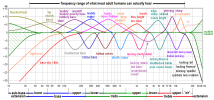
If you want to understand the Audibility thresholds check this :

 
In the following video, Bruno explains the SOUND differences between his amplifier developments UCD (UniversalClassD), Ncore (NegativeFeedbackCore) and Eigentakt. Firstly, that doesn’t match what you’re writing. Let it run from minute 4 to minute 8. Bruno actually speaks English.
The second thing that doesn’t match is that Bruno, very much like me or others, describes the sound differences of his amplifiers by pointing to the ever-lower distortions of each new generation, while you write that these distortions are below the threshold of perception. But, apparently not below his threshold of perception.
Do you still remember your words? "One amplifier sounds like another."
And thirdly, I don’t like it, just as you and everyone else wouldn’t like it, if you pin such nonsense on me like you do in that post.
Is that the fundamental ethos of this forum that John61 complains about?

Not mentioning many controlled listening tests there to back up those statements though.

I have a lot of respect for BP as an engineer – he has advanced the cause of powerful and near-perfect amplification beyond belief. But sadly, here…


Bruno clearly has the sales man hat on in that video. I guess that is why he is stuttering so bad. It all is made up.
I concur.
 
If you compare that with the measurements of a pure power amp, it's unfair.
Why does fairness matter? They are amps, not people.

In any case – pair any Purify with a half-decent DAC – yes, with digital volume control – and it will perform better than the digital amps that have been tested here to date.
 
Back
Top Bottom