
There's also the 8340/8350, price more reasonably. If you consider the price of grills and "easy" room correction for the KH310A, those become quite attractive.I know the feel. I also considered the Genelecs (can't remember the model) but had forgotten them again ... thanks ;-)
UPDATE: Just found them ... Genelec 8341A ... But the price is on the high side.

-
WANTED: Happy members who like to discuss audio and other topics related to our interest. Desire to learn and share knowledge of science required. There are many reviews of audio hardware and expert members to help answer your questions. Click here to have your audio equipment measured for free!
You are using an out of date browser. It may not display this or other websites correctly.
You should upgrade or use an alternative browser.
You should upgrade or use an alternative browser.
After Neumann KH 310A Review: What to buy?
- Thread starter ichonderoga
- Start date
@Pearljam5000: I do not think there's something beyond measurements in audio; probably just a translation error to an equivalent of our hearing apparatus. The field of psychoacoustics continues its research... but I get your point.
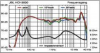
@thewas: Biggest differences show between ~200 Hz and ~ 3 kHz. They don't have a completely reflection-free environment for their measurements, which might be an explanation; although it looks a bit like the HDI-1600's vertical dispersion pattern. ^^
 .
. 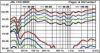
@thewas: Biggest differences show between ~200 Hz and ~ 3 kHz. They don't have a completely reflection-free environment for their measurements, which might be an explanation; although it looks a bit like the HDI-1600's vertical dispersion pattern. ^^
.
OP

- Joined
- Sep 21, 2019
- Messages
- 152
- Likes
- 160
- Thread Starter
- #43
I actually saw the Audyssey XT32 calibration of said speaker and noticed +dB in the treble range - and this would explain it. Wonder if the grill is easily removed by the end user?!ohh... I just saw that GrahmAudio had added a grille to the dome tweeter (or was that the case with the original?), which of course explains the early high frequency roll-off compared to the available dome tweeter.
View attachment 97238 View attachment 97239
Yeah, but that comes down to the whole design of the speaker (driver design and mounting, crossover design, cabinet design, etc etc) and not just one singular element.Every brand has it's own "house sound"
OP
- Joined
- Sep 21, 2019
- Messages
- 152
- Likes
- 160
- Thread Starter
- #45
*hmmm* that's a thought. Would you consider (especially the 8340s) equals to the KH310s? My listening room is ~16sqm (150sqft).There's also the 8340/8350, price more reasonably. If you consider the price of grills and "easy" room correction for the KH310A, those become quite attractive.
This should not be a big problem (except that the manufacturer warranty will be invalidated).I actually saw the Audyssey XT32 calibration of said speaker and noticed +dB in the treble range - and this would explain it. Wonder if the grill is easily removed by the end user?!
It's just important to first remove the complete tweeter or at least "put it on top of the cabinet" and only then remove the speaker grille, since the screws probably fix the front panel as well - otherwise the tweeter chamber will fall into the cabinet.
But if the (dome cone and) dome surround are connected to the front panel, the tweeter voice coil must be "recentered" after removing the grill.
For this purpose you should be able to measure the impedance of the tweeter while tightening the screws of the front panel. This is the only way to ensure that the voice coil is once again in the correct position.
I wouldn't, the 8350A is a better match in capabilities. Both have been extensively measured by S&R:*hmmm* that's a thought. Would you consider (especially the 8340s) equals to the KH310s? My listening room is ~16sqm (150sqft).
https://www.soundandrecording.de/equipment/studiomonitore-im-test-genelec-8350a/
https://www.soundandrecording.de/equipment/studiomonitor-neumann-kh-310-im-test/
The KH310 has less distorsion (especially IMD) in the mids and play a few Hz lower (even more if you consider the slow sealed rolloff), but the 8350 can play a little louder in the deep bass range (courtesy of the port). Dispersion is a bit smoother in the Genelec, due to the "normal" layout. No massive difference, to be honest, and they're priced exactly the same in Europe. Personally, I'd let GLM and the looks decide for or against.
Last edited:

Pearljam5000
Master Contributor
- Joined
- Oct 12, 2020
- Messages
- 5,217
- Likes
- 5,454
Plus aluminum vs wood cabinet.I wouldn't, the 8350A is a better match in capabilities. Both have been extensively measured by S&R:
https://www.soundandrecording.de/equipment/studiomonitore-im-test-genelec-8350a/
https://www.soundandrecording.de/equipment/studiomonitor-neumann-kh-310-im-test/
The KH310 has less distorsion (especially IMD) in the mids and play a few Hz lower (even more if you consider the slow sealed rolloff), but the 8350 can play a little louder in the deep bass range (courtesy of the port). Dispersion is a bit smoother in the Genelec, due to the "normal" layout. No massive difference, to be honest, and they're priced exactly the same in Europe. Personally, I'd let GLM and the looks decide for or against.
Which absolutely doesn't matter sound-wise.Plus aluminum vs wood cabinet.

Pearljam5000
Master Contributor
- Joined
- Oct 12, 2020
- Messages
- 5,217
- Likes
- 5,454
I know but it looks and feels specialWhich absolutely doesn't matter sound-wise.


DSJR
Major Contributor
Wasn't familiar with Graham, but with it being a BBC design, I would expect the KH310 to sound better.
The 5/9 is a very distinctive sounding and measuring box with a definite non neutral balance. No idea why the larger 5/8 turned out the way it did, but the 5/9 is this in (kind-of) miniature and was designed to suit the BBC and them alone although other broadcasters used them in editing suites as my pair were. Apparently, none were sold domestically until the BBC had taken what they wanted. Look at the Harbeth M30 from nigh on twenty years ago as reviewed here a while back. The balance is smoother than any 5/9 version (the Graham still has the 3kHz peak and sucked out upper mids, where the derived M30 has a straight-line downtilt). There are two UK speaker firms I can think of which actually do a lot worse in terms of response and UK audiophiles don't seem to care, so there you go.
If you wanted a similar size passive speaker with a FAR superior performance (you ought to see how 'soft' and easily deformed the polypropylene 5/9 cone is), I'd take a look at the Harbeth C7 in 'XD' form - or closer to home, the M30.2-XD. The former knocked me flat how much better it seemed to be over its predecessor and th elatter is a further very subtle tweak on the original 30.2. Amp was a Hegel 120 so nothing outrageous, but seemingly very well designed and performing. I'd suggest ther fC8-XD/Hegel combination could almost be regarded as a 'relaxed monitoring system.' I expect the Neumann's would be better in a forensic monitoring sense but I'd love the chance to see if I could listen to them for hours on end in a domestic environment..
The point is that with Neumann or Genelec speakers, you're not listening to them, but through them. Don't like what you hear? Get better music.I expect the Neumann's would be better in a forensic monitoring sense but I'd love the chance to see if I could listen to them for hours on end in a domestic environment..
Anyway, I agree that Harbeth seems a lot better than Graham in their little safe space of British lo-fi. I mean, no 3-way speaker in their catalog, even when that's the best cure for their lack of waveguide? No care given to diffraction or "singing" cabinets that are romanticised today when they were just a dirty and cheap solution to a problem now competely solved are still alarming for both brands, though.
This is a general misconception. Accurate loudspeakers like those from Neumann do not alter anything - playback is guaranteed the way the producer intended it to be [unless room acoustics change the tonality, which again is no loudspeakers' fault].[...] I expect the Neumann's would be better in a forensic monitoring sense but I'd love the chance to see if I could listen to them for hours on end in a domestic environment..
In the end you could always "shape" the sound to your likings via DSP - knowing, that the loudspeakers wouldn't add coloration through excessive distortion.

- Joined
- Jan 23, 2020
- Messages
- 4,335
- Likes
- 6,702
No care given to diffraction or "singing" cabinets that are romanticised today when they were just a dirty and cheap solution to a problem now competely solved are still alarming for both brands, though.
I wouldn't say "no care given". Based on interviews I've seen with Alan Shaw, he has considered making an inert resonance free cabinet, but decided against it. He believes the "singing" cabinet is superior to a resonance free cabinet.
Who knows if that's really what he believes or if that's simply part of their image and they basically couldn't exist without said image? Either way, he is wrong, as he's in the business of making loudspeakers, not music instruments.I wouldn't say "no care given". Based on interviews I've seen with Alan Shaw, he has considered making an inert resonance free cabinet, but decided against it. He believes the "singing" cabinet is superior to a resonance free cabinet.
A "singing" cabinet is a musical instrument![...] He believes the "singing" cabinet is superior to a resonance free cabinet.

oldsysop
Senior Member
- Joined
- Sep 5, 2019
- Messages
- 384
- Likes
- 658
Benchmark AHB2 + Graham LS5/9 it's my choice, without a doubtI pose you this (not so simple/straitforward) question: Benchmark AHB2 + Graham LS5/9 or a pair of Neumann KH 310A?

The BBC ‘types’ aren’t that bad, obviously limited bass response and just that bit ‘thrummy’ compared to more modern designs.
Properly integrate a couple of subs and they still wouldn’t be as good but listenable.
Keith
Properly integrate a couple of subs and they still wouldn’t be as good but listenable.
Keith
- Joined
- Jan 23, 2020
- Messages
- 4,335
- Likes
- 6,702
That’s a very good point.Who knows if that's really what he believes or if that's simply part of their image and they basically couldn't exist without said image