• Welcome to ASR. There are many reviews of audio hardware and expert members to help answer your questions. Click here to have your audio equipment measured for free!

A Deep Dive into HDMI Audio Performance

A good point, we should worry that HDMI carry video too, since it doesn't affect quality, as was originally stated.
 
I understand that Sony player has two HDMI outs for sake of connecting one to TV and another one to an amplifier. It is a pity, they didn't eliminate video signal from the amplifier HDMI.
My understanding is, that this is not possible, audio over HDMI needs a video as carrier so that interleaving is possible. It is a bit a shame that we are back to Hi8 technology there. Having no dedicated HDMI-Audio mode even in the latest version while not allowing Mch without HDCP sounds unreal for 2021.
 
Hi @amirm

I know this was an old thread (old tests) but Charles Hansen wrote:

"Much later, they added a thing called Audio Rate Control in HDMI 1.3a. This puts a buffer and the master audio clock in the receiver. Then commands are sent upstream on the CEC line telling the player to speed up and slow down as necessary to keep the buffer full."

https://www.audioasylum.com/forums/pcaudio/messages/8/82566.html

Was that around in the gear you tested?
 
Last edited:
This is a fascinating thread, thanks @amirm
Anyone have hypotheses as to WHY these differences occur, and bits are apparently not bits? And why does just connecting HDMI screw things up? Because for surround that seems the only practical game in town :(
 
And does it still occur with modern HDMI 2.1 units?
 
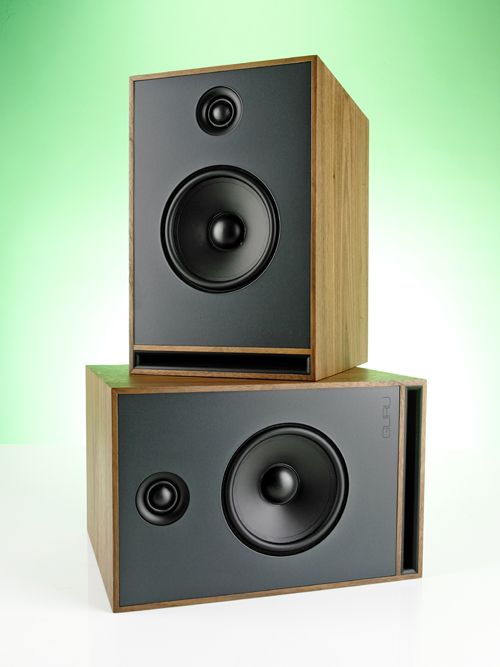
Guru Audio Junior
Are those 4" cones? I gotta laugh at 34 Hz from that-or do they come with a bar to clamp them on your head?!?:D They look really slick and nice, especially the cone at that physical size usually looks somehow not as developed as this. How much are those things?
 
Are those 4" cones? I gotta laugh at 34 Hz from that-or do they come with a bar to clamp them on your head?!?:D They look really slick and nice, especially the cone at that physical size usually looks somehow not as developed as this. How much are those things?
Well, that would be off topic, but yes they do dig that deep, but they need to be placed very close to a wall (preferably max 5cm away) because they are designed to take help from it so that bass doesn't lose decibels too quickly. They also need to be at the right height from the floor and the wall should use absorbents to get rid of early reflections.

Even the receiver perceives them as LARGE speakers unlike the others when measured with the AVR-microphone.

I paid around 800 euro, used. They are exceptionally neutral and I've yet to drive them so hard that the sound becomes messy.

Some Swedes will also know that the designer is the same as for Ino Audio, this is among the cheapest speaker he sells.

Here's an example of a more expensive product

These are serious constructions

Edit2: Some other speakers from Ingvar Öhman (lots of pictures, my Guru are there too)
 
Last edited:
From what I can tell, most of the modern AVRs or the BlueSound Node products are using the Lattice Sil9347 to processing incoming eARC from HDMI. The chip spits out a 24/192 signal on I2S which is all one needs. Functionally, I think this best option available on the market for processing HDMI audio. Of course, you can feed the I2S into any high-end DAC or DAC module even. I'm amazed these desktop products don't offer HDMI as a standard feature. At my desk, I have a computer and an xbox so eARC support is a perfect use case.

For my situation, the BlueSound PowerNode is nearly perfect but it has so many features I'd never use. In a perfect world, we'd have a box that took HDMI and outputted to speakers. It doesn't need volume or anything because the TV controls the signal. Streaming, optical inputs, analog inputs, etc.. are all extras. I'd love a product that had the Lattice SiI9437 as the input with a ESS9038 DAC and a TI 3255 or Hypex amp in it. Throw in a sub out and I'd spend $600 on that all day long.

 
In a perfect world, we'd have a box that took HDMI and outputted to speakers. It doesn't need volume or anything because the TV controls the signal. Streaming, optical inputs, analog inputs, etc.. are all extras. I'd love a product that had the Lattice SiI9437 as the input with a ESS9038 DAC and a TI 3255 or Hypex amp in it. Throw in a sub out and I'd spend $600 on that all day long.
They have what you want in abundance but with integrated speakers: Sound Bars :)
 
They have what you want in abundance but with integrated speakers: Sound Bars :)
It's true and a great point. I'm just not a fan of the form factor and integrated speakers. Plenty of great sound bars out there. I personally own a LG SY80 (I think) and a Beam Gen 1, but neither of those are going in my office on a desktop.
 
Last edited:
From what I can tell, most of the modern AVRs or the BlueSound Node products are using the Lattice Sil9347 to processing incoming eARC from HDMI. The chip spits out a 24/192 signal on I2S which is all one needs. Functionally, I think this best option available on the market for processing HDMI audio. Of course, you can feed the I2S into any high-end DAC or DAC module even. I'm amazed these desktop products don't offer HDMI as a standard feature. At my desk, I have a computer and an xbox so eARC support is a perfect use case.

For my situation, the BlueSound PowerNode is nearly perfect but it has so many features I'd never use. In a perfect world, we'd have a box that took HDMI and outputted to speakers. It doesn't need volume or anything because the TV controls the signal. Streaming, optical inputs, analog inputs, etc.. are all extras. I'd love a product that had the Lattice SiI9437 as the input with a ESS9038 DAC and a TI 3255 or Hypex amp in it. Throw in a sub out and I'd spend $600 on that all day long.
That answered my question. I use a blusound node via eARC. I send it to a Topping D10B only as a DDC but could use use the analog out.
 
English not mine native language, so let me ask about "the mere act of connecting an HDMI cable to your DAC causes its performance to decline!".

That mean: bare HDMI cable connected to DAC OR HDMI cable with other end connected to some other device used for ?

Reg. "causes noise to be induced from the source into the target device".
Do You mean noise is inducted over the air from HDMI cable to source device connected to S/PDIF ?
Or HDMI cable creating noise in other cable(s) which nearly located ?
Or some interference happens inside DAC from inactive to active input ?

Thank You very much for any feedback.
 
English not mine native language, so let me ask about "the mere act of connecting an HDMI cable to your DAC causes its performance to decline!".

That mean: bare HDMI cable connected to DAC OR HDMI cable with other end connected to some other device used for ?

Reg. "causes noise to be induced from the source into the target device".
Do You mean noise is inducted over the air from HDMI cable to source device connected to S/PDIF ?
Or HDMI cable creating noise in other cable(s) which nearly located ?
Or some interference happens inside DAC from inactive to active input ?

Thank You very much for any feedback.
It means if you plug an HDMI cable into the device from your tv or other source. Even if it's not the source you are using at the moment, it raises the noise floor.
 
We are seeing less of this now in 2025 with newer equipment. But it's important to know if your equipment takes a noise penalty or not from plugging something into its HDMI inputs.
 
It means if you plug an HDMI cable into the device from your tv or other source. Even if it's not the source you are using at the moment, it raises the noise floor.
Sure, it is one of two options. Hope author will answer how it was actually - just cable or cable connected to some device.

BTW any idea - is HDMI cable produce so strong radiation to induce noise in source equipment and/or cable and/or target device.
Or, IMHO more probably, this is just bad design/components/power of target DAC as soon inputs induce noise to each other while being "inactive"/not used.
 
That mean: bare HDMI cable connected to DAC OR HDMI cable with other end connected to some other device used for ?
With a source device connected to it.
 
Sure, it is one of two options. Hope author will answer how it was actually - just cable or cable connected to some device.

BTW any idea - is HDMI cable produce so strong radiation to induce noise in source equipment and/or cable and/or target device.
Or, IMHO more probably, this is just bad design/components/power of target DAC as soon inputs induce noise to each other while being "inactive"/not used.
It is bad design of the of the target dac. As @amirm said, he had the cable plugged into his analyzer device which is a very high quality source. And, as I said, we are now seeing dacs and AVRs that no longer incurr a noise penalty from having an HDMI source plugged in while testing. Such as the recent test of the Anthem mrx1140 AVR.
 
Back
Top Bottom