• Welcome to ASR. There are many reviews of audio hardware and expert members to help answer your questions. Click here to have your audio equipment measured for free!

3e Audio A5 Stereo Amplifier Review

Rate this amplifier:

  • 1. Poor (headless panther)

    Votes: 6 1.5%
  • 2. Not terrible (postman panther)

    Votes: 16 4.1%
  • 3. Fine (happy panther)

    Votes: 67 17.2%
  • 4. Great (golfing panther)

    Votes: 301 77.2%

  • Total voters
    390
Yeah. It's exactly what you add distortion in music for.
If the sound is changed it has been distorted. Tube amps add distortion, for example. Not all distortion sounds "bad".

But if an amp measures very similar to another it is almost certain to sound the same. Certainly you wouldn't hear the differences described above.
 
If the sound is changed it has been distorted. Tube amps add distortion, for example. Not all distortion sounds "bad".

But if an amp measures very similar to another it is almost certain to sound the same. Certainly you wouldn't hear the differences described above.
I meant in the music itself. Controlled distortion is used everywhere for mixing and sound design, precisely because it's rather effective when used right.
 
I assume you did the same, flawed testing mentioned in my post you quoted? If so, try again with the required controls in place.

Also, looking at the measurements of this amp, any audible change you could possibly induce would make it perform worse and deliver less faithful audio reproduction. Who would want that? If you need less treble because of your speakers, just add some EQ. It's often achievable for free and gives you vastly superior control over the outcome and actually audible improvements.

And as a last point: Amplifier classes do not have any sound. That's just audiophile fairytales. People failed to distinguish the vast majority of amps as far back as 40 years ago (p. 78) in well controlled tests. It's no different today, be it class A, B or D.
Thanks for chiming in, but I think you misunderstood what I meant by "smoother and fuller".

It's not EQ. If it were like rolling off treble to hide grain and making everything blurry and dull, those discrete op-amps wouldn't have stayed in my A5 for more than 5 minutes. What I hear is: same amount of detail, but without the etch / gritty texture that all IC op amps seems to have in the top end, and a denser, more focused midrange.

The A5's buffer op-amp sits right before the TPA3251 PFFB input. The OPA1612 is a BJT-input part with 1.1nV/rtHz and 0.000015% THD spec, achieving that with very high open-loop gain ∼120dB and heavy Miller compensation plus massive global feedback. That looks great on a 1kHz AP sweep. It's part of the reason that A5 measures brilliantly with a pair of IC op amps.

The Class-A discrete runs hot because everything stays on in Class-A, no crossover, less global feedback, more linear by itself. In practice that means less of that low-level high-order hash that our ears read as "harsh" or "thin", even if the THD number is slightly higher on paper. It also drives the PFFB input network with more current, so the mids sound fuller and more forward, not because of an EQ boost. Result: The harmonic structure shifts from low-level high-order to predominantly low-order (mostly H2/H3), which our hearing interprets as "smoother" and "fuller" without any loss of information. It's not low-pass filtering, it's removal of grain.

About measurements = faithfulness: A5's SINAD is noise-limited, distortion spikes are already below audibility. Once you are at -100dB+, SINAD is a check that nothing is broken, not a ranking of "correctness". Audibility thresholds discussed in literature are around THD/IMD -66dB / 0.05% and noise -85dB, with strict high-end target at -120dB. Everything below that lives in a grey zone where topology, TIM, thermal memory, and harmonic profile matter more but don't show up in a single 1kHz THD+N number. Low THD from huge feedback does not automatically mean correct timbre.

I use this Class-D amp just because to me it sounds more real. With PBTL+PFFB, it has much better control over my 4 ohm KEF R11 Meta. That's why my pure Class-A amp and AN Kit-1 300B are now on the backup shelf. Different implementations do sound different - even two Class-D amps can sound very different, especially when PFFB tuning and input buffer linearity, are different. The A5 is excellent, and with good discrete Class-A buffers, in my opinion, it gets one step closer to what I consider real instruments to sound like. Worth a try if you don't mind the heat - hence the rubber feet for airflow.
 
That's a lot of text to ignore the question if you tested with the necessary controls in place. I will repeat it: Without them, your brain is fooling you. You do "hear" things which do not exist and you're the 1001st person to post such impressions around here this year alone, while ignoring any and all problems with the way you tested.

Everything below that lives in a grey zone where topology, TIM, thermal memory, and harmonic profile matter more but don't show up in a single 1kHz THD+N number. Low THD from huge feedback does not automatically mean correct timbre.
You say yourself that the distortion and noise levels we are talking about here are below the threshold of audibility by a good margin. But then you argue like that? This is equal to "It's magic fairies changing the sound!". You are using fancy words like "thermal memory" and "topology', which have no relation to the performance of the amplifier or mean anything at all. The amps performance is well characterised by the measurements in the OP which - in contrast to what you suggest - comprise much, much more than a single SINAD number. Nothing you say has any relation to any scientifically established quality of audio devices. It's just a string of tech-sounding words which sound impressive to people who don't know much about electronics and measurements.

Please stop this nonsense. If you want to learn more about actual established facts and the tech behind audio, ASR is a great place. I suggest the following articles and posts as starting point:
 
That's a lot of text to ignore the question if you tested with the necessary controls in place. I will repeat it: Without them, your brain is fooling you. You do "hear" things which do not exist and you're the 1001st person to post such impressions around here this year alone, while ignoring any and all problems with the way you tested.


You say yourself that the distortion and noise levels we are talking about here are below the threshold of audibility by a good margin. But then you argue like that? This is equal to "It's magic fairies changing the sound!". You are using fancy words like "thermal memory" and "topology', which have no relation to the performance of the amplifier or mean anything at all. The amps performance is well characterised by the measurements in the OP which - in contrast to what you suggest - comprise much, much more than a single SINAD number. Nothing you say has any relation to any scientifically established quality of audio devices. It's just a string of tech-sounding words which sound impressive to people who don't know much about electronics and measurements.

Please stop this nonsense. If you want to learn more about actual established facts and the tech behind audio, ASR is a great place. I suggest the following articles and posts as starting point:
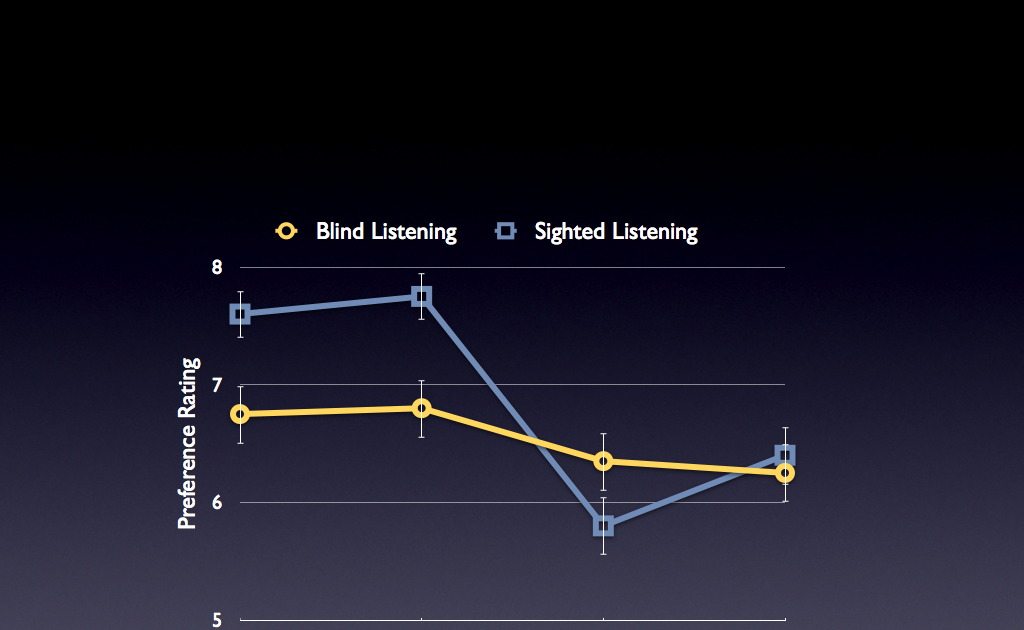
Thanks for the links and for explaining your view - I did read Sean Olive's blog before, and I agree sighted bias is real. I didn't do a level-matched blind ABX, it was just sighted listening in my room, so your caution is fair.

But I think there are three issues with your conclusion:

1. Topology, TIM, thermal memory are not meaningless buzzwords. They are real engineering concepts documented by Self, Groner and others. Whether they are audible at -110dB is debatable, but to say they have no relation to performance at all is incorrect. ICs use extensive internal current mirrors and heavy compensation to get that 0.000015% number - that architecture behaves differently from a discrete Class-A circuit that is linear open-loop first.

2. The A5 is well measured, but not with my op-amps in it. Amir's test shows the stock OPA1612 unit is excellent, much more than just SINAD. But it didn't test IMD vs frequency, multitone, or 19+20k with discrete op-amps installed. You can't conclude that an unmeasured modification is inaudible from the stock measurements. That's absence of evidence, not evidence of absence.

3. "Below threshold therefore magic fairies" is a strawman. I never said the THD is big and audible. I said two circuits can both be below 0.001% at 1kHz yet have different harmonic profile and loop-gain at high frequencies, which we weight differently than a single 1kHz number. The thresholds you quote are for detecting an added tone, not for timbre. Saying low THD automatically equals correct timbre is itself an assumption.

So I'm not claiming this as scientific proof, just sharing my experience as an owner: same detail, less grain, fuller mids. If it's placebo, it's a cheap, hot-running, enjoyable placebo. No hard feelings, I'm happy to agree to disagree and just enjoy the music.
 
That's a lot of text to ignore the question if you tested with the necessary controls in place. I will repeat it: Without them, your brain is fooling you. You do "hear" things which do not exist and you're the 1001st person to post such impressions around here this year alone, while ignoring any and all problems with the way you tested.


You say yourself that the distortion and noise levels we are talking about here are below the threshold of audibility by a good margin. But then you argue like that? This is equal to "It's magic fairies changing the sound!". You are using fancy words like "thermal memory" and "topology', which have no relation to the performance of the amplifier or mean anything at all. The amps performance is well characterised by the measurements in the OP which - in contrast to what you suggest - comprise much, much more than a single SINAD number. Nothing you say has any relation to any scientifically established quality of audio devices. It's just a string of tech-sounding words which sound impressive to people who don't know much about electronics and measurements.

Please stop this nonsense. If you want to learn more about actual established facts and the tech behind audio, ASR is a great place. I suggest the following articles and posts as starting point:
They aren't magic fairies changing the sound—they're djinns.
After all, magic fairies are considered benevolent beings.
Genies would explain why they trick people so badly with this.
 
They aren't magic fairies changing the sound—they're djinns.
After all, magic fairies are considered benevolent beings.
Genies would explain why they trick people so badly with this.
You're thinking of Tinkerbell and sparkly Disney whitewashing as they always do. Real fairies are tricksters and mischievous as well, and folklore around them describes various methods of protecting yourself with charms and such.

The mischievous creatures of the world must've teamed up long ago to misguide and confuse our hearing...
 
That's a lot of text to ignore the question if you tested with the necessary controls in place. I will repeat it: Without them, your brain is fooling you. You do "hear" things which do not exist and you're the 1001st person to post such impressions around here this year alone, while ignoring any and all problems with the way you tested.


You say yourself that the distortion and noise levels we are talking about here are below the threshold of audibility by a good margin. But then you argue like that? This is equal to "It's magic fairies changing the sound!". You are using fancy words like "thermal memory" and "topology', which have no relation to the performance of the amplifier or mean anything at all. The amps performance is well characterised by the measurements in the OP which - in contrast to what you suggest - comprise much, much more than a single SINAD number. Nothing you say has any relation to any scientifically established quality of audio devices. It's just a string of tech-sounding words which sound impressive to people who don't know much about electronics and measurements.

Please stop this nonsense. If you want to learn more about actual established facts and the tech behind audio, ASR is a great place. I suggest the following articles and posts as starting point:
very well put sir.
I have no debate with the other gentleman's preference in sound, as I can not argue what any individual personally likes. The nonsensical words and correlations I most definitely do object to. I'll always argue silly statements presented as FACT.

A question:
Beyond any additional distortion, in part, is he describing a simple shift in tonality from a modest change in the linear output from the dac? Do we have any data from the dac that might show us a slight top end rolloff or a midrange boost? If it does do this it could easily be described as presenting an "improved" midrange. This would be such as with that lowered, or "softened" top end, the mids would be RELATIVELY more elevated/"improved"/"present" etc. Often folks describe hotter mids as more forward or more detailed or some such thing. In general this is of course at the expense of accurate sound reproduction. It is a shockingly common practice with speaker demos to boost the mids or lower treble wherein you will hear statements from an average shopper such as "I've never heard such incredibly detailed mids"; of course you haven't. Because they are artificially boosted by 3 dB from 3 kHz to 6 kHz or something similar.

I appreciate you bearing with me here. I aid folks on another forum and in my efforts to understand what they are looking for, what they prefer and do and do not like and desire, I find that I spend a tremendous amount of time trying to understand what they are actually saying. It is made more difficult by nebulous audiofool words presented to me that may or may not mean what I think that they mean. It is NOT easy to figure out...
I do this in an effort to ascertain if the sound of a particular speaker will suit them. If they like some particular sound profile, such as a typical B&W sound for example, then I can not suggest speaker XXX. I have no interest in forcing someone to like a neutral accurate speaker, as I do, if that is not what brings them joy. Of course I always look to show someone what accurate sound reproduction is, as in uncolored and adding little or nothing to the source signal. I come from the school of thought where my goal is to hear what the studio engineer heard that day when he sat behind that console.
Give me a straight wire with gain any day. If a particular mood hits me I can always add a simple PEQ to suit that mood then back to clean, uncolored sound it is.

Thanks again for bearing with me here, off I go on a short 450 mile drive to pick up some speakers. Looking forward to any informative replies later upon my return.
Thanks for the balanced view, I appreciate it.

You make a good point about relative tonality - a slight rolloff on top can make the mids feel more present. I don't have FR data for the A5 with these op-amps, but what I heard wasn't less treble amount, just less gritty texture with the same detail. Could be very small FR shift though, I didn't measure.

I totally agree that preference is personal. I'm just enjoying this cheap tweak on the A5 and wanted to share. Thanks again and safe drive for those 450 miles!
 
  • Like
Reactions: jlx
But it didn't test IMD vs frequency, multitone, or 19+20k with discrete op-amps installed. You can't conclude that an unmeasured modification is inaudible from the stock measurements. That's absence of evidence, not evidence of absence.
That is not always true though, I know it is often mentioned on forums that IMD is more offensive than THD but the fact is, if we are talking about around -100 to -105 dB or lower THD, then to say "absence of evidence.." is not true because IMD will not be an issue if THD is so low. It seems that there are lots of forum posters who for whatever reasons, would like to mention IMD could be the culprit even when THD was measured and found to be extremely low, apparently not recognizing the two distortions are to some extent related. Same thing about harmonic profile they often mentioned, but again, tended to ignore the math, that if THD is -60 dB, "profile" may matter, but at -90 dB or lower, the "profile" is not going to matter much, as even if that -90 dB is dominated by the offensive high order harmonics.

As to measuring THD at 1 KHz test frequency, that is not the case in most of ASR's measurements would include the test results below:
Clearly as frequency increases, THD increased significantly, but then we are back to the audibility conversation that gets more complicated, not in the scope of this thread. For those who is really concerned about distortions vs frequency above 5 kHz, I would suggest they just focus more on comparison graphs among amps, and less so on the absolute distortion levels.


1787401652928.png
 
That is not always true though, I know it is often mentioned on forums that IMD is more offensive than THD but the fact is, if we are talking about around -100 to -105 dB or lower THD, then to say "absence of evidence.." is not true because IMD will not be an issue if THD is so low. It seems that there are lots of forum posters who for whatever reasons, would like to mention IMD could be the culprit even when THD was measured and found to be extremely low, apparently not recognizing the two distortions are to some extent related. Same thing about harmonic profile they often mentioned, but again, tended to ignore the math, that if THD is -60 dB, "profile" may matter, but at -90 dB or lower, the "profile" is not going to matter much, as even if that -90 dB is dominated by the offensive high order harmonics.

As to measuring THD at 1 KHz test frequency, that is not the case in most of ASR's measurements would include the test results below:
Clearly as frequency increases, THD increased significantly, but then we are back to the audibility conversation that gets more complicated, not in the scope of this thread. For those who is really concerned about distortions vs frequency above 5 kHz, I would suggest they just focus more on comparison graphs among amps, and less so on the absolute distortion levels.


View attachment 553635

Thanks @peng for the graph and the clarification, I appreciate you taking time to explain. I agree with you on the math - if THD is -100 to -105dB at 1kHz, IMD will also be very low and profile matters much less. That part makes sense.

My point was a bit different, and actually your graph shows it: THD rises significantly with frequency. At 1kHz it's -100dB, but at 15kHz it is already around -65 to -70dB at higher power. At that level, loop gain, compensation and how the input buffer drives the PFFB network do matter, and a discrete Class-A buffer with no crossover and more linear open-loop can have a different rising slope than an IC op-amp relying on heavy global feedback. That's what I meant earlier by topology - not buzzwords, but how much open-loop linearity you have and how fast loop gain falls with frequency, which is why THD rises with frequency and why multitone/IMD can look different from a single 1kHz THD number.

Maybe the difference is still below audibility, I accept that. I'm not claiming science, just sharing as someone who has played instruments for 20 years. My reference for "correct" is the natural decay and overtone texture of a real instrument in a room. With IC op-amps the A5 is super clean and accurate, but with the discrete I feel it's a bit closer to that real texture - same detail, less mechanical edge on strings. Again I understand this is sighted and could be placebo.

Agreed, the issue is more about audibility, as it is clear that those differences between different amps clearly exist and have been measured many times on many test benches. I don't believe in most forum posts that claimed they heard the differences between amps that measured results show little chance what they heard would pass even single blind tests for reasons such as but not limited to the following:

- frequency above 15 kHz are not likely to be audible to people older than 40, and I suspect most strong believers who has owned or auditioned enough amps to make their claims would more likely be older than 40 than not Lol.

- if they expressed their preference, then fine, but more often than not they would make those claims as though there were facts, and it is very obvious that those who responded to those kind of posts would show that they actually believe, or at least influenced by such posts to the point they were going to make their purchase decision after reading such posts.

- they often exaggerate (can't prove it or know for sue, but very apparent anyway) the differences they heard based on the "buzz" words like night and day, much wider sound stage, heard details that were never noticed before etc.

- no mentioning of the basic criteria for a serious comparative listening session, such as basic level matching, using same source, media contents, identical speakers/placements etc.

Back to that graph, yes it shows distortions increased in a significant way at higher test frequency at above 5 kHz, but the resulting IMD that are theoretically audible to people with good hearing are still going to be very low and not audible to older than 40 who likely have enough loss in HF hearing.

I believe in subtle (hard to define what it is as it depends) difference heard but not more than that.
 
Last edited:
- frequency above 15 kHz are not likely to be audible to people over than 40, and I suspect most strong believers who has owned or auditioned enough amps to make their claims would more likely be older than 40 than not Lol.

I wish this was true for me, I'm well in my 40's but I still hear every mosquito speaker, 'youth scramblin speaker' and even the cheap ebike charger from my neighbours that puts out a super loud 16~21kHz PWM signal. Nobody in my street can hear it, but I can and it's driving me mad. Nobody believes me, even though I can back my claim up by showing the measurements with a spectrum analyzer! o_O
 
I wish this was true for me, I'm well in my 40's but I still hear every mosquito speaker, 'youth scramblin speaker' and even the cheap ebike charger from my neighbours that puts out a super loud 16~21kHz PWM signal. Nobody in my street can hear it, but I can and it's driving me mad. Nobody believes me, even though I can back my claim up by showing the measurements with a spectrum analyzer! o_O
Yeah, this extension at age is rare but not unicornishly so. Doesn't surprise me people don't believe you; most aren't self aware enough to look beyond their own perception. "I don't hear it so it doesn't exist". Lol
 
Yeah, this extension at age is rare but not unicornishly so. Doesn't surprise me people don't believe you; most aren't self aware enough to look beyond their own perception. "I don't hear it so it doesn't exist". Lol
Yeah, I can also sort of understand their perspective. Though I was disappointed that they don't even want to try and understand the spectrum analyzer's result, but then again, maybe that's too technical for most people as well :)
 
Thanks @peng for the graph and the clarification, I appreciate you taking time to explain. I agree with you on the math - if THD is -100 to -105dB at 1kHz, IMD will also be very low and profile matters much less. That part makes sense.

My point was a bit different, and actually your graph shows it: THD rises significantly with frequency. At 1kHz it's -100dB, but at 15kHz it is already around -65 to -70dB at higher power. At that level, loop gain, compensation and how the input buffer drives the PFFB network do matter, and a discrete Class-A buffer with no crossover and more linear open-loop can have a different rising slope than an IC op-amp relying on heavy global feedback. That's what I meant earlier by topology - not buzzwords, but how much open-loop linearity you have and how fast loop gain falls with frequency, which is why THD rises with frequency and why multitone/IMD can look different from a single 1kHz THD number.

Maybe the difference is still below audibility, I accept that. I'm not claiming science, just sharing as someone who has played instruments for 20 years. My reference for "correct" is the natural decay and overtone texture of a real instrument in a room. With IC op-amps the A5 is super clean and accurate, but with the discrete I feel it's a bit closer to that real texture - same detail, less mechanical edge on strings. Again I understand this is sighted and could be placebo.
All of which is irrelevant - because with out properly controlled blind tests by far the most likely reason for your sighted listening impressions is perceptive sighted bias. It has been demonstrated over and over again - when people test properly, controlled and blind, suddenly all those differences that are so clear to them simply ... evaporate.
 
Back
Top Bottom